Why ‘The Great Wall of Trump’ will never be built

Trump and Mexican president Enrique Pena Nieto cancelled their meeting next week over Wall dispute.
wallxxxx

BBC

Donald Trump’s Mexico wall: Who is going to pay for it?

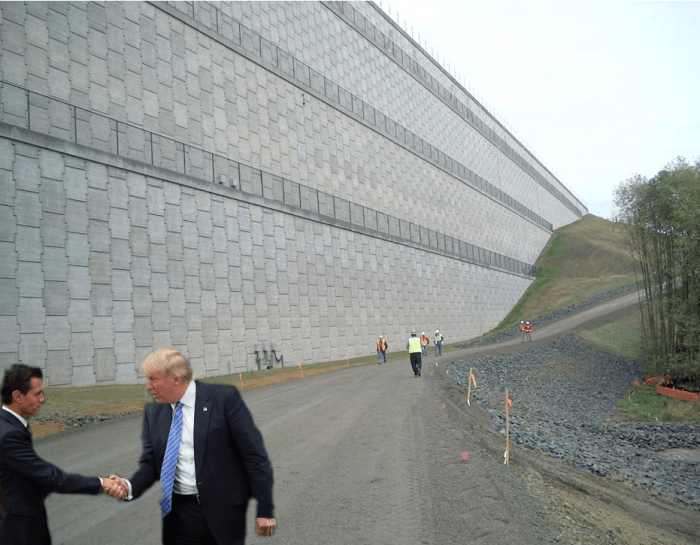
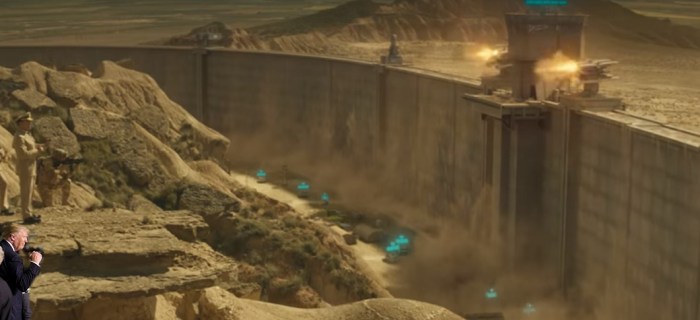
President Donald Trump has set in motion his plan to build an “impenetrable, physical, tall, powerful, beautiful, southern border wall” between the US and Mexico. An example above.

The border is about 1,900 miles (3,100 km) long and traverses all sorts of terrain.

Mr Trump says his wall will cover 1,000 miles and natural obstacles will take care of the rest.

But how much will it cost and who is going to foot the bill?

What is the estimated budget?

“I would build a great wall, and nobody builds walls better than me, believe me, and I build them very inexpensively.”

Mr Trump claims the total cost of the wall will be $10bn (£7.5bn) to $12bn. But estimates from fact checkers and engineers seem to be universally higher.

Senate Majority Leader Mitch McConnell estimated it will cost between $12-15bn, as he addressed reporters at a Republican conference in Philadelphia.

Another model:
wall11

The 650 miles of fencing already put up has cost the government more than $7bn, and none of it could be described, even charitably, as impenetrable, physical, tall, powerful or beautiful.

There are other reasons the costs would be likely to escalate beyond Mr Trump’s price tag – his plans require extending the wall into increasingly remote and mountainous regions, raising the building costs substantially.

Adding even more to the expense, the new 1,000 miles would crisscross private land, which would have to be purchased, perhaps by legal force, or financial settlements made with owners.

A study by the Washington Post estimated the cost of the president’s wall would be closer to $25bn.

The row over payment

President Trump has always insisted Mexico will pay. Mexican President Enrique Pena Nieto has been equally insistent he will not.

wall11a

Needing to fulfill his election pledge to start building on day one, Mr Trump has signed an executive order setting it in motion.

He has accepted that US taxpayers will have to cover the initial funding.

Congressional approval would be needed and Republicans have suggested a supplemental appropriations bill could be fleshed out over the next two months.

So, how would that money be recouped from Mexico?

There are a number of options, but nothing has been officially spelled out.

1. Remittances. Two possibilities here. President Trump could try to use laws aimed at preventing money-laundering to halt Mexicans working in the US from wiring money to families back home. The sector is huge – about $25bn a year. The hope is that the threat would cow Mexico into coughing up for the wall. The second option is to tax the remittances. Either a flat tax on all, or a far more punitive tax on those who cannot prove legal residence. But Mexicans affected by remittances might simply avoid using the wire companies and find undocumented third parties to transfer the cash.

2. Levying a “border adjustment” tax. House Republicans propose lowering corporation tax from 35% to 20% but base it on the place of consumption, not production. Imports would be taxed but not exports. A 20% tax, given the $60bn trade deficit with Mexico, would raise $12bn a year. Mexico could do little, the Washington Post reports, because border adjustments would apply to all US trading partners and would not therefore be seen as a singling out Mexico.

3. Raising tariffs on imports. Would raise income but, Forbes argue, existing duties on Mexican goods would have to be quadrupled to pay for the whole of the wall, even if its cost were spread over 10 years. US companies would also almost certainly source products from elsewhere, reducing the revenue. The Mexican government could respond by removing tax benefits for US foreign investment. The investment totalled $101bn in 2013.

4. Increasing travel visa and border crossing fees. Targeting countries that have a bad record on illegal immigration, including Mexico, for higher visa fees would be popular among many Republicans. Along with increasing the fees on cars and individual people crossing the border it would raise revenue, but would probably not be enough alone.

Asked whether any of his solutions were realistic, he told the Washington Post: “It’s realistic if you know something about the art of negotiating. If you have a bunch of clowns negotiating, it’s not realistic.”
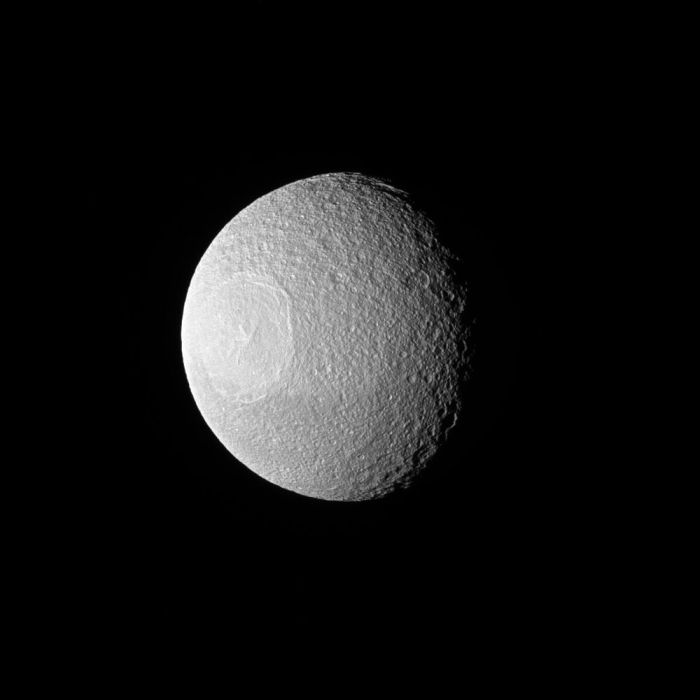
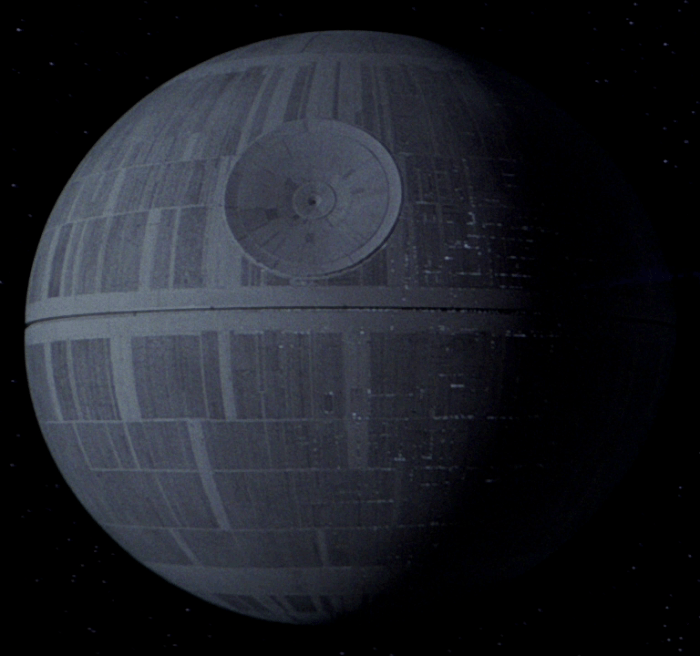
Saturn’s Moon Resembles the ‘Death Star’

star1

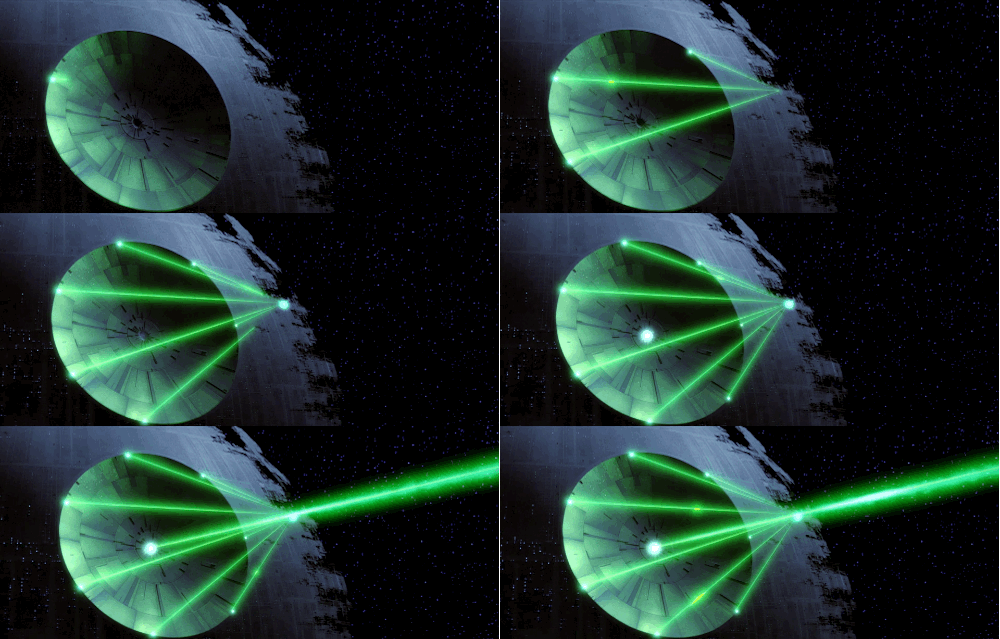
A new image from NASA’s Cassini probe is raising eyebrows among sci fi fans for its eerie resemblance to the infamous Death Star from the Star Wars films.

The unsettling celestial body, dubbed ‘Tethys,’ is one of Saturn’s icy moons and measures about 660 miles across.

With its enormous crater positioned in just the right spot when photographed by the spacecraft, the moon looks remarkably similar to the monstrous weapon at the center of the epic space opera.

While it is almost certainly not a fabricated space ship designed to destroy planets and wreak havoc across the universe, who knows what creatures could lurk in the deep deep depths of the moon?

star2

star

Popsci.com

The Strange Phenomena of Sun Pillars

I was listening to a science show the other day and came across this weirdness. The scientist said most people have witnessed this. Not sure where he was coming from, but I have never seen one, or even heard about them.

pillar2

Sun Pillar over Antarctica

A light pillar is an atmospheric optical phenomenon in the form of a vertical band of light which appears to extend above and/or below a light source. The effect is created by the reflection of light from numerous tiny ice crystal suspended in the atmosphere or clouds. The light can come from the Sun (usually when it is near or even below the horizon) in which case the phenomenon is called a sun pillar or solar pillar. It can also come from the Moon or from terrestrial sources such as streetlights.

Light Pillars over North Bay, Ontario

pillar1

Since they are caused by the interaction of light with ice crystals, light pillars belong to the family of halos. The crystals responsible for light pillars usually consist of flat, hexagonal plates, which tend to orient themselves more or less horizontally as they fall through the air. Their collective surfaces act as a giant mirror, which reflects the light source upwards and/or downwards into a virtual image. As the crystals are disturbed by turbulence, the angle of their surfaces deviates some degrees from the horizontal orientation, causing the reflection (i.e. the light pillar) to become elongated into a column. The larger the crystals, the more pronounced this effect becomes. More rarely, column-shaped crystals can cause light pillars as well. In very cold weather, the ice crystals can be suspended near the ground, in which case they are referred to as diamond dust.

Unlike a light beam, a light pillar is not physically located above or below the light source. Its appearance of a vertical column is an optical illusion, resulting from the collective reflection off the ice crystals, only those of which that appear to lie in a vertical line direct the light rays towards the observer (similar to the reflection of a light source in a body of water).

pillar3-sun-ohio

Sun Pillar over Ohio

pillar

Light Pillars over Cambridge Bay, Canada

pillar4

Source: Wikipedia, Google and CBC Quirks and Quarks

Moose Populations

aamoose

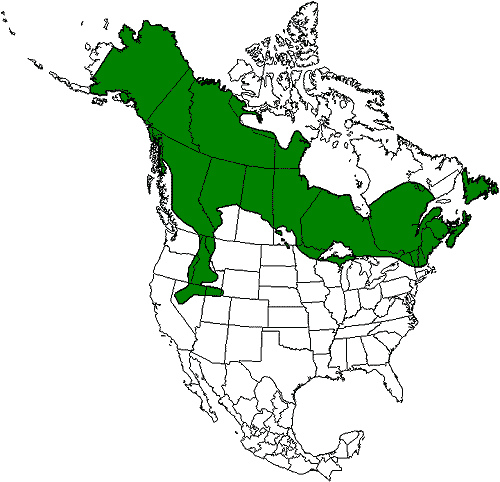
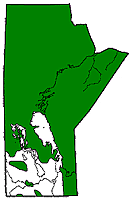
Moose are found throughout the province of Manitoba ranging south from the U.S border, north to the Nunavut Territory. Until recently, there has been only an occasional report of moose in the prairie region of southern Manitoba, but populations have now become established in the Pembina and Souris River Valleys. They are also found in Spruce Woods Provincial Forest and Turtle Mountain Provincial Park in southwestern Manitoba from where they were absent until as late as the early 1970’s.

moose_na

The moose population in Manitoba is about 27,000 animals. Populations in accessible southern areas are at lower than desired levels. The demand for consumptive use of moose continues to exceed supply in the more accessible areas. Discussions with user groups regarding moose population recovery are ongoing. First Nations, Métis and licensed hunters actively harvest the moose. Equitable distribution of sustainable harvest, providing opportunity for all stakeholders, will require constructive consultation.

As additional forestry and recreational development occurs east of Lake Winnipeg and north and east of The Pas, more intensive management will be required to ensure that the moose population can be maintained.

moose_prov

Populations
North America:
In Canada : There are an estimated 500,000 to 1,000,000 moose with 150,000 in Newfoundland in 2007 descended from just four that were introduced in the 1900s.

In United States : probably around 300,000, as follows:
Alaska: The state’s Department of Fish and Game estimated 200,000 in 2011.
Northeast: A wildlife ecologist estimated 50,000 in New York and New England in 2007, with expansion expected.
Rocky Mountain states: Wyoming is said to have the largest share in its 6-state region, and its Fish and Game Commission estimated 7,692 in 2009.
Upper Midwest: Michigan estimated 433 (in its Upper Peninsula) in 2011, Wisconsin Department of Natural Resources 20–40 (close to its UP border with Michigan) in 2003, Minnesota 5600 in its northeast in 2010, and under 100 in its northwest in 2009; North Dakota closed, due to low moose population, one of its moose-hunting (geographic) units in 2011, and issued 162 single-kill licenses to hunters, each restricted to one of the remaining nine units.

Europe and Asia:
Finland : In 2009, there was a summer population of 115,000 moose.
Norway : In 2009, there were a winter population of around 120,000 moose. In 2015 31,131 moose were shot. In 1999, a record number of 39,422 moose were shot.
Latvia : in 2015, there were 21,000 moose.
Estonia : 13,260 individuals
Poland : 2,800 individuals
Czech Republic : maximum of 50 animals
Russia : In 2008, there were approximately 730,000 moose.
Sweden : Summer population is estimated to be 300,000–400,000 moose. Around 100,000 are shot each fall.

Manitoba Moose (hockey mascot)

amoose

Winnipeg Forks Skating Trail Superb

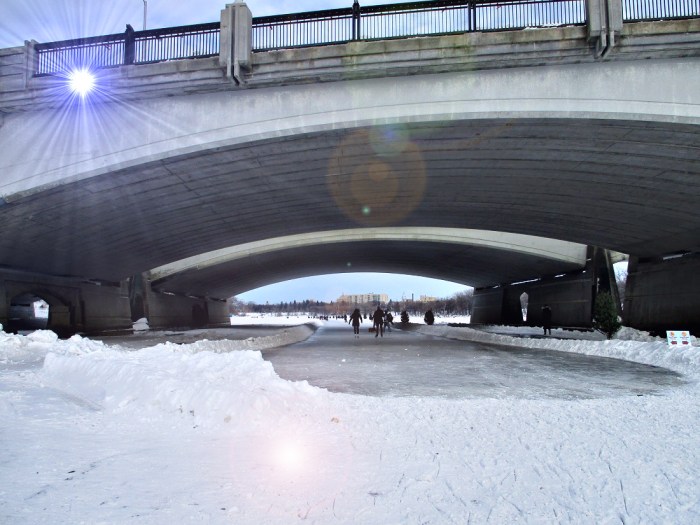
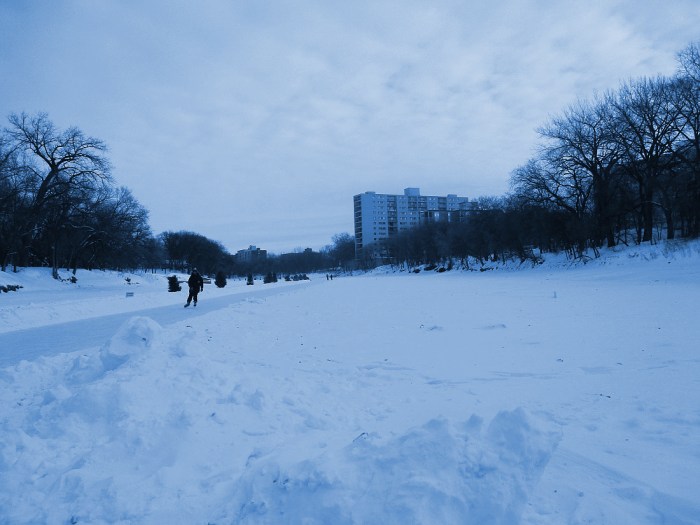
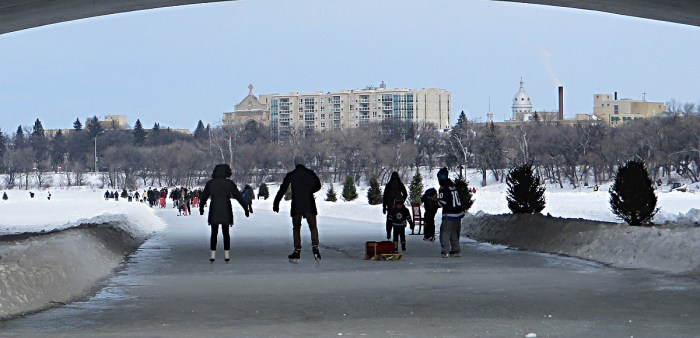
I checked out the skating trail today as the weather was very agreeable. Warmer temps allowed a skate without having to wear astronaut-like clothing. The trail is well groomed and the ice was smooth as glass. For a Tuesday afternoon there was a surprisingly large turnout.

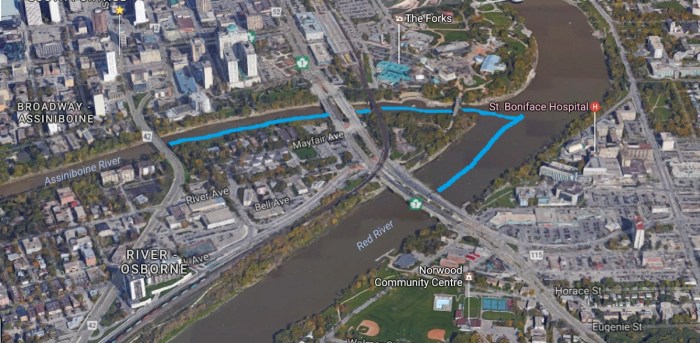
The trail isn’t as long as past years. But it does cover areas of the two rivers, Red and Assiniboine. It has been a few years since the Assiniboine River segment has been open, strong currents and mild weather the cause. There is also a couple hockey rinks right at the Forks harbor.

skatee3

skatee5

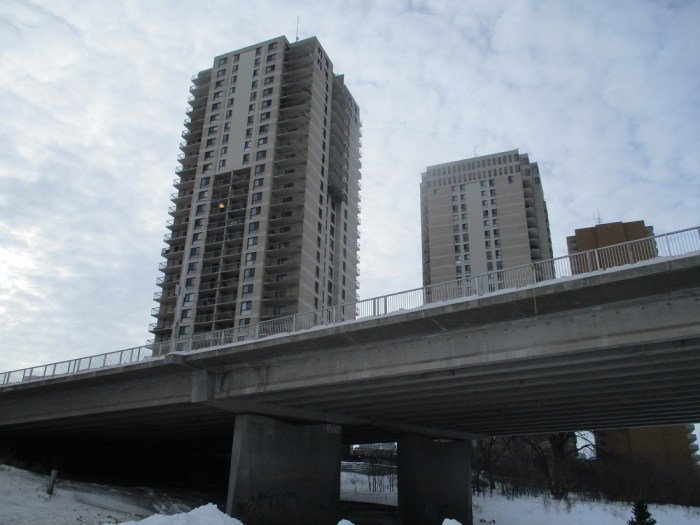
Different perspectives of the city from the rivers.

skatee4

skatee2

skatee6a

Blue shows current skate trail.

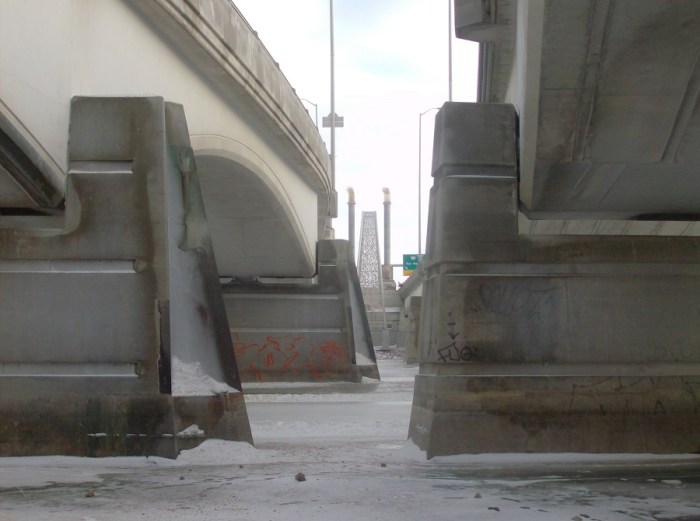
Get to see graffiti otherwise hidden from the public.

skatee6

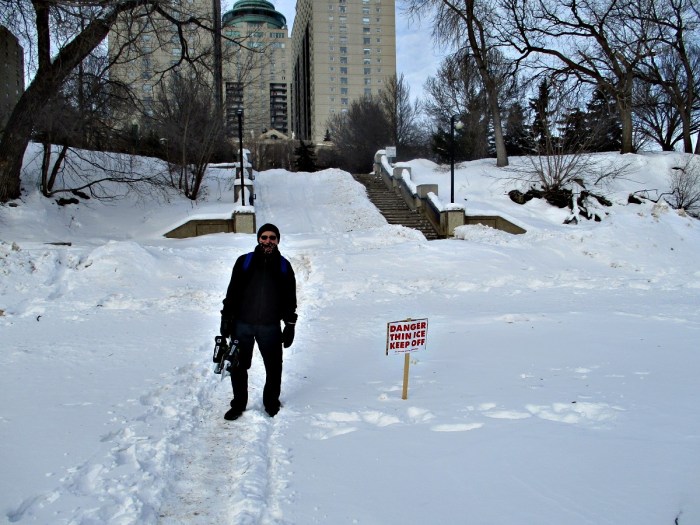
Some people just can’t read.

skatee1x

The Stimulating Contrasts Living in the Great White North

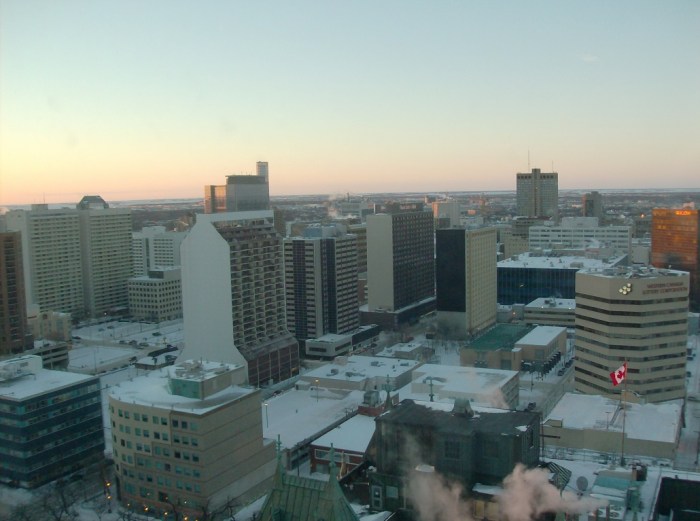
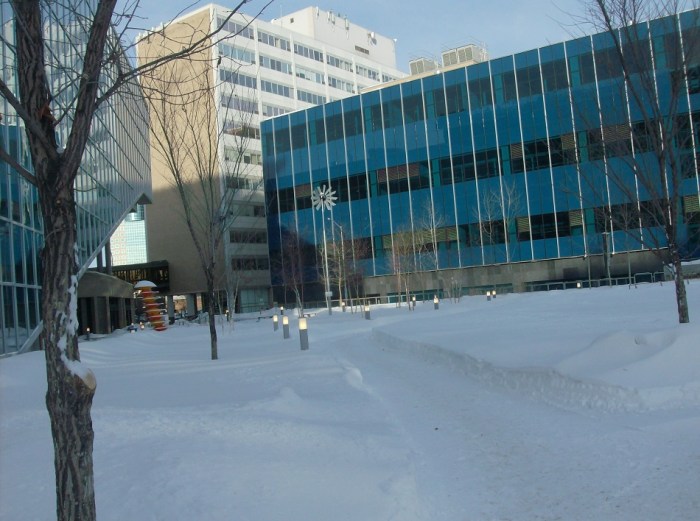
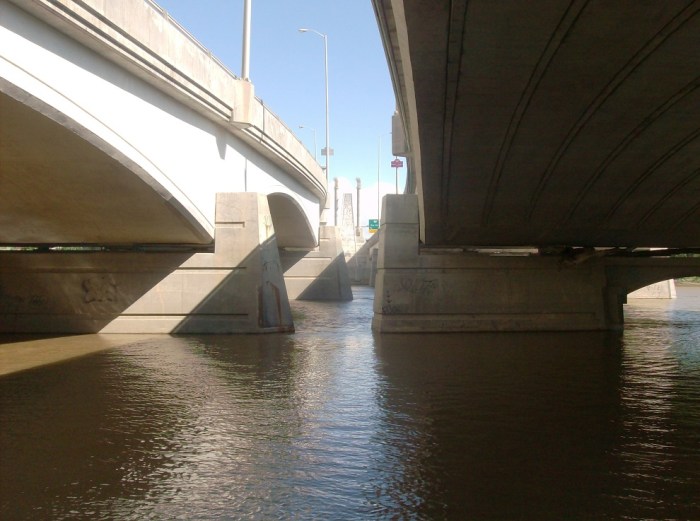
Living in northern climes can be challenging, with the bitter cold and icy northerly winds. But, those of us who live here, get to experience the many variations of Mother Nature. The good and the bad.

Winnipeg is located just above the 49th parallel, almost in the middle of North America, the northern part of the middle. The city gets every conceivable kind of weather possible. Extremely hot and humid summers, a brief spring and fall, and very cold long winters. Even the odd tornado. But as the hedonistic sage once said: variety is the spice of life. Change is interesting. 

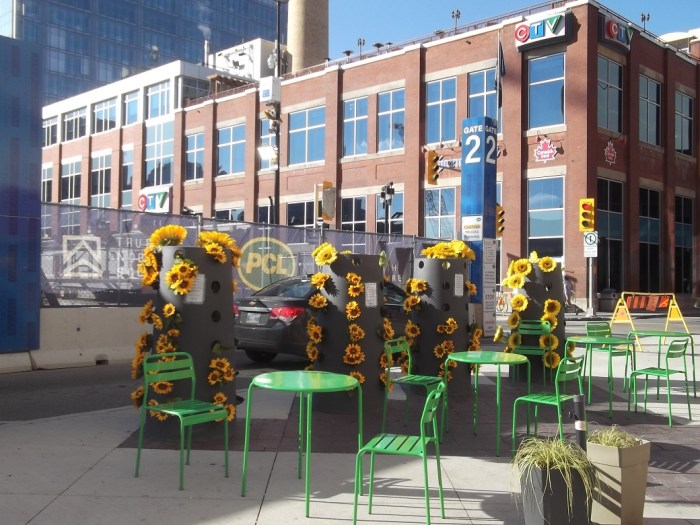
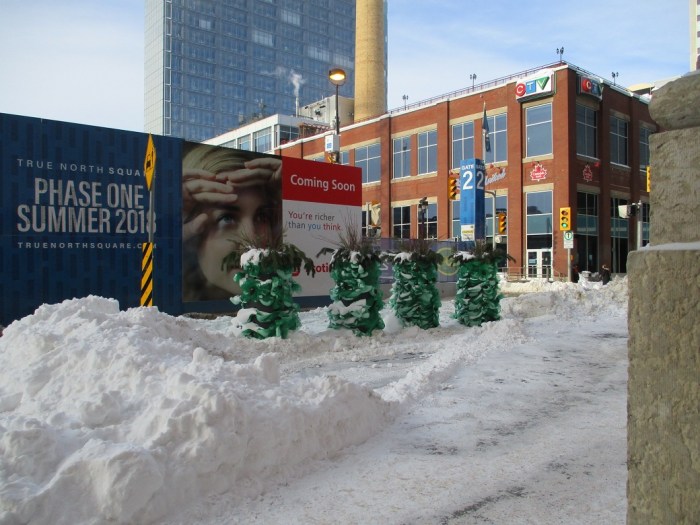
Some contrasts

hargrave-planters-1

hargrave-planters-2

hargrave-planters-3

contrast-1

contrast-2

parkxz6a

parkxz6

riverc1

riverc2

blizz1x

img_0111

riverz

riverzz