One of the latest design trends that seems to have found appeal among some architects is a towering skyscraper that twists its way up to the top. Possibly the first, modern, twisted skyscraper constructed was the Turning Torso in Malmö, Sweden. The residential building is constructed in nine segments of five-story pentagons that twist as it rises, with the topmost segment twisted 90 degrees with respect to the ground floor. The construction of this building was featured on Discovery Channel’s “Extreme Engineering” TV program. The tower received some more publicity when on 18 August 2006, Austrian skydiver Felix Baumgartner jumped off it and parachuted to the ground.
After the successful completion of the Turning Torso, designers started proposing similar audacious structures elsewhere. Many projects got shelved, others were passed and built, and a handful of them are currently under construction. Here we explore some of the most twisted skyscraper designs around the world, but first, a few pictures of the tower that started it all.
Turning Torso, Malmo, Sweden
The project was designed by the Spanish architect Santiago Calatrava and officially opened on 27 August 2005. The tower reaches a height of 190 metres (623 feet) with 54 stories – 147 apartments, relax/lounge/spa, wine cellar followed by around-the-clock Concierge service 365 days a year. Each floor consists of an irregular pentagonal shape rotating around the vertical core, which is supported by an exterior steel framework. Completed in 2005, the Turning Torso is the tallest skyscraper in Sweden and all the Nordic countries, and presently the third tallest residential building in Europe.
Infinity Tower, Dubai
Infinity Tower is 306 metres (1,004 ft) tall with 76 stories and is under construction in Dubai, United Arab Emirates, which when completed, will become the world’s tallest high rise building with a twist of 90˚. The tower is designed by Skidmore, Owings and Merrill SOM architectural group, the same group who built the Burj Khalifa also in Dubai and Trump Tower in Chicago.
Construction of the building began in February 2006 and by 2012, the intended height was reached. Unlike the Turning Torso, which is a series of cantilevered plates rotated about a straight structure, Infinity Tower’s much larger floor plates actually require the structure to be twisted as it raises from level to level. Each floor is rotated by 1.2˚ to achieve the full 90˚ spiral, creating the shape of a helix. The tower will have residential apartments, conference rooms, tennis courts, pools, a state of the art gymnasium, a nursery and a spa.
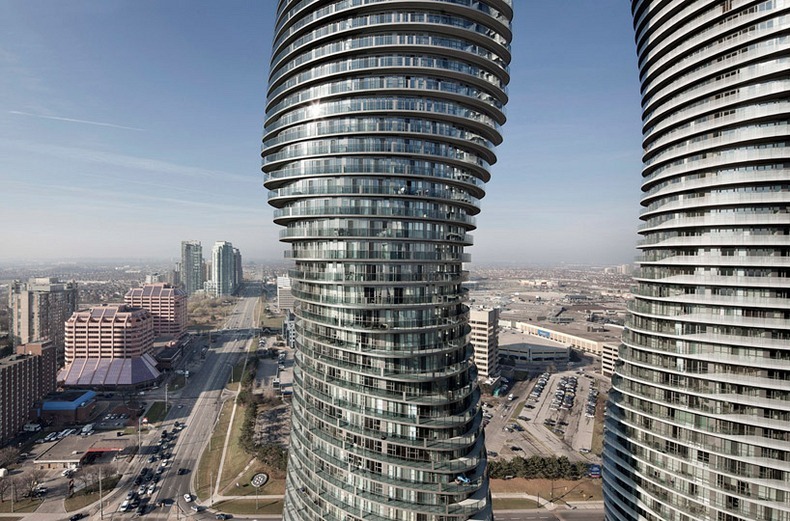
Absolute World Towers, Mississauga, Canada
Absolute World is a residential twin tower skyscraper complex in Mississauga, Ontario. One is 179 meters tall while the other stands at 161 meters. Both towers twist 209 degrees from the base to the top. The building has been nicknamed the “Marilyn Monroe” tower due to its curvaceous, hourglass figure likened to actress Marilyn Monroe.
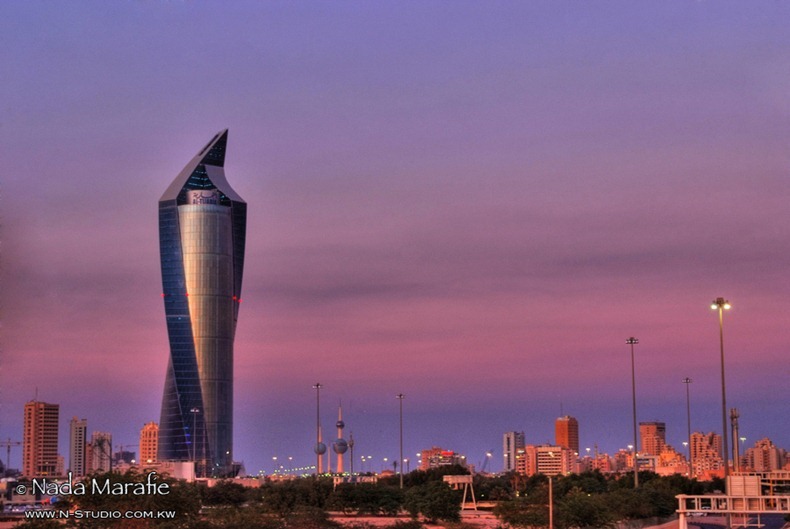
Kuwait Trade Center
Kuwait Trade Center, also known as Al Tijaria Tower, is a magnificent 218 meter tall tower in Kuwait City and currently the tallest building in Kuwait.
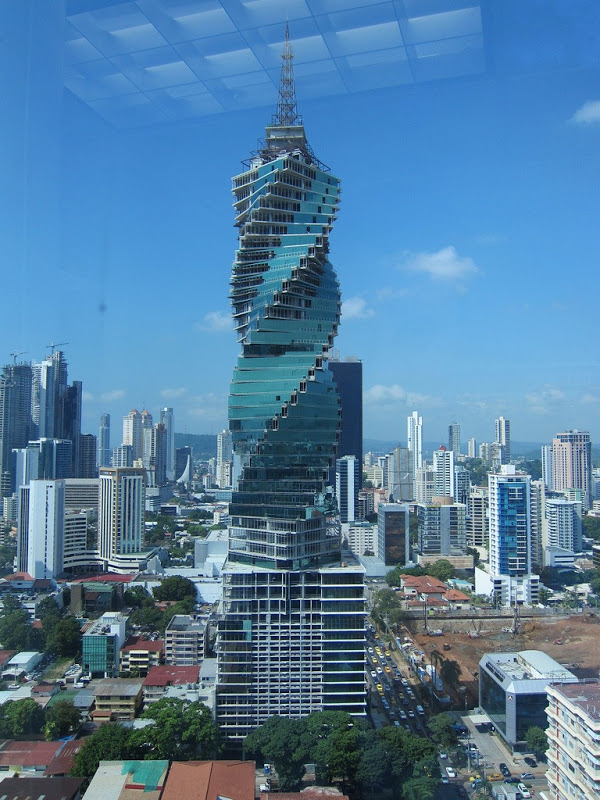
Revolution Tower, Panama City
The Revolution Tower is a controversial “corkscrew” tower complex of modern offices in Panama City, just a few minutes away from the banking center. The 242-meter reinforced concrete tower consist of 52 floors and makes a 360 degree turn as it rises up.
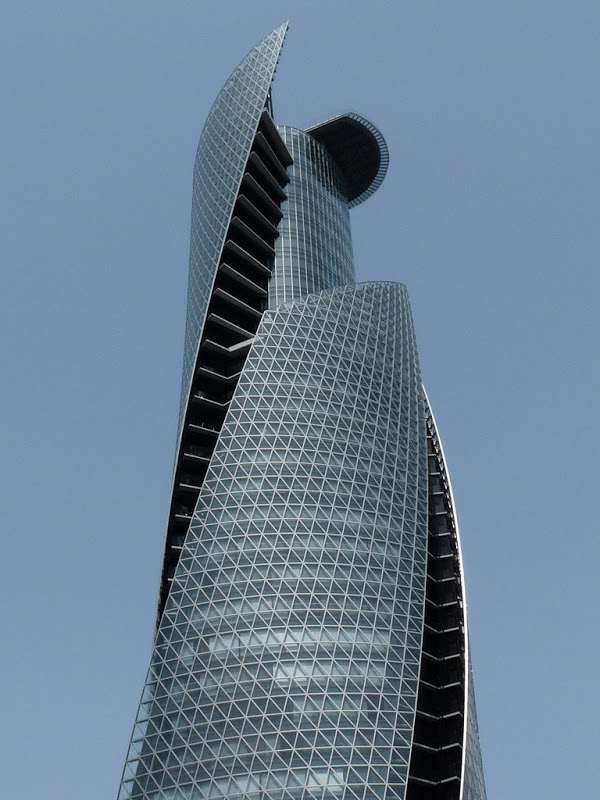
Mode Gakuen Spiral Towers, Nagoya
Mode Gakuen Spiral Towers is a 170-meter, 36-storey educational facility located on a busy main street of Nagoya City in front of Nagoya Station in Nakamura-ku, Nagoya, Aichi, Japan. The towers’ wing-like shape, narrow at the top, changes the rotation axis as they rise and create an organic curve. Spiral Towers appears to change shape slightly when viewed from different angles, giving an elegant yet dynamic impression. The strong inner truss tube is visible through gaps between the three wings, highlighting the bold design and structure while demonstrating the overall consistency.
The towers are highlighted with many ecological features, such as a double-glassed air flow window system and a natural air ventilation system.
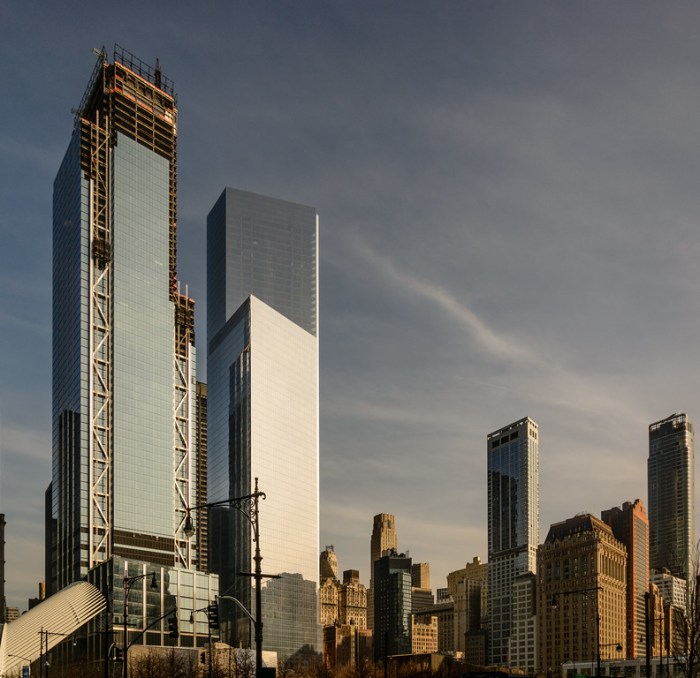
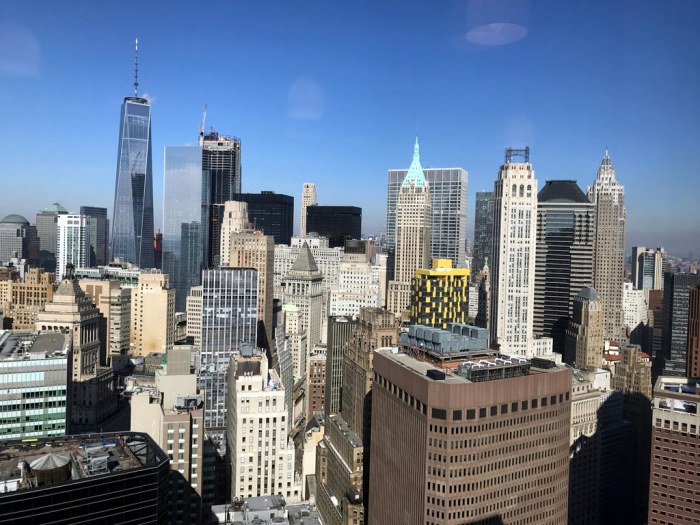
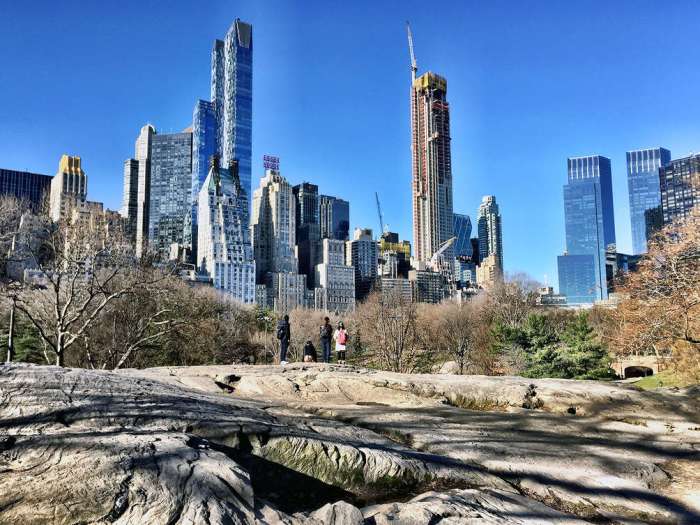
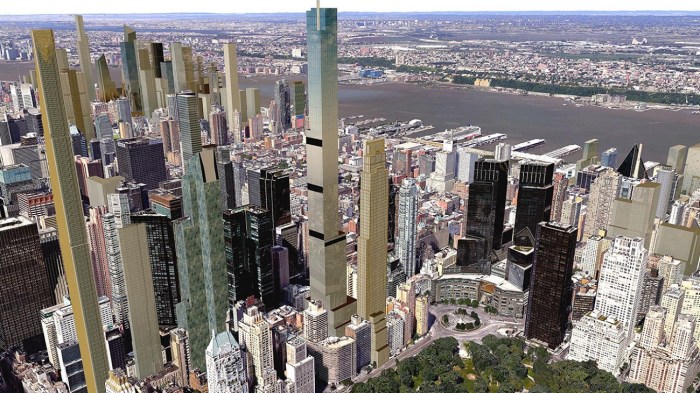
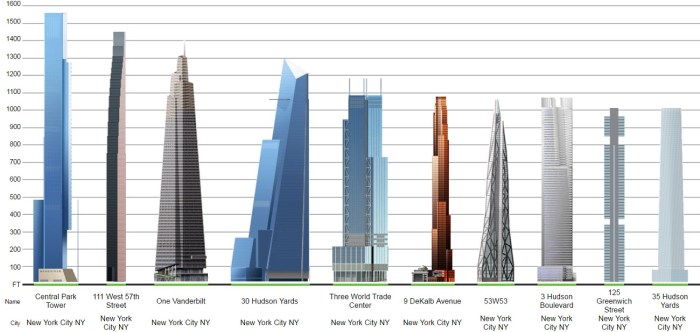
NYC is experiencing a skyscraper construction rush like it hasn’t seen since the 1930’s. The skyline is changing fast. Currently there are ten buildings that tower over a thousand feet high under construction. The ‘Big Apple’ is rising higher and higher.
The new World Trade Center complex
Just south of Central Park
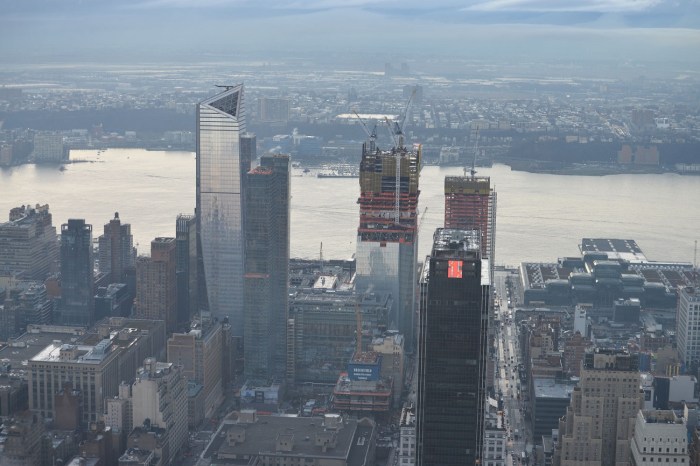
What it will look like in two years. Hudson Yards complex in the background.
Hudson Yards
Winnipeg also has it’s own micro boom on the go.
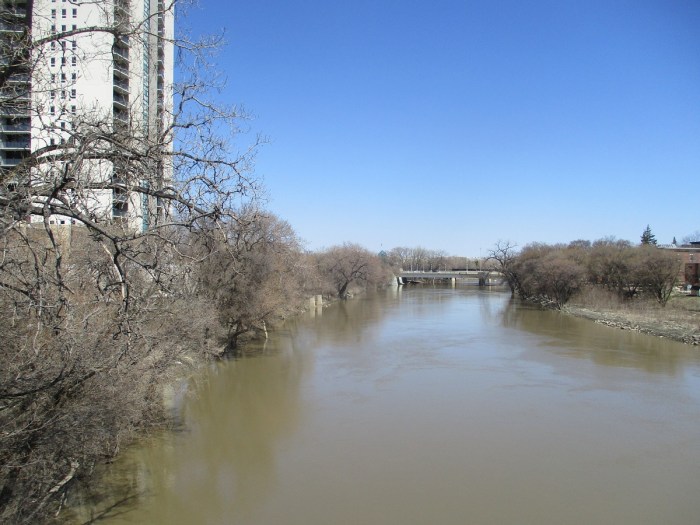
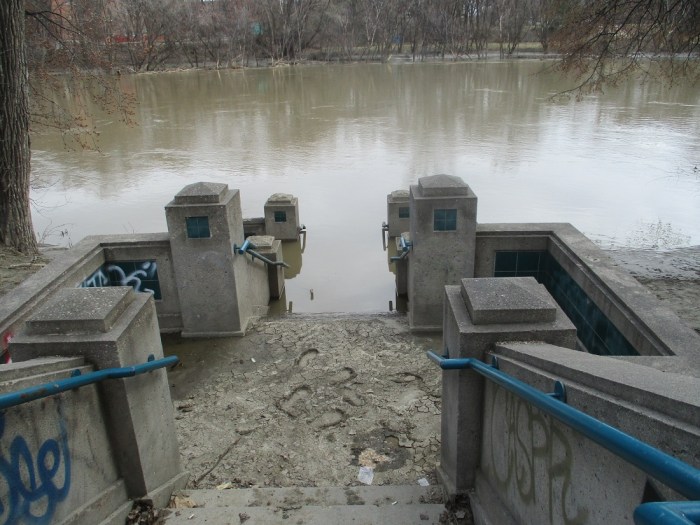
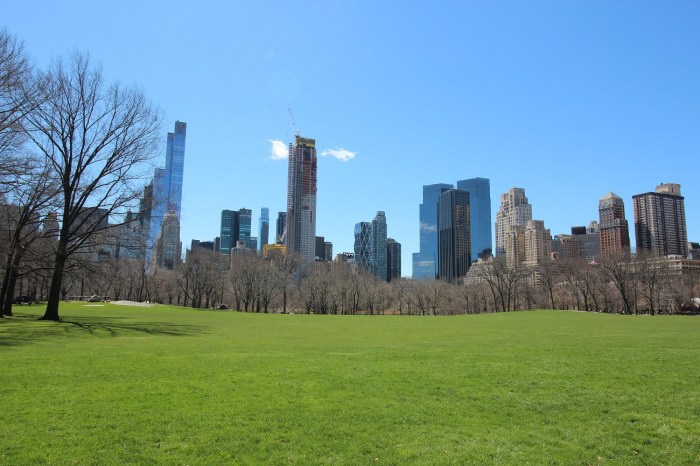
Winnipeg has another similarity with NYC. It has a Central Park:
Rainier Tower is a 31-story, 156.67 m (514.0 ft) skyscraper in the Metropolitan Tract of Seattle, Washington, at 1301 Fifth Avenue. It was designed by Minoru Yamasaki, who designed the World Trade Center in New York City as well as the IBM Building, which is on the corner across the street from Rainier Tower to the southeast. Its construction was completed in 1977.
The skyscraper has an unusual appearance, being built atop an 11-storey, 37 m (121 ft) concrete pedestal base that tapers towards ground level, like an inverted pyramid.
The tower occupies only 25% of its site at ground level, with a normal-sized tower balanced on an extremely narrow pedestal.
A number of young Russians are making names for themselves by posting videos of life-threatening stunts online. What drives these extreme selfie daredevils?
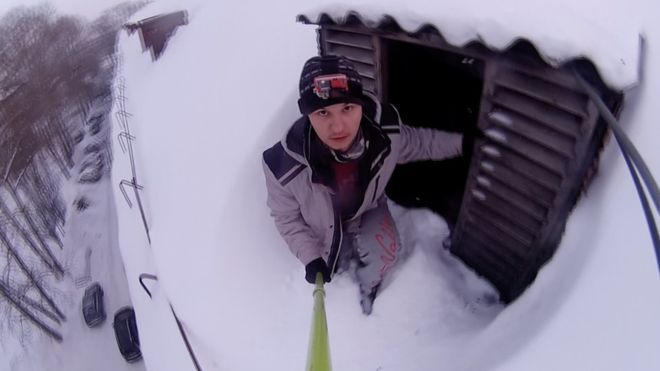
He’s got a camera strapped to his head and he teeters on the edge of the roof in a nine-storey apartment block in Siberia.
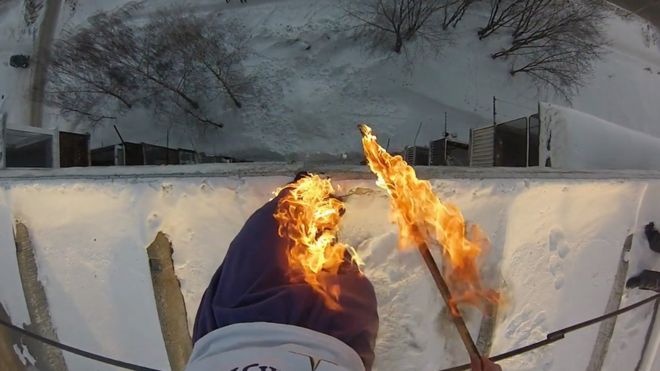
“Are you filming?” he asks, as a friend hands him a flaming torch. Orange flames engulf his legs and suddenly he jumps, somersaulting in the air like a stricken warplane before landing with a thud into a deep pile of snow.
Remarkably, he’s unhurt – if a little winded. Police tell a gaggle of onlookers to stop filming, but within hours, footage of this potentially deadly jump goes viral – various videos of the stunt filmed from different angles were watched millions of times on YouTube.
Many people were incredulous, even angry. “Is this the stupidest stunt ever?” screamed one headline.
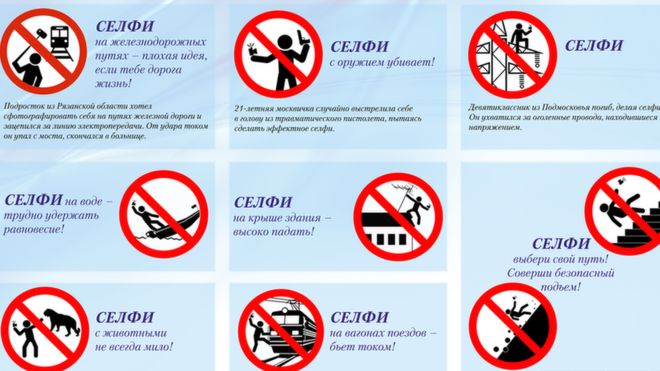
The young man’s appetite for risk is unusual but not unique. In fact a growing number of deaths and injuries, suffered by Russians who among other things have fallen from buildings and moving trains whilst taking pictures, have prompted the Russian Interior Ministry to launch a “safe selfie” campaign.
The Russian Ministry’s safe selfie campaign urges people to, for instance, avoid train tracks and roofs, and be cautious around staircases, wild animals and guns
Despite the deadly peril, some of the risk takers are attracted by fame and the possibility of becoming social media stars. In many places in Russia, tall buildings are accessible and fines for trespassing are low, if they exist at all. And one enthusiastic participant says extreme stunts can alleviate the boredom and pent up energy of many Russian men.
But what really drives some of the most notable Russian selfie daredevils?
The man jumping off of that Siberian apartment block, 23-year-old Alexander Chernikov, lives on the outskirts of Barnaul – 4,000km east of Moscow.
Even though it’s -18C and thick ice cakes the pavements, he’s dressed in a shiny burgundy bomber jacket, jeans and cowboy boots. The place where he made his infamous jump is a dreary, Soviet-era building with rusty balconies covered in satellite dishes.
“Up there you feel that you’re standing on the line between life and death – your life is hanging by a thread – that if something goes wrong you may die,” he says.
Alexander claims he is not afraid of death. “What’s the point of being scared? It’s inescapable. It comes to us all,” he says.
But would he go to such lengths if there were no cameras? “Probably not,” he admits. “I would find a different way to get on in life.”
Alexander sometimes gets temporary work as a labourer on building sites – there are also local jobs in factories or unloading cargo trains. But he dreams of a career as a stunt man or even a film star. He’s desperate to get out of the sleepy village where he still lives with his parents.
Soon after Alexander’s notorious jump, which has been viewed more than 10 million times online, he was invited onto a TV show in Moscow where a film director promised him a screen test. But on the show, he and his family were treated like country bumpkins.
Angela Nikolau
The daughter of a trapeze artist from Moscow’s best known circus, Angela has more than 400,000 followers on her Instagram account. Travel firms, fashion brands and camera companies sponsor her dangerous adventures in Russia and beyond.
Like Alexander Chernikov, the 24-year-old art student was invited onto a TV show to talk about her stunts. But unlike him, she was applauded and received a bouquet of pink roses from the presenter.
In one of her most extreme videos, Angela and her boyfriend climb what is said to be the world’s tallest crane in Tianjin, China.
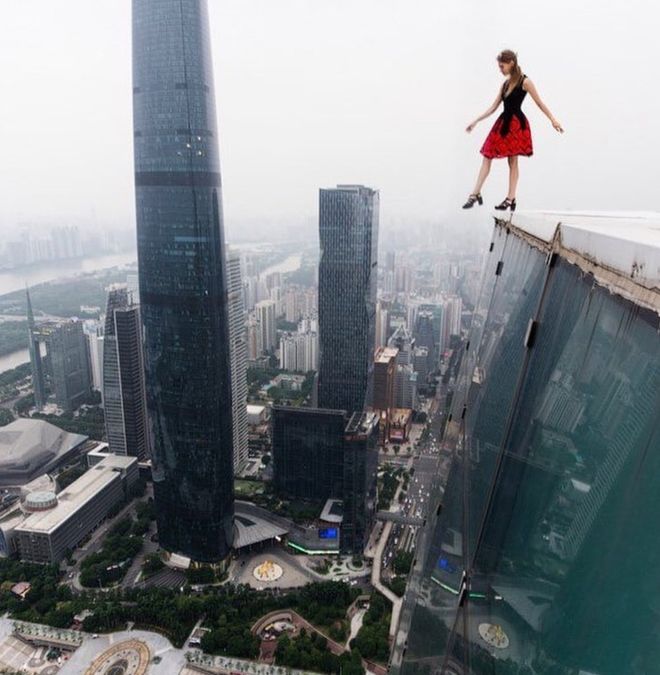
She also climbs high buildings to perform eye-popping feats like a yoga backbend on a narrow ledge, or a ballerina’s arabesque on a turret. Sometimes she is pictured smiling casually under a selfie-stick with the ground hundreds of metres below her.
Angela says her grandmother was so upset when she first saw her photos, that she pretended they were Photoshopped.
For her, the presence of the camera is a key part of what she calls her art – although few artistic pursuits are as clearly dangerous.
“Sometimes I just climb up a building without a camera just to see a colourful sunrise or sunset,” she says. “But if you are asking why I film myself, imagine an artist painting all alone in his studio – painting, painting, painting for five years until he is practically drowning in his own work. And he thinks who am I doing this for – is there any point in my work? We need an audience – that is just part of the human condition.”
Apocalypse Wow! Luxury doomsday condo complex is built 15 storeys underground in an old Cold War missile silo – and an apartment can be yours for $1.5million
Complex is designed to survive any apocalypse such as health pandemics, cataclysmic weather and terror attacks
The condos can hold up 70 people with resources to keep them alive for years, as they wait for the dust to settle
They feature flat-screen TVs, swimming pools, a theater, workout area, library, classrooms and a rock climbing wall
The walls, constructed with epoxy-hardened concrete, are 9 feet thick and designed to survive a direct nuclear strike
A single condo in the complex near Concordia in Kansas costs anwhere from $1.5 million up to $3 million
A luxurious doomsday bunker complex designed to comfortably survive any apocalypse has sold out all of its condos – despite the fact that prices range from $1.5 to $3million.
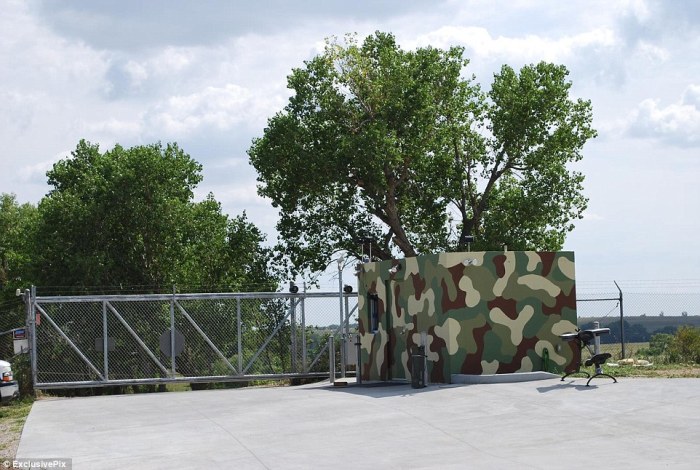
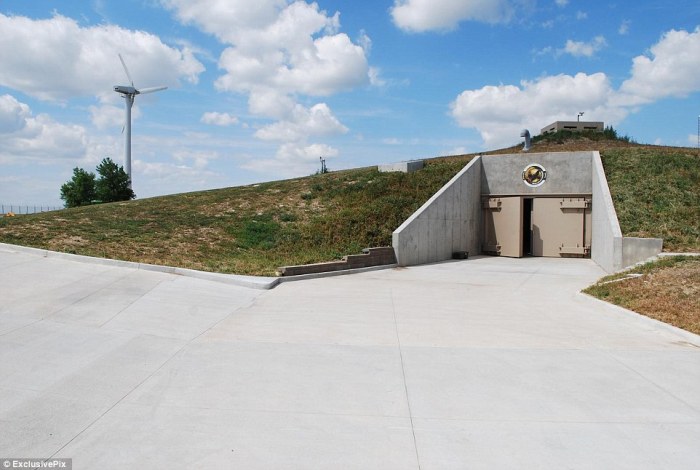
The Survival Condo Project is a luxury complex housed 15 storeys below ground in a former missile silo near Concordia, in Kansas.
It is designed to comfortably survive any apocalyptic disaster such as global health pandemics, cataclysmic weather and terror attacks, including a nuclear one.
The condos are equipped with all the amenities and resources that its residents need to survive for around five years.
The missile silo was originally built by the U.S. Army Corps of Engineers in the 1960s for the Atlas F missile, and there were 72 of them around the country.
The walls of the silo, constructed out of epoxy-hardened concrete, are 9 feet thick and designed to survive a direct nuclear strike.
The survival condos are designed to hold up to 70 people and have enough resources to keep them alive for years, as they wait for the dust to settle.
A single condo is nearly 2,000-square-foot in size and cost anywhere from $1.5 to $3 million.
Larry Hall, the brainchild behind the project, says that the condos are already sold out, but he is currently working on a second.
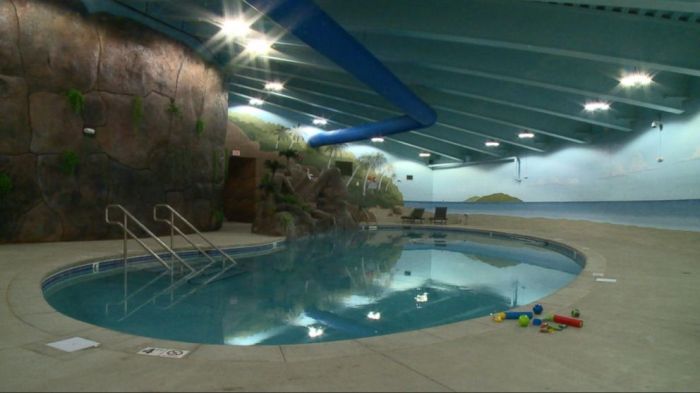
The condos are equipped with a number of modern amenities including flat-screen TVs, a community pool, theater, workout area, classrooms and library, and a minor surgery center.
Each residential unit is provisioned with a five-year supply of freeze-dried and dehydrated survival food per person.
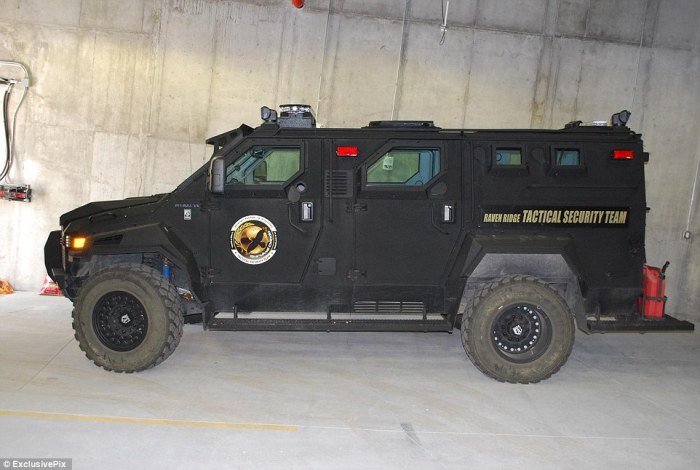
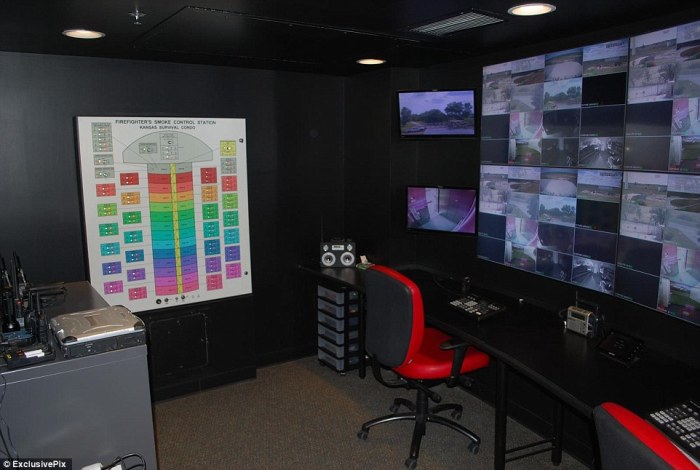
The facility has a military grade security system that includes infrared cameras, proximity sensors, trip sensors, and passive detectors
The air supply for the entire facility is filtered by Nuclear, Biological, and Chemical filters, and the physical air intakes are protected by blast valves that prevent an overpressure air wave created by a nearby explosion from entering the facility and killing those inside.
Power is provided by the local electric grid, with a backup large wind turbine, and a diesel generator, while water is provided from redundant sources and purified for consumption.
On the security aspect, the facility has a military grade security system that includes infrared cameras, proximity sensors, microphones, trip sensors, and passive detectors.
Numerous levels of blast doors are designed to withstand sizable explosives protect the facility’s entrance.
The Survival Condo Project is not the only one of its kind. Elsewhere around the United States, privately owned bunkers in decommissioned military sites are creeping up as a new breed of wealthy survivalist are emerging.
Back-up generators
Industrial washers and dryers
Flat screen portals show real time action on the surface to counter the enclosed reality.
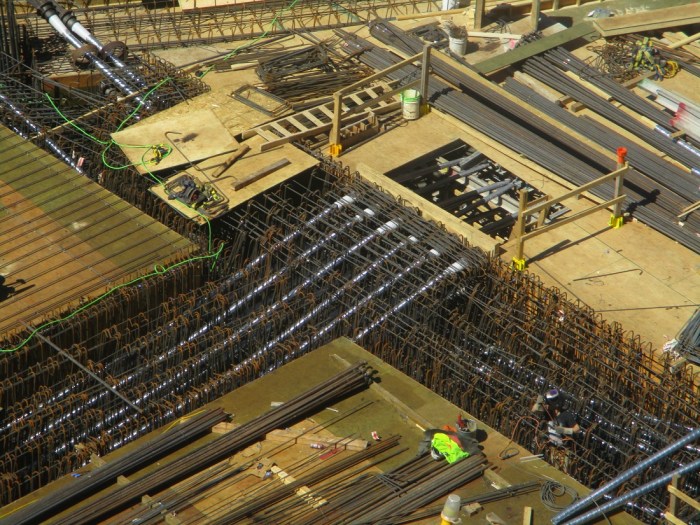
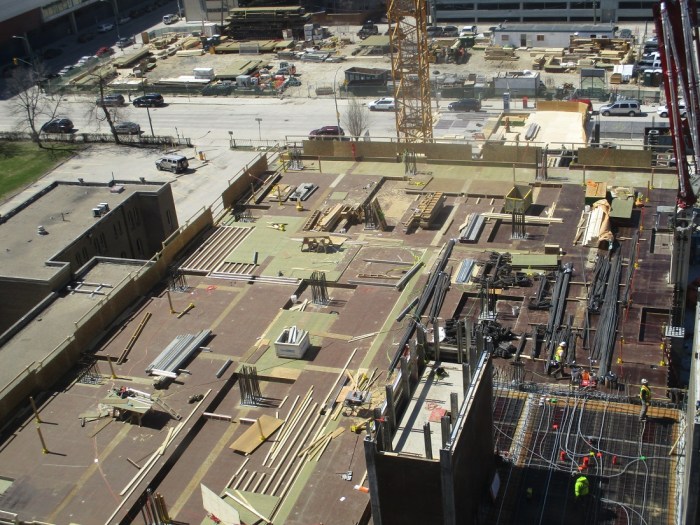
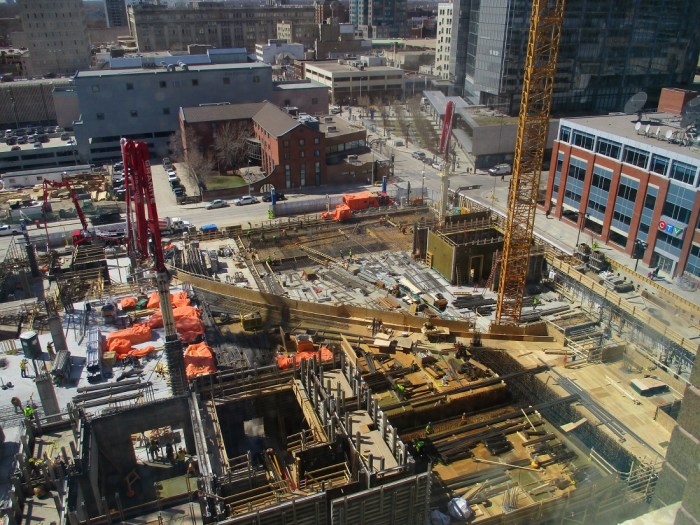
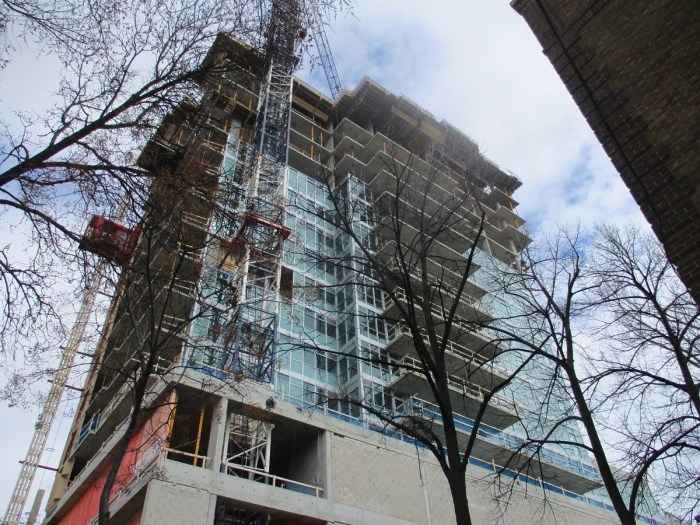
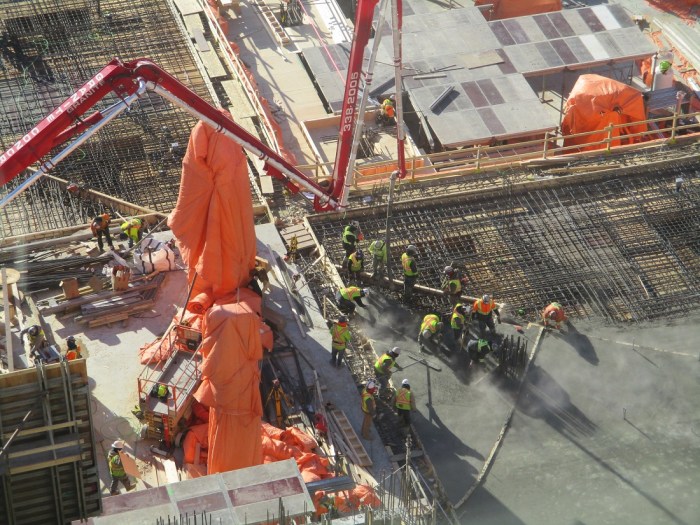
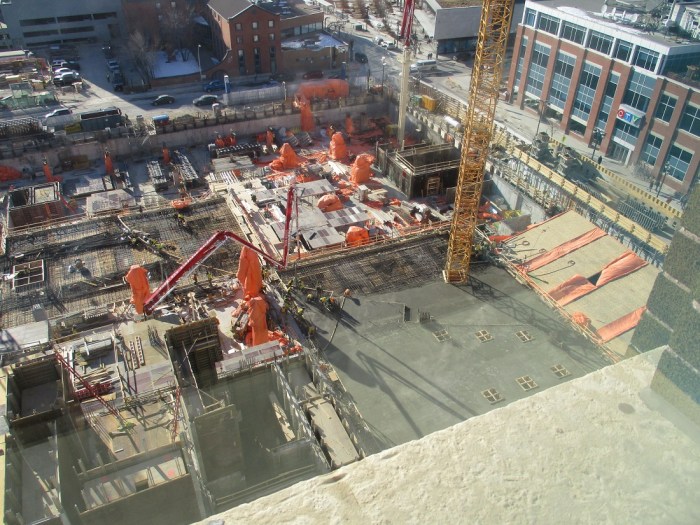
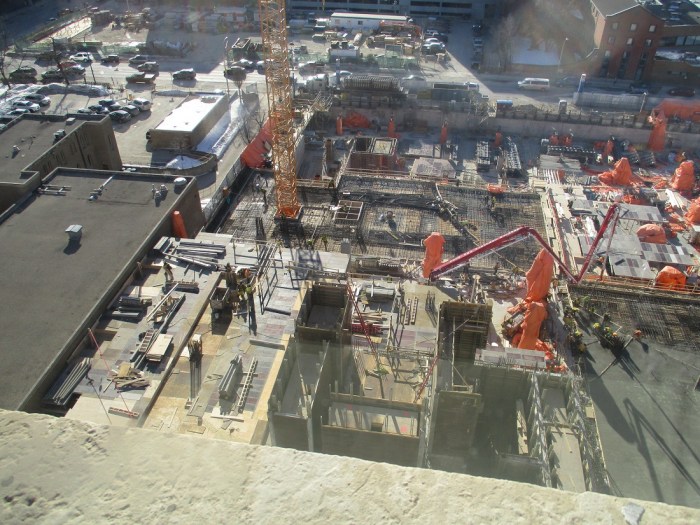
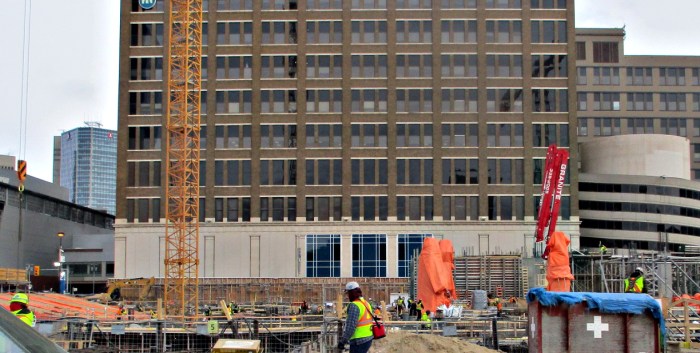
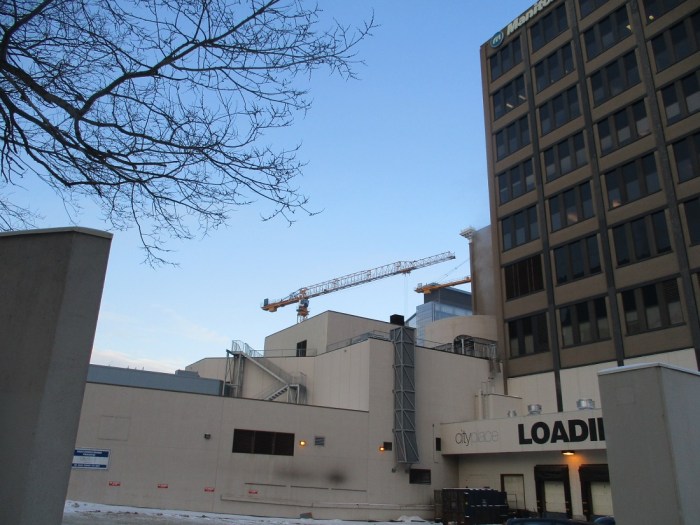
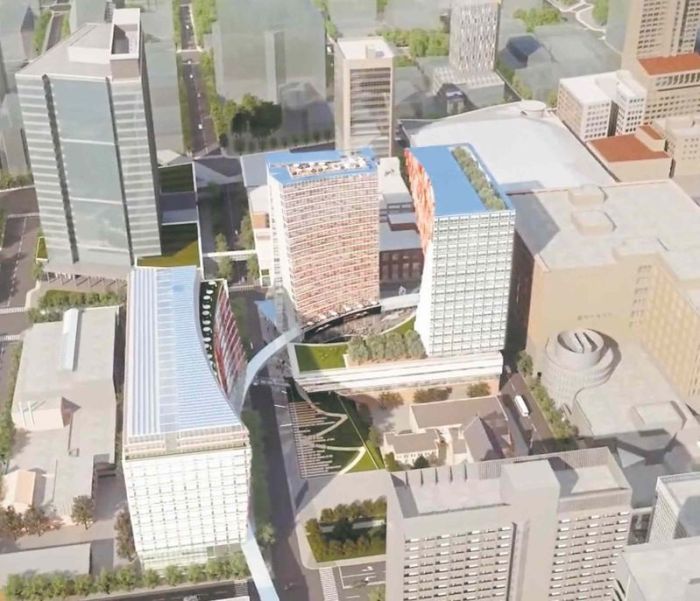
True North Square is a multi high-rise building development in downtown Winnipeg. Four buildings are planned, two are under construction. The workers were laying cement today in very cold weather.

































 The MarkoZen Blog