Wild New Skyscraper in New York City


leonard 56a


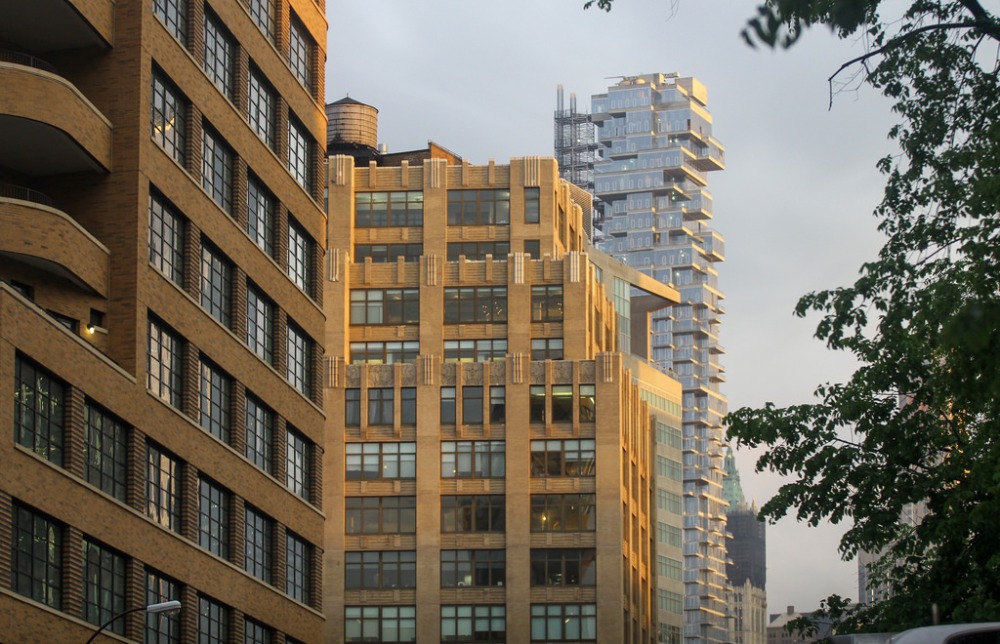
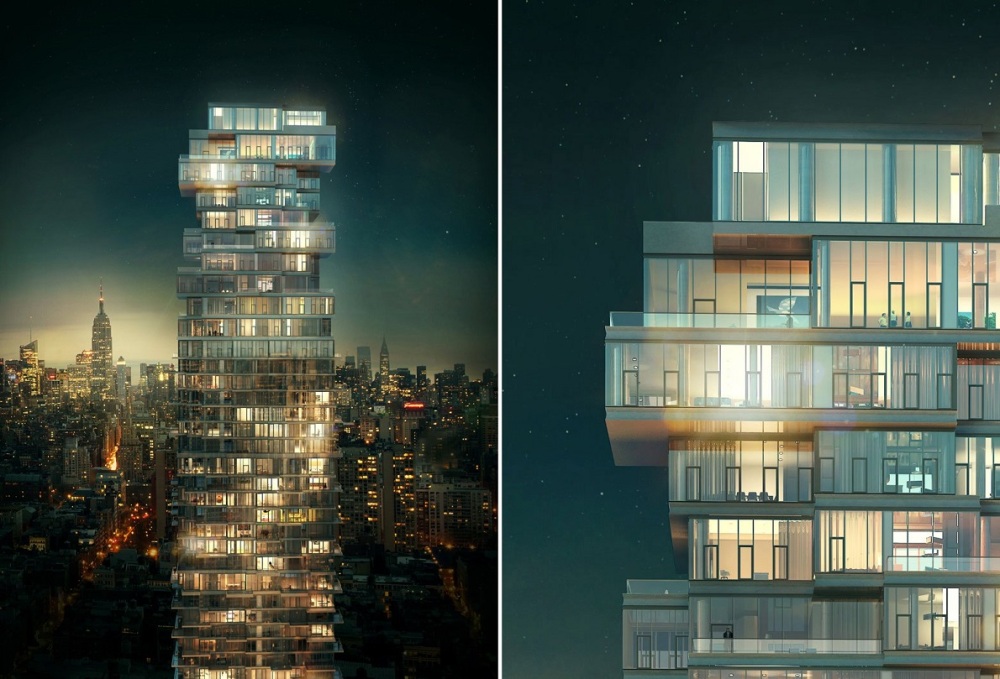
56 Leonard Street is an 821 feet (250 m) tall, 57-story skyscraper on Leonard Street in Tribeca, New York City, United States. Herzog & de Meuron describes the building as “houses stacked in the sky.” It is the tallest structure in Tribeca.

The building has 145 condominium residences priced between US$3.5 million and US$50 million. Residences will range in size from 1,418 to 6,400 square feet (131.7 to 594.6 m2) and will include 2 to 5 bedrooms all with private outdoor space.

As of May 2013, 70% of the building had sold. According to building developer Izak Senbahar, the building was 92% sold in seven months. In June 2013, a penthouse at 56 Leonard went into contract for US$47 million, making it the most expensive residential property ever sold below Midtown Manhattan.

The building was completed in 2016.[4] Due to its cantilevered balconies it has been nicknamed the Jenga building by the media.

leonard 56b


leonard 56


56-Leonard-COmbo

56Leonard_6_2B

It’s all about the ingredients in the concrete

The Pantheon is a building in Rome, Italy, on the site of an earlier building commissioned by Marcus Agrippa during the reign of Augustus (27 BC – 14 AD). The present building was completed by the emperor Hadrian and probably dedicated about 126 AD. He retained Agrippa’s original inscription, which has confused its date of construction.

The building is circular with a portico of large granite Corinthian columns (eight in the first rank and two groups of four behind) under a pediment. A rectangular vestibule links the porch to the rotunda, which is under a coffered concrete dome, with a central opening (oculus) to the sky. Almost two thousand years after it was built, the Pantheon’s dome is still the world’s largest unreinforced concrete dome. The height to the oculus and the diameter of the interior circle are the same, 43.3 metres (142 ft).


Pantheon_Rome-The_Dome


The 4,535 metric tons (4,999 short tons) weight of the Roman concrete dome is concentrated on a ring of voussoirs 9.1 metres (30 ft) in diameter that form the oculus, while the downward thrust of the dome is carried by eight barrel vaults in the 6.4 metres (21 ft) thick drum wall into eight piers. The thickness of the dome varies from 6.4 metres (21 ft) at the base of the dome to 1.2 metres (3.9 ft) around the oculus. The materials used in the concrete of the dome also varies. At its thickest point, the aggregate is travertine, then terracotta tiles, then at the very top, tufa and pumice, both porous light stones. At the very top, where the dome would be at its weakest and vulnerable to collapse, the oculus actually lightens the load.


Pantheon_0918_2013


No tensile test results are available on the concrete used in the Pantheon; however, Cowan discussed tests on ancient concrete from Roman ruins in Libya, which gave a compressive strength of 20 MPa (2,900 psi). An empirical relationship gives a tensile strength of 1.47 MPa (213 psi) for this specimen. Finite element analysis of the structure by Mark and Hutchison found a maximum tensile stress of only 128 kPa (18.5 psi) at the point where the dome joins the raised outer wall.


Pantheon-Roof-from-Gianicolo-2012


The stresses in the dome were found to be substantially reduced by the use of successively less dense aggregate stones, such as small pots or pieces of pumice, in higher layers of the dome. Mark and Hutchison estimated that, if normal weight concrete had been used throughout, the stresses in the arch would have been some 80% greater. Hidden chambers engineered within the rotunda form a sophisticated structural system. This reduced the weight of the roof, as did the elimination of the apex by means of the oculus.


Pantheon-occulus


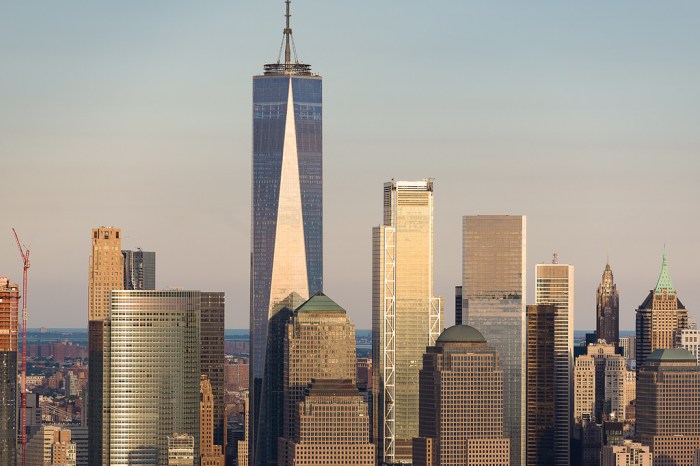
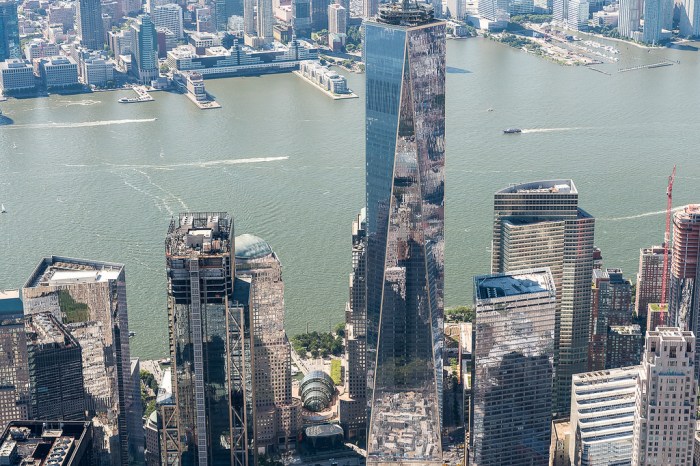
One World Trade Center (also known as the Freedom Tower1 World Trade CenterOne WTC and 1 WTC) is the main building of the rebuilt World Trade Center complex in Lower Manhattan, New York City. It is the tallest building in the Western Hemisphere, and the fourth-tallest in the world. The supertall structure has the same name as the North Tower of the original World Trade Center, which was completely destroyed in the terrorist attacks of September 11, 2001. The new skyscraper stands on the northwest corner of the 16-acre (6.5 ha) World Trade Center site, on the site of the original 6 World Trade Center. The building is bounded by West Street to the west, Vesey Street to the north, Fulton Street to the south, and Washington Street to the east.


1 wtc8


In early 2010, Eastern Concrete Materials, a U.S. Concrete company, began producing high-strength concrete for One World Trade Center (WTC). Within three years, the New York City-based producer had supplied 150,000 cubic yards of ready-mix for the tower’s superstructure—with a concrete strength that has never been used on such a scale in building construction. Collavino Construction Co. then pumped this mix as high as 103 stories.
new1

Construction began in 2006 and was completed in 2014. Its supporting columns are made of steel and concrete ranging in strength from 8600 psi to 14,000 psi. Columns on the first 40 floors are made from 12,000-14,000-psi concrete and the upper floors with 8,600–10,000-psi mix designs.

The ready-mixed concrete was pumped by Collavino’s crews to the highest elevation to which concrete has ever been pumped in the Americas. Because the mix design was so workable, pumping was accomplished with a single pump that moved the concrete directly from the ground to the top story, instead of to an intermediate station where it would have been remixed before being transferred to a second pump.

The Trump World Tower, the tallest all-residential building in the world when completed in 2001 and the tallest in New York until the 76-story Beekman Tower, engineered by WSP Cantor Seinuk, brought another technological marvel to New York: “super” cement. The super or high-strength concrete is produced by blending fly ash, slag cement and silica fume with concrete. Super high-strength concrete cannot be produced with only concrete.

Typically, the high-strength concrete used in skyscraper cores (in the 1990’s) would have a compressive strength of 8,000 to 10,000 pounds per square inch (psi). Because Trump World Tower is a rather slender high-rise, WSP Cantor Seinuk specified concrete compressive strength of 12,000psi for the first time in New York City.

“On One World Trade Center WSP Cantor Seinuk’s engineers worked on specifying the compressive strength and modulus of elasticity,” says Marcus. “But we needed even higher compressive strength—14,000 psi—for the taller One World Trade building.”

1wtc (3)

View from the top

Most of the concrete has gone into the tower’s monolithic pedestal. From a footprint of 200-by-200 feet, it rises up for 70 feet. Above ground, this has specially reinforced concrete to defend the building from the blast of a street-level bomb. Below grade, the reinforced-concrete structure is engineered to protect the tower’s structural integrity from a bomb even bigger than the one that exploded in 1993 in the World Trade Center’s parking garage.

 

cement

new2

Art Museum in Austria Looks Like an Alien Blob with Snorkels

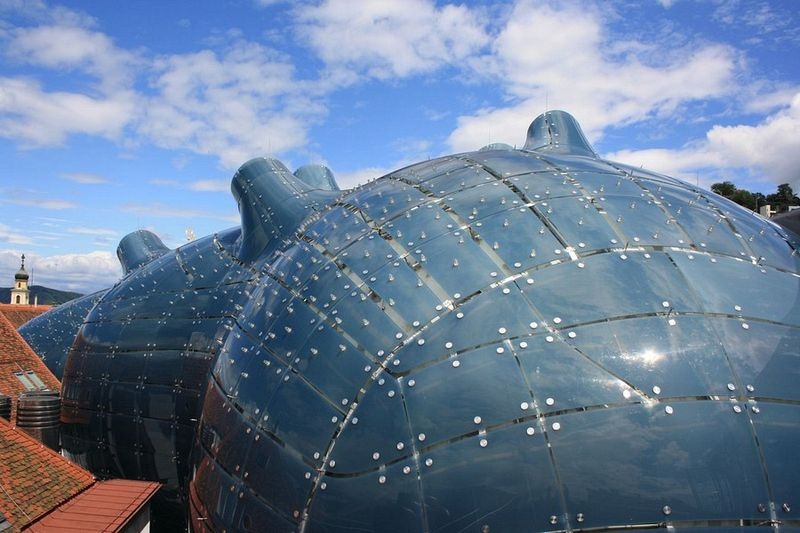
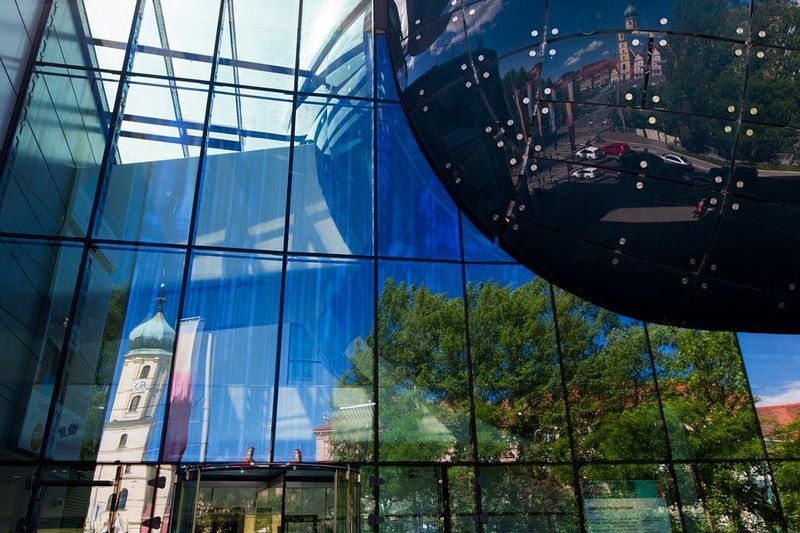
The Kunsthaus Graz Art Museum in Graz, Austria, is a gigantic blob-shaped building with a dozen or so tube like nozzles, acting as windows, that stick out from its curved roof, giving the structure an undeniable alien creature like look. Indeed, its designers, London architect Peter Cook and Colin Fournier, have themselves named the building the “Friendly Alien”. Inside the beast’s belly are two huge floors for modern art exhibitions.

Located on the west bank of the River Mur in the historic center, the Graz Art Museum was built as part of the European Capital of Culture celebrations in 2003, and has since become an architectural landmark in Graz.

The building’s roof is made from thousands of acrylic glass panels that generates energy with built-in photovoltaic panels. The outer skin is embedded with some nine-hundred fluorescent rings that can be individually programmed, creating a work of art on the structure itself.


00blob


00blob1


00blob2

Good God is this thing ugly!


00blob3


00blob4


00blob5


00blob6

It just doesn’t fit to the surrounding buildings and architecture.


111111111


111111111a


111111111b


Ten of the World’s Largest Churches

1. St. Peter’s Basilica (Vatican City, Rome)

church-st-peter

church-st-peters

2. The Basilica of the National Shrine of Our Lady Aparecida, Aparecida, Brazil.

basilica_of_the_national_shrine_of_our_lady_of_aparecida_2007


basilica1


3. The Cathedral of Saint Mary of the See, better known as Seville Cathedral, Seville (Andalusia, Spain).


sevilla_cathedral_-_southeast


seville


4. The Cathedral of St. John the Divine, officially the Cathedral Church of Saint John: The Great Divine in the City and Diocese of New York, is the cathedral of the Episcopal Diocese of New York.


Enclave at the Cathedral, 400 West 113th Street, New York, NY Handel Architects The Brodsky Organization Nancy Packes Inc. Rendering by Archpartners


new-york-photos-church-riverside


5. Milan Cathedral is the cathedral church of Milan, Italy.


milano


milano1


6. The Basilica of Our Lady of Licheń is a Roman Catholic church located in the village of Licheń Stary near Konin in the Greater Poland Voivodeship in Poland.


poland


poland1


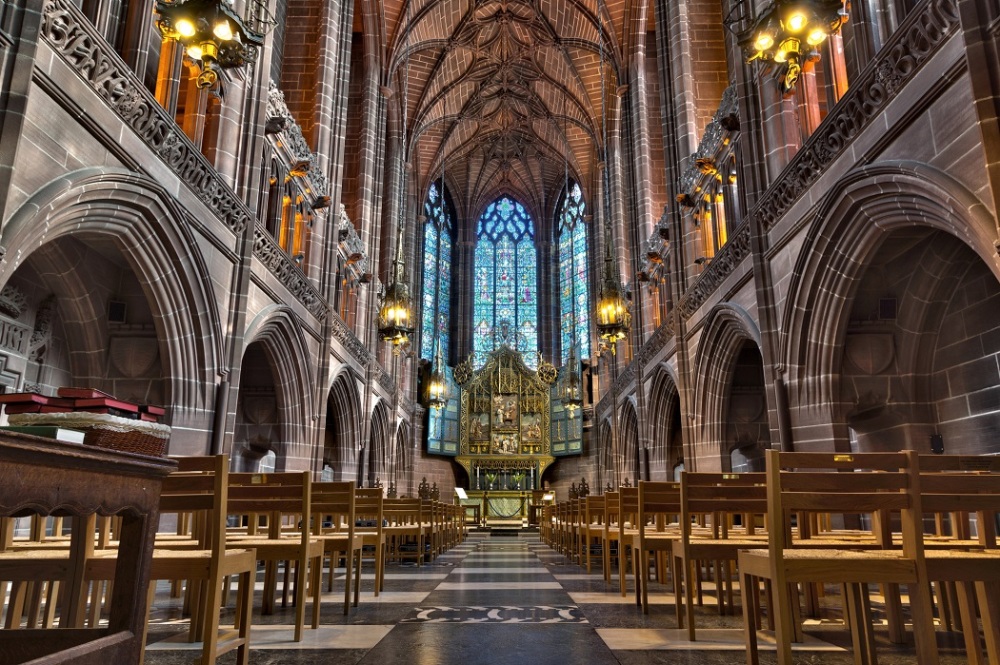
7. Liverpool Cathedral is the Church of England Cathedral of the Diocese of Liverpool, built on St James’s Mount in Liverpool and is the seat of the Bishop of Liverpool.


Birdseye view of the Liverpool Cathedral in Liverpool, UK

The total external length of the building, including the Lady Chapel (dedicated to the Blessed Virgin), is 207 yards (189 m) making it the longest cathedral in the world; its internal length is 160 yards (150 m). With a height of 331 feet (101 m) it is also one of the world’s tallest non-spired church buildings and the third-tallest structure in the city of Liverpool.

liverpool-cathedral-miquel-mendez


8. Ulm Minster is a Lutheran church located in Ulm, Germany.


ulmer_munster-westfassade


It is the tallest church in the world, and the 4th tallest structure built before the 20th century, with a steeple measuring 161.5 metres (530 ft) and containing 768 steps.

ulm-muenster-blickzumchor-061104_adj


9. The Cathedral of Our Lady is a Roman Catholic cathedral in Antwerp, Belgium.


antwerp_july_2015-1a


antwerp1


10. Saint Joseph’s Oratory of Mount Royal is a Roman Catholic minor basilica and national shrine on Westmount Summit in Montreal, Quebec. It is Canada’s largest church.


montreal


montreal1


montreal-saint-josephs-oratory-002


Striking Skyscraper in Chicago

Aqua is an 87-story mixed-use residential skyscraper in the Lakeshore East development in downtown Chicago designed in the Modern architectural style.

Aqua was designed by Jeanne Gang, principal and founder of Studio Gang Architects, and it is her first skyscraper project.  This is the largest project ever awarded to an American firm headed by a woman.  Loewenberg & Associates are the architects of record, led by James Loewenberg.

The building contains 55,000 square feet (5,100 square meters) of retail and office space, in addition to 215 hotel rooms (floors 1-18), 476 rental residential units (floors 19-52), and 263 condominium units & Penthouses (floors 53-80).  Aqua is the first downtown building to combine condos, apartments and a hotel.

The name ‘Aqua’ was assigned to the building by Magellan Development Group LLC. It fits the nautical theme of the other buildings in the Lakeshore East development, and is derived from the wave-like forms of the balconies; the tower’s proximity to nearby Lake Michigan also influenced the name.

Sustainability was also an important factor in Aqua’s design. Gang and her team refined the terrace extensions to maximize solar shading, and other sustainable features will include rainwater collection systems and energy-efficient lighting. The green roof on top of the tower base will be the largest in Chicago.

Construction started 2007
Completed 2009
Cost US$300 million
Owner Aqua Realty Holdings LLC
Height 261.8 m (859 ft)
Technical details
Floor count 87
1 below ground
Floor area 1,990,635 sq ft (184,936.0 m2)
Lifts/elevators 24

Imagine having cocktails on the 75th floor balcony.  One hell of a view.  And drinking a few cocktails is the only way I would walk onto that balcony.

The World’s Most Imposing Statue


You’d expect a God of War statue to look pretty epic. But there’s epic and then there’s EPIC, and this enormous statue of Guan Yu, a famous general in Chinese history who was later deified, is most definitely EPIC.

The statue has just been unveiled in Guan Yu Park in Jingzhou, China. It’s 58 metres (190ft) tall and weighs over 1,320 tonnes, and it contains over 4,000 strips of bronze. It was designed by Han Meilin, who is probably best known for his designs of the 2008 Beijing Olympics mascots, and the monument is so big that there’s even an 8,000sqm museum inside it! Guan Yu lived during China’s turbulent Three Kingdoms period. He carried an axe-like weapon called a Green Dragon Crescent Blade, which has been immortalised with him as part of the statue. The only difference is that the weapon now weighs 136 tonnes! Did we mention this statue was epic?


guan-yu-statue-3


CALIFORNIA’S BIZARRO ‘FLINTSTONE HOUSE’ SELLS FOR $2.8 MILLION

Some lucky schmoe just bought one of the coolest houses in the United States.

The Hillsborough, California home affectionately known as “The Flintstone House” which has been on the market since 2015, sold this week for $2.8 million—$1.4 million less than the original asking price.

The last previous sale of the home was for $800,000 in 1996.

The experimental home, built in 1976, was constructed using steel rebar and wire mesh frames built over large inflated aeronautical balloons and sprayed with high-velocity concrete known as gunite or “shotcrete.”

The home, also known as “Dome House,” “Gumby House,” or “Bubble House,” became more commonly known as “Flintstone House” when it was painted completely orange, from its original white, in 2000.

According to Atlas Obscura, there have been many urban legends surrounding the home’s previous ownership. George Lucas was once rumored to have owned the house. It has also been speculated that O.J. Simpson made a bid following his 1995 trial and that several famous Silicon Valley investors have lived there.

The new buyer of the home has not been disclosed.


Photos via Alain Pinel Realtors


Dangerousminds.net


Living in the Clouds of Ostentatious Luxury

park1

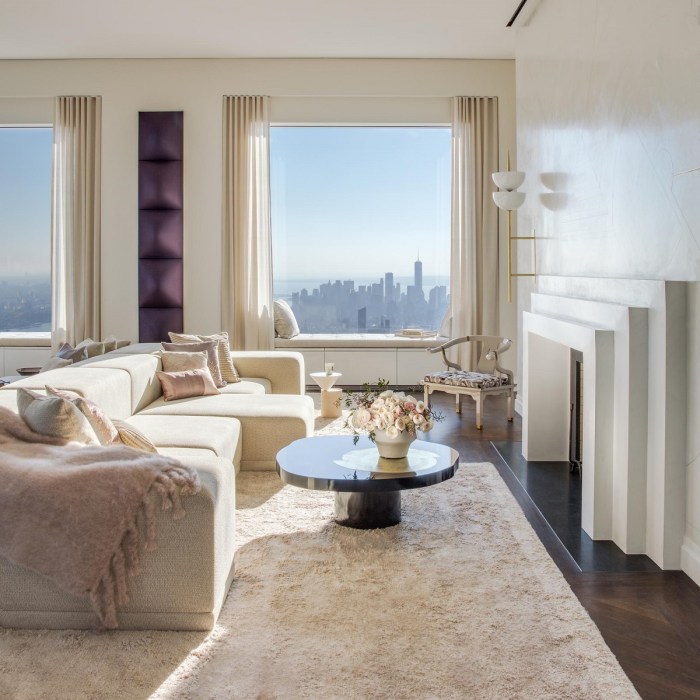
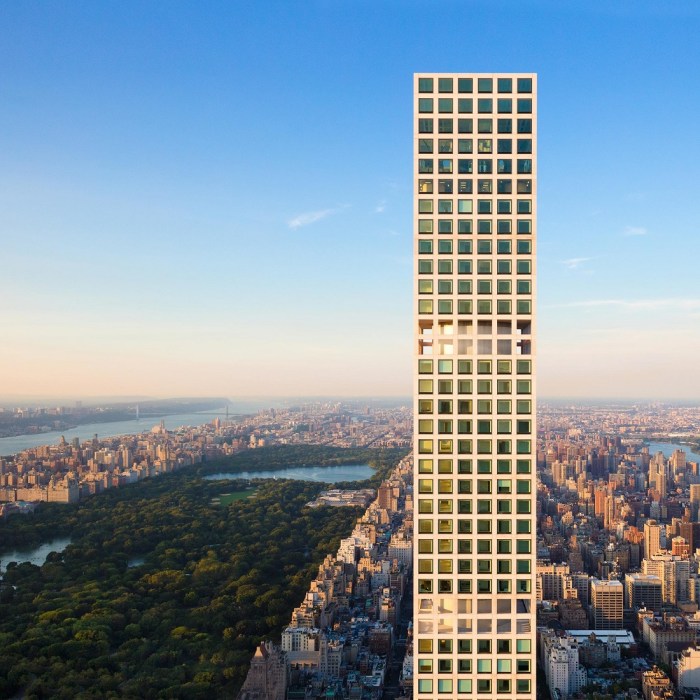
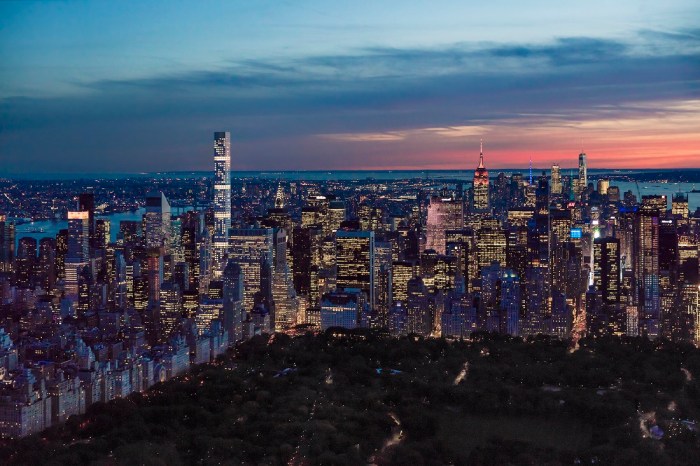
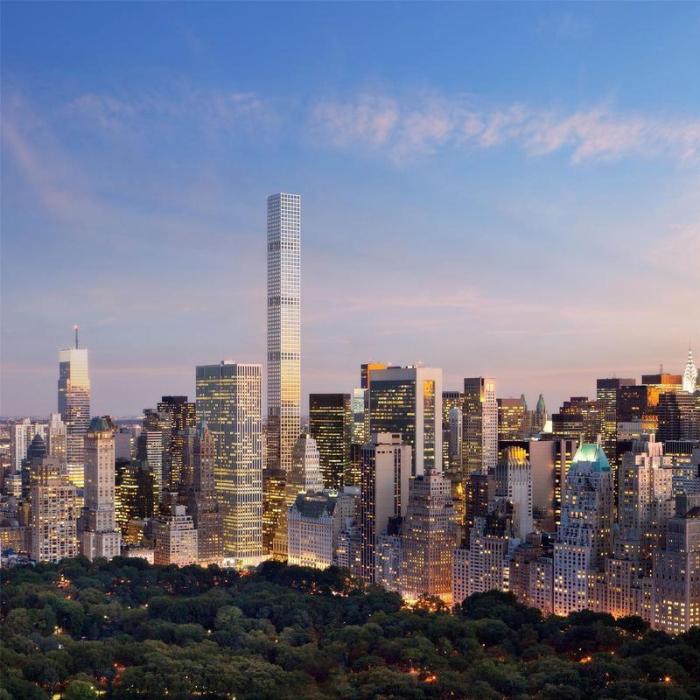
432 Park Avenue is a residential skyscraper in Manhattan, New York City that overlooks Central Park. Originally proposed to be 1,300 feet (396.2 meters) in 2011, the structure topped out at 1,396 ft (425.5 m). It was developed by CIM Group and features 104 condominium apartments. Construction began in 2012 and was completed on December 23, 2015.

The building required the demolition of the 495-room Drake Hotel. Built in 1926, it was purchased for $440 million in 2006 by developer Harry Macklowe and razed the next year. Its footprint became one of New York’s most valuable development sites due to its location, between East 56th and 57th Streets on the west side of Park Avenue.
As completed, 432 Park Avenue is the third tallest building in the United States, and the tallest residential building in the world. It is the second-tallest building in New York City, behind One World Trade Center, and ahead of the Empire State Building.

park

The floor-to-floor height of each of the 85 stories is 15 ft 6 in (4.72 m), with 10 in (25 cm) thick floor slabs, although to dampen the acceleration from wind loads, upper floors have slabs up to 18 in (46 cm) thick to add more mass. Also aimed at reducing the potentially uncomfortable effects of swaying due to wind vortex loading on such a flexible tower, the window grid and interior space of 2 floors between every 12 occupied floors are left open to allow the wind to pass through. These floors also contain modularized mechanical services for the six floors above and below to reduce ductwork. In addition two tuned mass dampers are located at the top of the tower and in the outriggers of some of the mechanical floors to help damp the motion.

park5

park6

Height
Architectural 1,396 ft (425.5 m)
Tip 1,396 ft (425.5 m)
Top floor 1,286 ft (392.1 m) (occupied)
Technical details
Floor count 96 + 3 below ground
Floor area 412,637 square feet (38,335 m2)
Lifts/elevators 6

View of Central Park from the top floor

park5 (2)

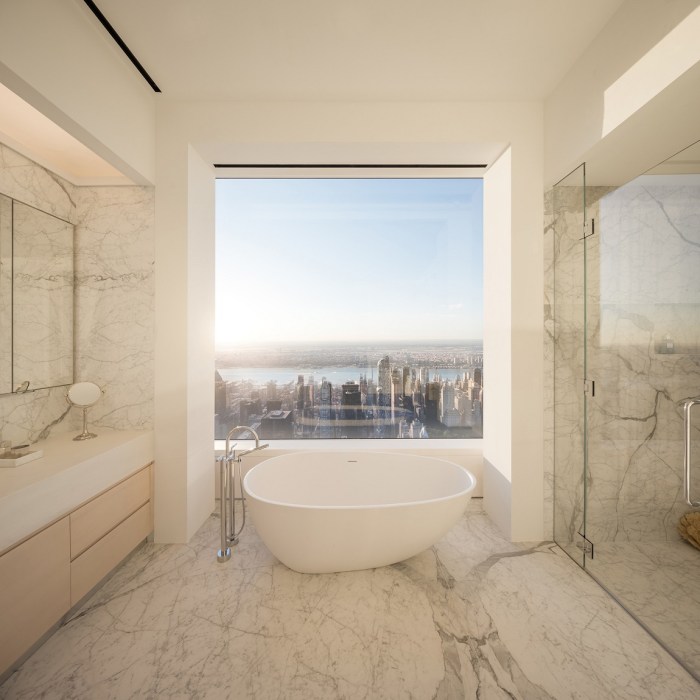
The tower’s condominium units feature high ceilings, and range from a 351-square-foot (32.6 m2) studio to a six-bedroom, seven-bath penthouse with a library, which sold for $95 million to real estate mogul Fawaz Al Hokair. The building’s amenities include 12-foot (3.7 m) golf training facilities and private dining and screening rooms.

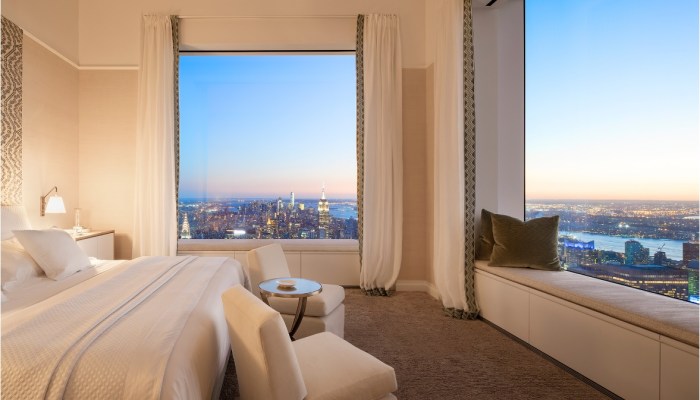
The first sale of apartment #35B was reported in January 2016 for $18.116 million, more than the $17.75 million asking price. Ten additional apartments were available at the time ranging from $17.4 to $44.25 million. #35B covers 4,000 square feet (370 m2), one half of the 35th floor of the tower, and contains three bedrooms and four-and-a-half baths. Each face has six 10 by 10 ft (3.0 by 3.0 m) windows, which for #35B, face south and west with views of Central Park.

park3

park4

The multi-millionaires get their way and play high.

000park

50th Anniversary of Habitat 67

habitat1

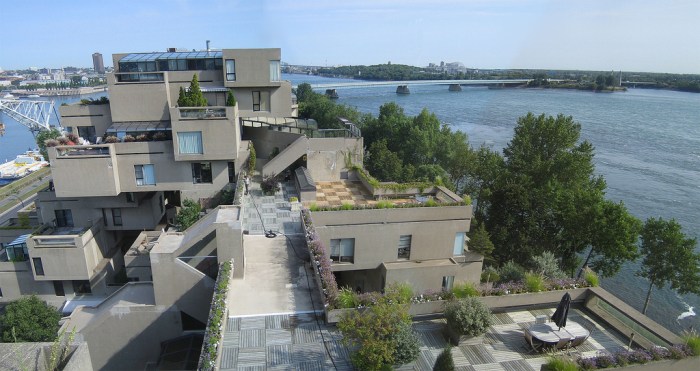
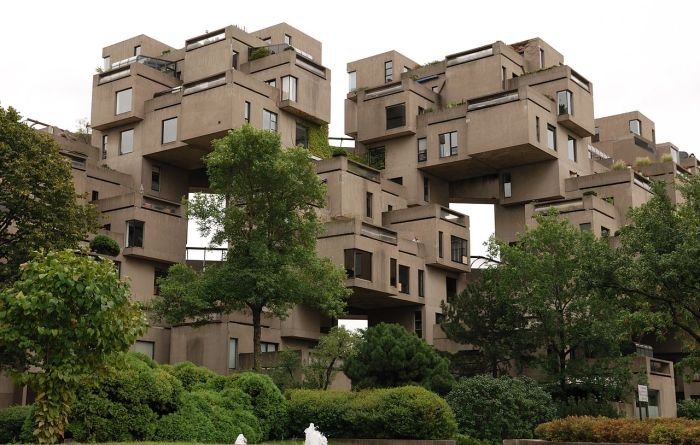
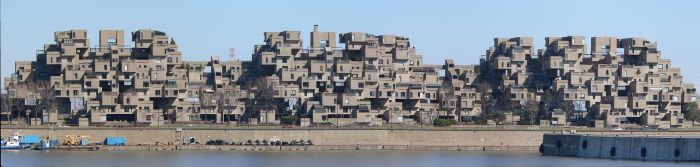
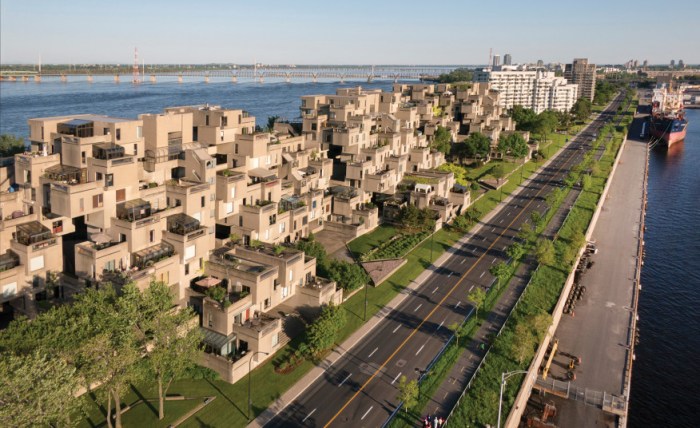
Habitat 67, or simply Habitat, is a model community and housing complex in Montreal, Quebec, Canada, designed by Israeli/Canadian architect Moshe Safdie. It was originally conceived as his master’s thesis in architecture at McGill University and then built as a pavilion for Expo 67, the World’s Fair held from April to October 1967. It is located at 2600 Avenue Pierre-Dupuy on the Marc-Drouin Quay next to the Saint Lawrence River. Habitat 67 is widely considered an architectural landmark and one of the most recognizable and spectacular buildings in both Montreal and Canada. In 2017, Canada Post issued a commemorative stamp for the 50th anniversary of Expo 67 featuring the structure.

Habitat_67_(Montreal)

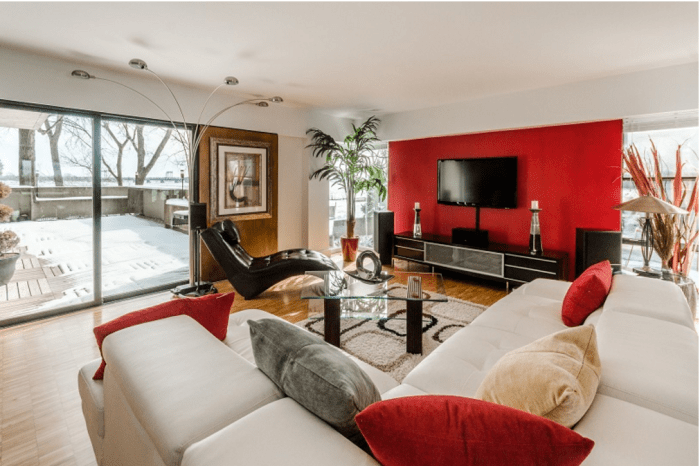
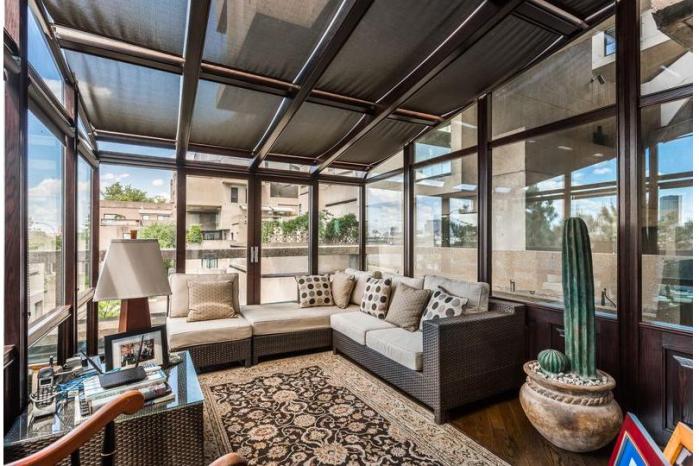
Habitat 67 comprises 354 identical, prefabricated concrete forms arranged in various combinations, reaching up to 12 stories in height. Together these units create 146 residences of varying sizes and configurations, each formed from one to eight linked concrete units. The complex originally contained 158 apartments, but several apartments have since been joined to create larger units, reducing the total number. Each unit is connected to at least one private terrace, which can range from approximately 20 to 90 square metres (225 to 1,000 sq ft) in size.

Habitat_67_Montreal_Close-up_cropped

habitat

habitat5

Habitat_panorama

habitat3

habitat2

habitat4

The development was financed by the federal government, but is now owned by its tenants, who formed a limited partnership that purchased the building from the Canada Mortgage and Housing Corporation in 1985. Safdie still owns a penthouse apartment in the building.