A couple and their two teenage daughters decided to get away from it all. They were living in the Los Angeles area and got fed up with the fast pace, noise and crazy traffic. Husband and wife are both professionals in television and commute back to L.A. a few days a week. But their home is now located dab smack in the barren desert of Death Valley, California.
There are no neighbours for over 20 miles. The nearest town is 35 miles away. They are out there with the coyotes and eagles. Complete isolation. Strangely enough, it does look quite peaceful, yet invigorating. After all, they are out there with nature in its most pure state.
The house derives most of its power from solar panels. Water is provided from a natural spring nearby.
The desert sun keeps the house perpetually bright.
No swimming pool, but a little hot tub to cool off during the day, or warm up at night.
The Chemosphere is a strange looking house located in the San Fernando Valley area of Los Angeles. It was built in 1960 by by American architect John Lautner. It is a one story octagon with around 2200 square feet (200m2) of living space. Most distinctively, the house is perched atop a concrete pole nearly thirty feet high. This innovative design was Lautner’s solution to a site that, with a slope of 45 degrees, was thought to be practically unbuildable. Access is by a long stairway and a cable railway.
Because of a concrete pedestal, almost 20 feet (6.1 m) in diameter, buried under the earth and supporting the post, the house has survived earthquakes and heavy rains.
The building was first used in a dramatic film as a futuristic residence in the 1964 ABC-TV program “The Outer Limits: The Duplicate Man,” based on a science fiction story by American author Clifford D. Simak. Exterior scenes for the television episode were shot on location; a detailed sound-stage set of the house’s interior was built.
Media caption Mark Lehner: “A space that the builders left to protect the grand gallery?”
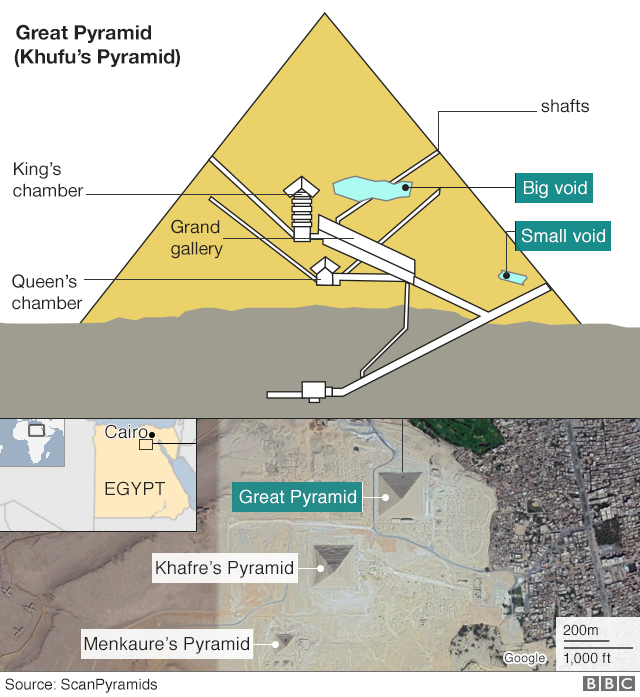
The mysteries of the pyramids have deepened with the discovery of what appears to be a giant void within the Khufu, or Cheops, monument in Egypt.
It is not known why the cavity exists or indeed if it holds anything of value because it is not obviously accessible.
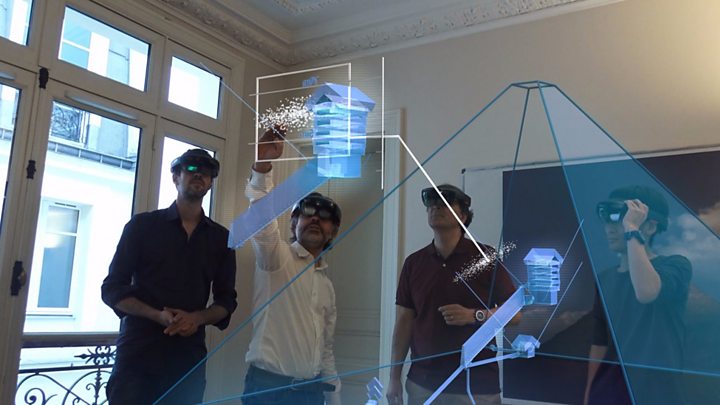
Japanese and French scientists made the announcement after two years of study at the famous pyramid complex.
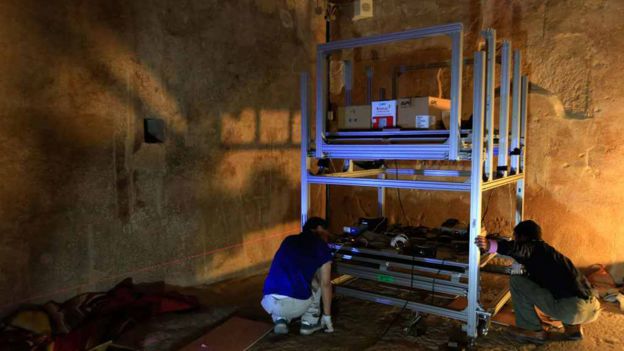
They have been using a technique called muography, which can sense density changes inside large rock structures.
The Great Pyramid, or Khufu’s Pyramid, was constructed during the reign of Pharaoh Khufu between 2509 and 2483 BC.
At 140m (460 feet) in height, it is the largest of the Egyptian pyramids located at Giza on the outskirts of Cairo.
ScanPyramids has already detected a smaller void on the northern face
The new cavity is perhaps 30m long and several metres in height
All three muon technologies sense the same feature in the same place
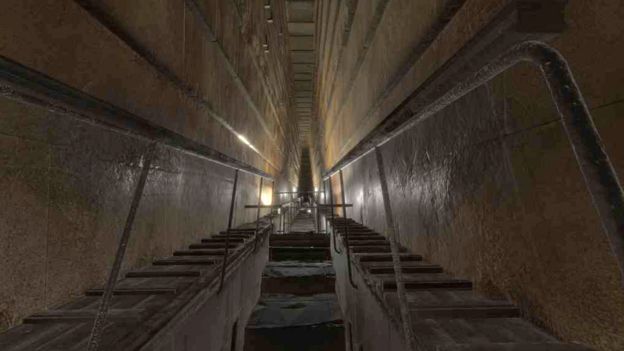
Khufu famously contains three large interior chambers and a series of passageways, the most striking of which is the 47m-long, 8m-high Grand Gallery.
The newly identified feature is said to sit directly above this and have similar dimensions.
“We don’t know whether this big void is horizontal or inclined; we don’t know if this void is made by one structure or several successive structures,” explained Mehdi Tayoubi from the HIP Institute, Paris.
“What we are sure about is that this big void is there; that it is impressive; and that it was not expected as far as I know by any sort of theory.”
Image copyrightSCANPYRAMIDSImage captionThe newly found void is directly above the Grand Gallery
The Scan pyramids team is being very careful not to describe the cavity as a “chamber”.
Khufu contains compartments that experts believe may have been incorporated by the builders to avoid collapse by relieving some of the stress of the overlying weight of stone.
The higher King’s Chamber, for example, has five such spaces above it.
The renowned American archaeologist Mark Lehner sits on a panel reviewing ScanPyramids’ work.
He says the muon science is sound but he is not yet convinced the discovery has significance.
“It could be a kind of space that the builders left to protect the very narrow roof of the grand gallery from the weight of the pyramid,” he told the BBC”s Science in Action programme.
“Right now it’s just a big difference; it’s an anomaly. But we need more of a focus on it especially in a day and age when we can no longer go blasting our way through the pyramid with gunpowder as [British] Egyptologist Howard Vyse did in the early 1800s.”
Media captionMehdi Tayoubi: “It’s a big void, similar to the Grand Gallery, but what is it?”
One of the team leaders, Hany Helal from Cairo University, believes the void is too big to have a pressure-relieving purpose, but concedes the experts will debate this.
“What we are doing is trying to understand the internal structure of the pyramids and how this pyramid has been built,” he told reporters.
“Famous Egyptologists, archaeologists and architects – they have some hypotheses. And what we are doing is giving them data. It is they who have to tell us whether this is expected or not.”
Much of the uncertainty comes down to the rather imprecise data gained from muography.
This non-invasive technique has been developed over the past 50 years to probe the interiors of phenomena as diverse as volcanoes and glaciers. It has even been used to investigate the failed nuclear reactors at Fukushima.
Muography makes use of the shower of high-energy particles that rain down on the Earth’s surface from space.
When super-fast cosmic rays collide with air molecules, they produce a range of “daughter” particles, including muons.
These also move close to the speed of light and only weakly interact with matter. So when they reach the surface, they penetrate deeply into rock.
But some of the particles will be absorbed and deflected by the atoms in the rock’s minerals, and if the muon detectors are placed under a region of interest then a picture of density anomalies can be obtained.
The ScanPyramids team used three different muography technologies and all three agreed on the position and scale of the void.
Sébastien Procureur, from CEA-IRFU, University of Paris-Saclay, emphasised that muography only sees large features, and that the team’s scans were not just picking up a general porosity inside the pyramid.
“With muons you measure an integrated density,” he explained. “So, if there are holes everywhere then the integrated density will be the same, more or less, in all directions, because everything will be averaged. But if you see some excess of muons, it means that you have a bigger void.
“You don’t get that in a Swiss cheese.”
The question now arises as to how the void should be investigated further.
Jean-Baptiste Mouret, from the French national institute for computer science and applied mathematics (Inria), said the team had an idea how to do it, but that the Egyptian authorities would first have to approve it.
“Our concept is to drill a very small hole to potentially explore monuments like this. We aim to have a robot that could fit in a 3cm hole. Basically, we’re working on flying robots,” he said.
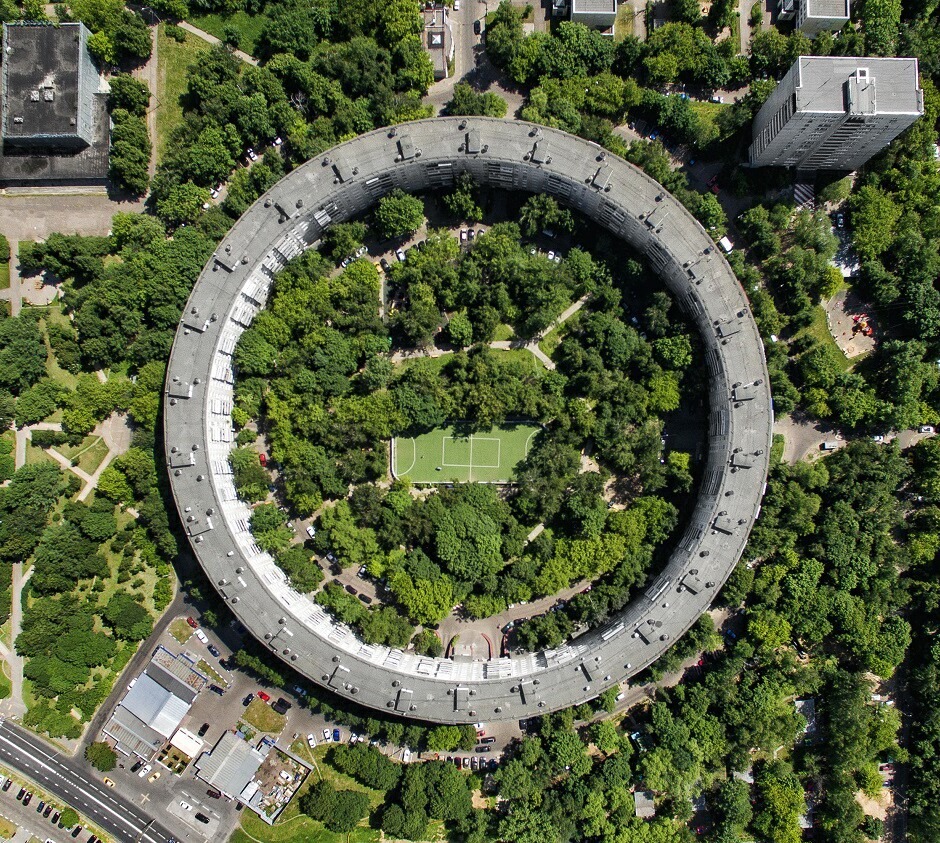
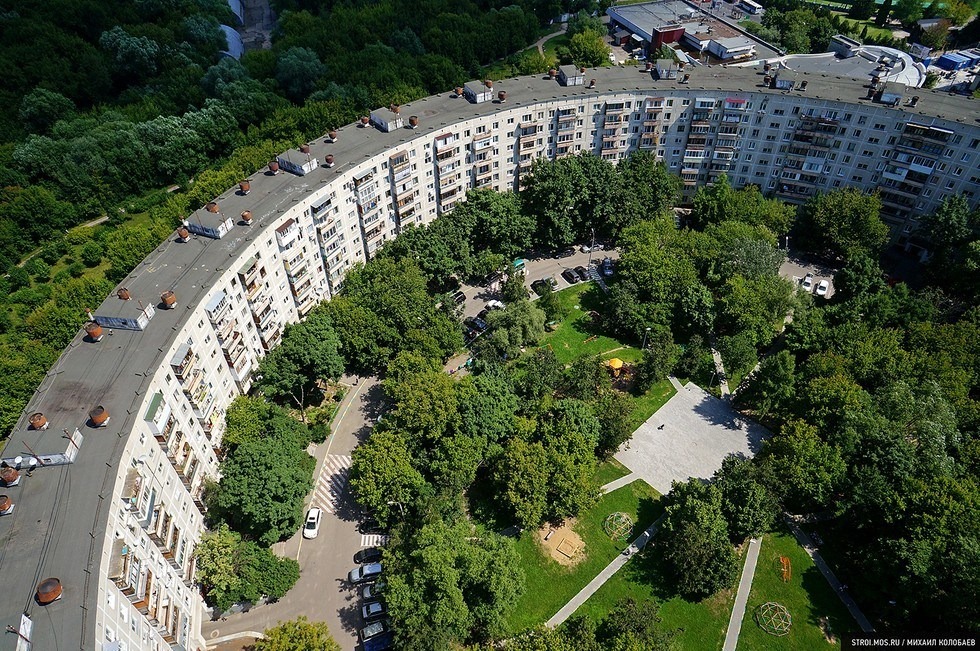
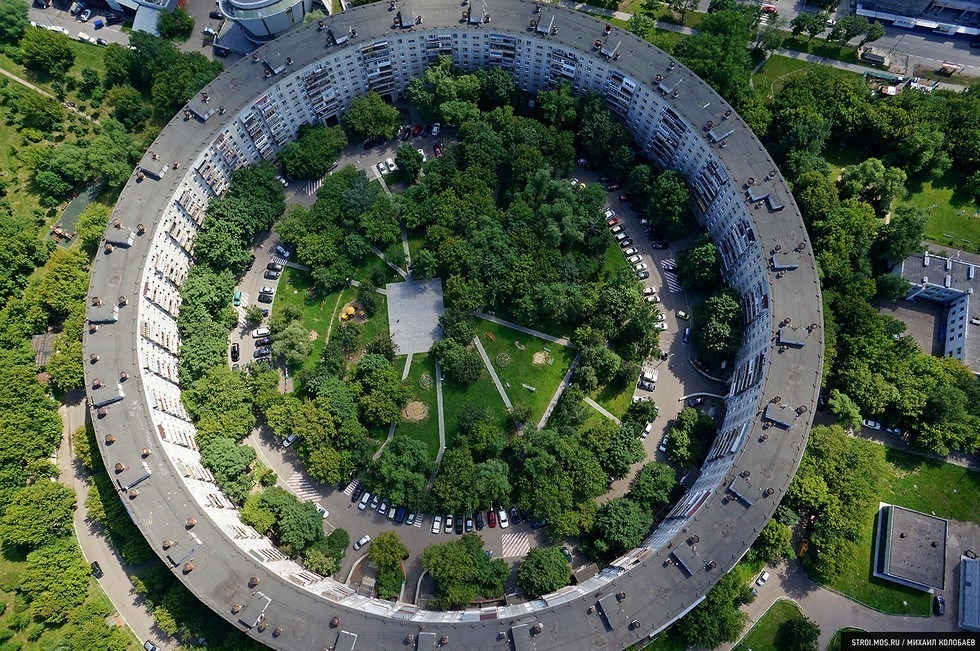
In the early 1970s, Russian architect Evgeny Stamo and engineer Alexander Markelov came up with plans for an unusual house in the capital city Moscow. The house was to be shaped like a ring, about 150 meters across, enclosing a large inner courtyard with playgrounds and green spaces. The building was to have over nine hundred apartments, and all the necessary services and facilities, including shops, a pharmacy, a laundry room, a studio, post office, and so on. When completed in 1972, the authorities were so impressed that plans for more such house across Moscow were drawn up.
At that time, the Summer Olympic Games of 1980, which was to be hosted by the Soviet Union, was approaching, and the city decided to build five similar ring-shaped houses to symbolize the event. However, by the time the second ring house went up in 1979, on Dovzhenko street, the project was already shelved. The Soviet Union was on the brink of an economic collapse, and the buildings, it was realized, were too expensive to maintain. They are also bulky and inconvenient.
Besides, the proposed location of the buildings were spaced too far apart to provide any meaningful association with the five Olympic rings. Even if it did, a pedestrian could never see the rings from the street level or appreciate the composition.
Today, both buildings are still used as apartments. Each building has nine floors and over twenty entrances. Some say that finding the right entrance and locating the correct apartment is extremely difficult.
Locals affectionately call them the “bagel house”.
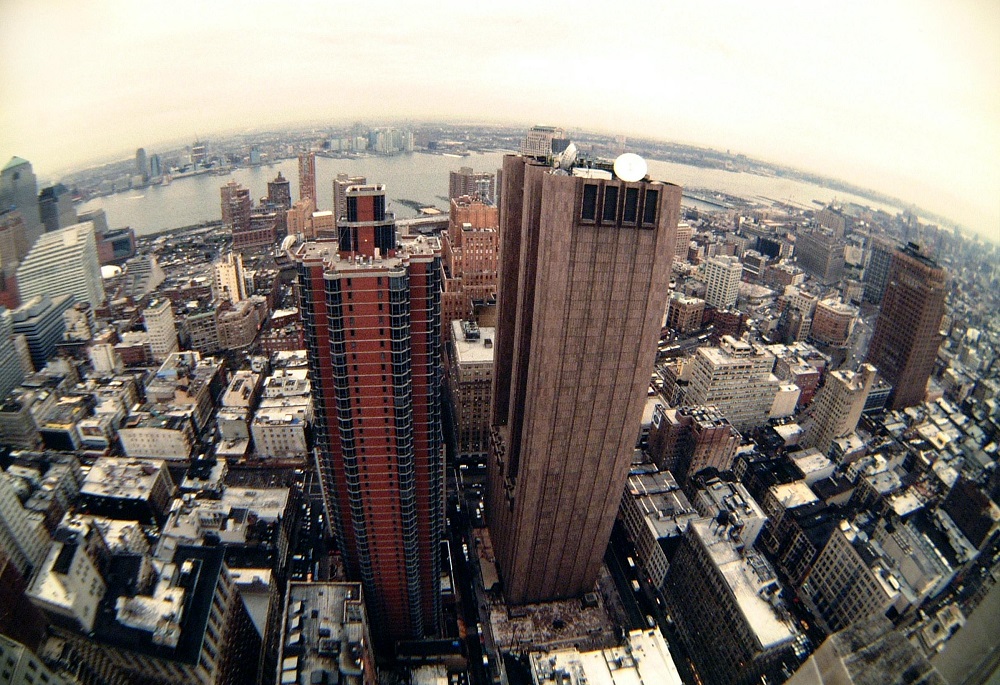
Standing at 33 Thomas Street in the Civic Center neighborhood of New York City is a 550-foot tall monolithic, granite-clad, concrete building. Even in a city like New York, where tall buildings are typical, people passing by would look up to gaze at this intimidating structure —their attention drawn not by the building’s height but by its fortress-like appearance. Aside from a couple of ventilation openings on the sides, the building’s bare concrete slab façade is without a single window.
The Long Lines Building is owned by the multinational telecom company AT&T, and is indeed an impenetrable fortress. When it was built in 1974, AT&T asked architect John Carl Warnecke to design a structure that could withstand a nuclear blast and protect its occupants from fallout for up to two weeks after the attack. Such concerns were not uncommon at that time, and AT&T wanted to be sure that their expensive equipment stayed undamaged.
The building was originally built to house AT&T’s solid-state switches and other equipment for the company’s long distance telephone lines, hence the name Long Lines Building. These switches required a high level of security and space, so the floors of the building are taller than average. Each floor is 18 feet high, so even though the building is as high as a 40 story tower, it has only 29 floors. The floors are also designed to bear an extremely large amount of weight.
The building continued to function as AT&T’s long distance telephone exchange until 1999. After that AT&T vacated the building and moved a few blocks away. The building is still used for telephone switching by some local exchange carriers, but some of the space is also used as a high security datacenter.
Since AT&T moved out, the building has been referred to by its street address 33 Thomas St., like many major New York City commercial buildings.
The vast majority of Muscovite’s live in apartment buildings. In the Soviet era private property was sacrilegious. It was a communal society from top to bottom. Under the later Soviet regimes people could apply to live in the Dachas – country houses just outside the city. To get into a Dacha one had to be extremely pro-regime and wait on a very long list. It was a type of reward.
Almost a 100 percent of Moscow residents live in high-rise apartment buildings.
Because there are so many tall apartment buildings, Moscow has more elevator lifts than any other city in the world.
How about living in the suburbs? Some people do indeed live at their dachas (and in that case these are more like country houses), but there is no such thing as suburbia in the “American way of thinking”. People do not move to suburbs when they start families and want to raise kids. People want to have an apartment in the city as the permanent home and dacha as a summer-house for weekends. And those people, who do live outside of the city, but work in the center are heavily penalized for the opportunity to have fresh air by sitting in traffic jams on their way to and from work for many hours every day.
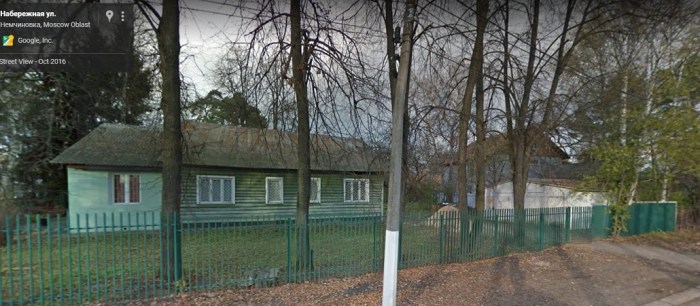
So, 99% of Russians, living in the city do live in apartments. To have a private house within the city limits is super rare. There are just several townhouse communities in Moscow and all of them were established in the recent decade or two.*
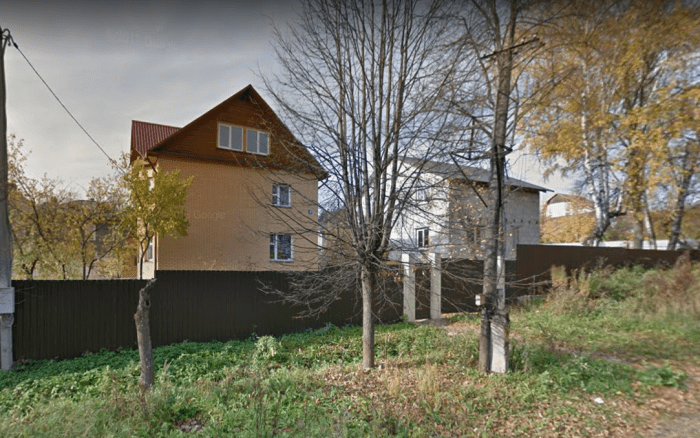
They all have big fences surrounding the houses.
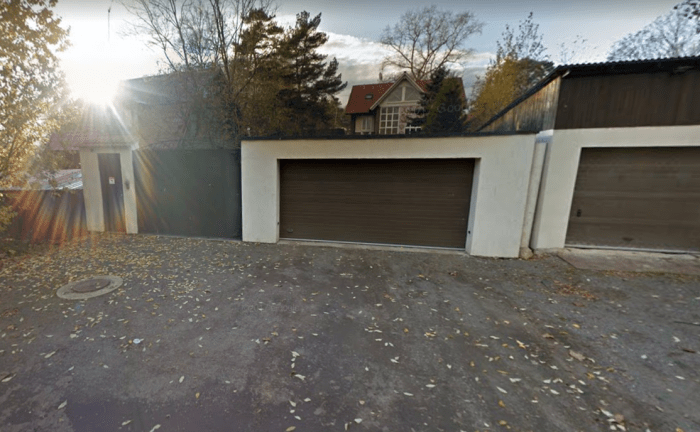
This looks like a 4 car garage.
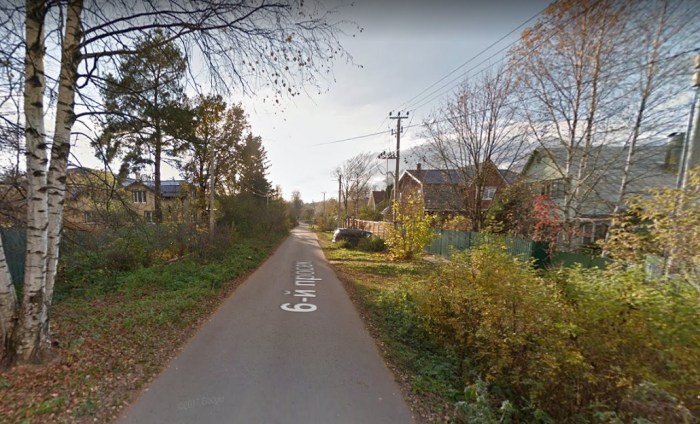
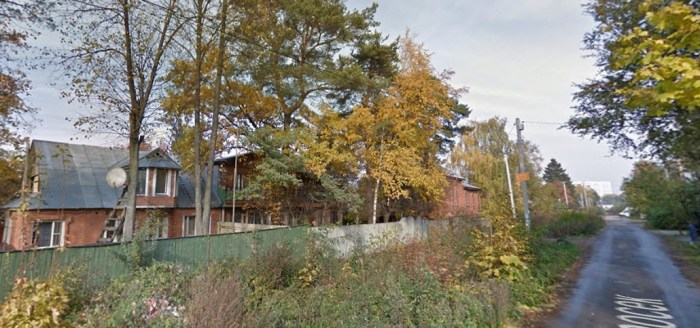
The Dachas are not really lined on streets, in the North American sense, but narrow back lanes.
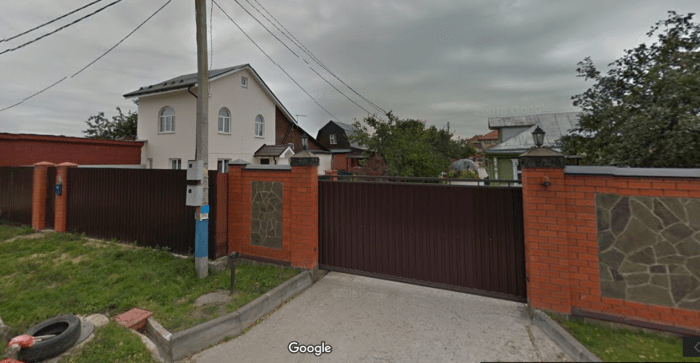
Some have really impressive fences and gates.
Back in the city, strange parking arrangement. Going over a curb.
Mercedes-Benz Stadium is a multi-purpose retractable roof stadium located in Atlanta, Georgia. The home of the Atlanta Falcons of the National Football League (NFL) and the Atlanta United FC of Major League Soccer (MLS), it replaced the adjacent Georgia Dome, the Falcons’ home stadium for a quarter century, from 1992 through 2016.
Opened in 2017, Mercedes-Benz Stadium is owned by the state of Georgia through the Georgia World Congress Center Authority, and operated by AMB Group, the parent organization of the Falcons and Atlanta United. The total cost is estimated at $1.6 billion, as of June 2016. The stadium officially opened on August 26 with a Falcons preseason game against the Arizona Cardinals, despite the retractable roof system being incomplete.
The winning design, submitted by HOK, featured an eight-panel retractable roof that resembled a pinwheel, and a glass wall that would open with the roof to allow in fresh air.
The roof design included eight triangular translucent panels, that when opened would create the illusion of a bird’s wings extended. Surrounding the opening of the roof would be a halo video board that would enclose the playing surface, stretching from one of the 10-yard lines to the other and then curving around the end zones to complete the oval. Each of the eight panels operates on two parallel rails; one rail is responsible for moving the panel while the other rail stabilizes the panel.
Capacity
Football: 71,000
(expandable to 83,000)
Soccer: 42,500
(expandable to 71,000
The above photo appears to be of a European city, but no, it’s Pennsylvania, USA.
The Cathedral of Learning, a Pittsburgh landmark listed in the National Register of Historic Places, is the centerpiece of the University of Pittsburgh’s main campus in the Oakland neighborhood of Pittsburgh, Pennsylvania, United States. Standing at 535 feet (163 m), the 42-story Late Gothic Revival Cathedral is the tallest educational building in the Western hemisphere and the second tallest university building (fourth tallest educationally-purposed building) in the world. It is also the second tallest gothic-styled building in the world. The Cathedral of Learning was commissioned in 1921 and ground was broken in 1926. The first class was held in the building in 1931 and its exterior finished in October 1934, prior to its formal dedication in June 1937.
Colloquially referred to as “Cathy” by Pitt students, the Cathedral of Learning is a steel frame structure overlaid with Indiana limestone and contains more than 2,000 rooms and windows. It functions as a primary classroom and administrative center of the university, and is home to the Dietrich School of Arts and Sciences and many of its departments, as well as the University Honors College. It served as home of the university’s College of General Studies until its relocation to Posvar Hall in 2014. It houses many specialty spaces, including a studio theater, food court, study lounges, offices, computer and language labs, 30 Nationality Rooms, and a 1⁄2-acre (2,000 m2), 4-story-high, vaulted, gothic study and event hall. The building contains noted examples of stained glass, stone, wood, and iron work and is often used by the university in photographs, postcards, and other advertisements.
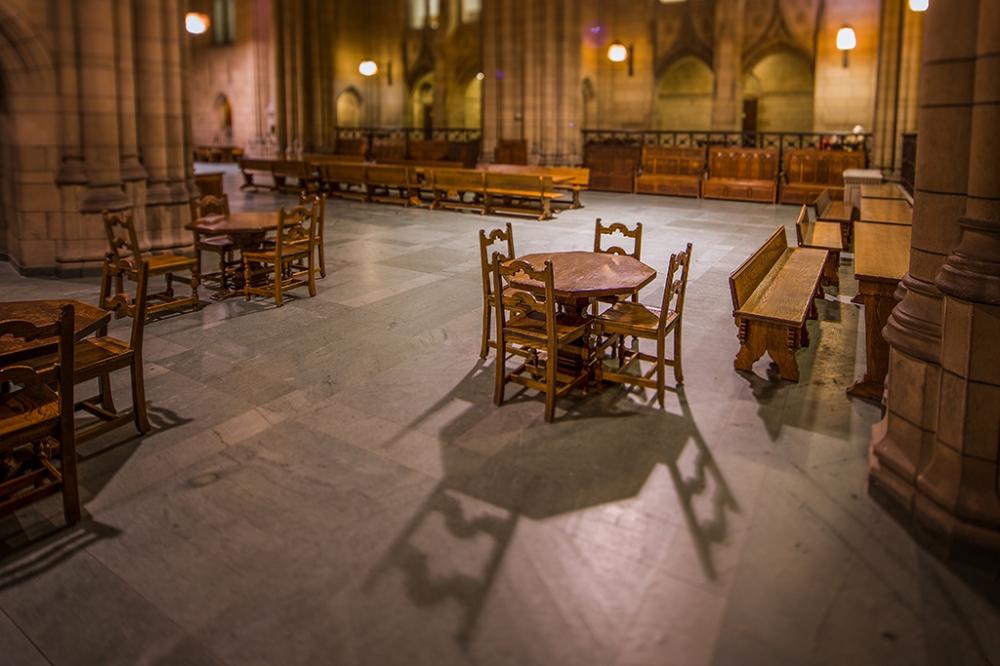
Commons room on the main floor
The basement and floors up to (and including) floor 40 are used for educational purposes, although most floors above 36 house the building’s mechanical equipment. These floors include theaters, computer laboratories, language laboratories, classrooms, and departmental offices. The basement contains a black box theater and the ground floor contains computer labs, language labs, classrooms, and the Cathedral Café food court. The “lobby”, comprising the first through third floors, contains a massive gothic “Commons Room” that is used as a general study area and for special events and is ringed by three floors of classrooms, including, on the first and third floors, the 30 Nationality Rooms designed by members of the Pittsburgh community in the styles of different nations and ethnic groups. Twenty-eight of these serve as functional classrooms while more conventional classrooms are located on the second floor and elsewhere throughout the building. The first floor also serves as the home to the offices of the Chancellor, Executive Vice Chancellor, and other administration offices, as well as the Nationality Rooms Gift Shop. The fourth floor, which used to be home to the main stacks of the university’s library, is now occupied by the McCarl Center for Nontraditional Student Success. The fifth floor originally housed the main borrowing, reference, and reading rooms of the university library, and now houses the Department of English. The Pitt Humanities Center is housed on the sixth floor. Additionally, the University Honors College is located on the 35th and 36th floors.
The Cathedral of Learning houses the Department of Philosophy, considered one of the top five in the United States, and the Department of History and Philosophy of Science, consistently ranked at the top of the field. Other departments in the Cathedral include English, Religious Studies, Statistics, Theatre Arts, and the School of Social Work which maintains the highest classrooms in the building located on the 23rd floor. Floors 37–40 are closed to the general public, as they contain electrical wiring for the building, as well as the Babcock Room, a large conference room on the 40th floor used for meetings, seminars, and special events and which provides a panoramic view of downtown Pittsburgh and the rest of the university. The 40th floor balcony also houses a nesting pair of Peregrine falcons. A view from the top is available via a webcam. Golden lights, dubbed “victory lights,” surround the outside of the highest floors and are lit following Pitt football wins and other notable victories, giving the upper part of the Cathedral an amber glow.































 The MarkoZen Blog