Walking into Glass Walls

By Adam Killick

And now it’s time for another edition of our occasional, semi-regular, periodically occurring segment, “seems like a bad idea….”

If there is one thing that Apple fans and critics can likely agree on, it’s that the company’s products have really good design. Apple’s designers really know how to make metal and glass look pretty.

So it was only fitting that when the company built its new headquarters, the architectural design matched the company’s industrial design ethic.

And that resulted in a spectacular building in Cupertino, California, dubbed the “spaceship.”

apple-s-new-hq

The ring-shaped building feature lots and lots of glass. Glass walls, glass floors, glass ceilings… you get the idea. And you can bet all that glass is kept sparking clean, so it looks all but invisible, as it was designed to.

Apple’s new “spaceship” campus in Silicon Valley (The Associated Press/Apple Inc.)

But there is one obvious — or perhaps not-so-obvious — issue with the design.

And that is that people have a habit of walking into things they can’t see.

A freedom-of-information request by the San Francisco Chronicle revealed that there have been quite a lot of 9-1-1 calls made from the Apple campus.

What is clear, if you pardon the pun, is that Apple was warned by building inspectors about the dangers of the glass design when the campus was being built. And the company has removed numerous Post-it notes placed by employees that showed where the doors were,

That’s because the designers apparently wanted nothing that might distract engineers and coders from thinking about their work. So those same distracted engineers and coders have been walking into the glass.

Which really seems like a bad idea.

Apple-spaceship_HQ_01


Portraits of Canada’s Ice Fishing Huts

Lake Winnipeg ice fishers reeling in ‘fish of a lifetime’ thanks to 1997 flood, says veteran angler

‘It’s probably the best walleye fishing in the world right now,’ says nature guide and fisher Lee Nolan
ice-fishing-lake-winnipeg

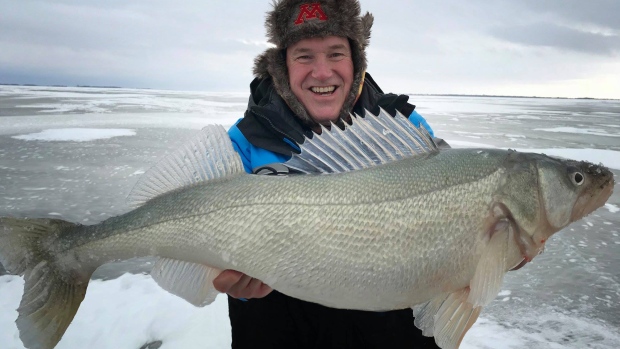
The Flood of the Century may have spawned the largest walleye that Lake Winnipeg ice fishers have seen in recent memory.

Veteran ice fisher and nature guide Lee Nolan said this year, fishers are finding giant walleye in Manitoba’s largest lake — and he said it all started with excellent spawning seasons.

“So back in 1997 and 2000, when we had very high water, walleye had a very, very good spawn,” said Nolan. “So you’ve got year classes of fish.”

The 1997 spring flood that affected large parts of Manitoba is considered the Flood of the Century, meaning the water reached the highest point it’s expected to reach in a century.

“Those fish are getting very mature now, so that’s why you’ve got a higher percentage of the biomass in the lake [that] is actually very, very, large fish.”

So how big are the fish?

“I believe the current ice-fishing record is about 35, 36 inches [roughly 90 centimetres] and I think there’s some fish that size out there,” said Nolan, adding so far, the biggest one he’s caught was 32 inches (81 centimetres).

“They’re very healthy, girthy fish.… It’s probably the best walleye fishing in the world right now for large walleye,” he said.

“We’ve got a good shot at breaking a world record up here this year, I think. There’s lots of people catching fish of a lifetime out there right now.”

Walleye weigh roughly one to two kilograms (two to four pounds) in a normal year, said Nolan. This year, they’re seeing seven-kilogram (or 15-pound) fish.

Staying on topic with ice fishing, below is a collection of Canadian ice fishing huts compiled by Modern Farmer.

ice-house-quebec-hero-1

As with any fishing trip, trolling the Great White North for char, smelt, and salmon requires a pole, bait, and enough beer to keep your buddies in good spirits. But given the potential for -40° temperatures and howling winds, Canadian anglers insist on shelter, too.

Not that it has to be sophisticated. The basic requirements include a roof, four walls, and a hole cut in the floor through which to lure the catch of the day. Scrap plywood and repurposed two-by-fours constitute the most popular materials. Indoor amenities range from a woodstove or propane heater to a kitchenette or satellite TV. Though Quebecois are known for kitsch and Newfoundlanders for dogged wit, a certain patriotic scrappiness reigns supreme, which is why Toronto architectural photographer Richard Johnson turned his lens toward the makeshift homesteads. “All the work I do for architects is highly polished,” he explains. “I was drawn to ice huts because they are crooked and textured and every one is so different.”

Beyond Photoshopping out the inevitable yellow pee stains around these man caves, Johnson took a hyperrealistic approach—employing a straight-on angle, gray-sky lighting, and a chest-high horizon line—to bring the unique qualities of each shack into sharp focus. “I see them as portraits of the hut owners without the owners present.”

ice-house-saskatchewan-white

Saskatchewan Though the antlers are purely decorative, those red reflectors serve a purpose: protecting this Anglin Lake hut from post-dusk snowmobilers.


ice-house-saskatchewan-blue

Saskatchewan Pickup-truck campers are prevalent in Regina Beach. Note the gas-powered auger—the power tool of choice for making a hole in the ice.


ice-house-pei

Prince Edward Island Windowless huts dot the island’s 1,100 miles of coastline, allowing spearfishermen a clear view of their prey beneath the ice. This “darkhouse,” set atop skis, can be easily towed by a snowmobile, a four-wheeler, or a few gruff guys.


ice-house-ontario-white

Ontario Snapped on March 14, the last day of Ontario’s winter fishing season, this image depicts a hobbit-sized hut about to be pulled off Lake Simcoe atop a sled.


ice-house-ontario-light

Ontario Temporary power lines from the mainland allow the owner of this dwelling—part of a small village that appears every winter on the Ottawa River—to fish after sunset on a winter’s eve.


ice-house-ontario-green

Ontario An Ottawa River shack exuberantly complies with the province’s license-number laws.


ice-house-new-brunswick

New Brunswick Heavy snowstorms left much of the province—including this camouflaged Kennebecasis River cabin—inaccessible last year.


ice-house-new-brunswick-red

Newfoundland What this remote island lacks in material wealth, its people make up for in ingenuity. The owner of this shack MacGyvered an old washing machine to serve as a wood-burning stove. “They repurpose whatever they can,” says Johnson of Newfoundlanders.


ice-house-manitoba-rv

Manitoba The upside of Lake Winnipeg’s brutal winters? Extra-thick ice able to withstand the weight of relatively luxurious RVs.


ice-house-manitoba-red

Manitoba This plywood hut sports an “addition” on one end. “When a family expands,” Johnson explains, “they’ll knock out walls and build on.


ice-house-british-columbia-skis

Nova Scotia No bigger than an outhouse, this one-person shelter can be flipped on its side and scooted off the ice via side-mounted skis whenever Silver Lake’s mild maritime climate experiences a thaw.


ice-house-british-columbia-black

British Columbia In Canada’s least wintry province, “most people just drill a hole and sit on lawn chairs,” says Johnson, making this Charlie Lake structure a rarity.


ice-house-alberta

Alberta The folks of Alberta, known as “the Texas of Canada,” live large. Good thing, then, that the winter ice is thick enough to support six-person huts.


ice-house-alberta-maple-leaf

Alberta Like Texans, Albertans don’t hesitate to express regional pride.

A $1 Billion Embassy Opens in London

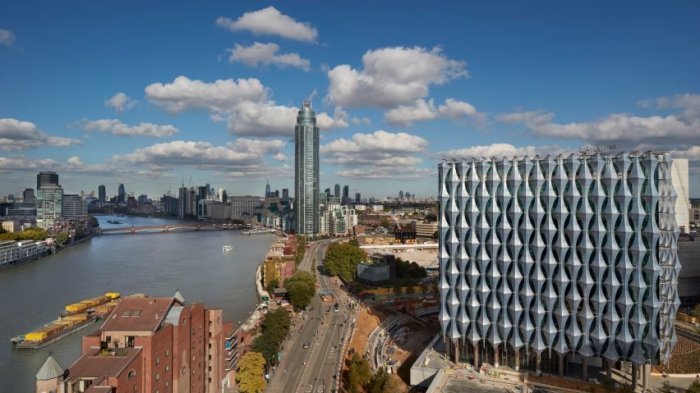
New United States embassy opens in London.

embassy1

The new site, a 12-story glass cube, designed by Philadelphia architecture firm KieranTimberlake and replete with moat and gardens, will open its doors to the public on January 16. It will house around 800 staff and is expected to receive 1,000 visitors daily.
The billion-dollar building was paid for by selling other US government properties in London. Some members of the US Congress criticizing the hefty price tag.
At a hearing in 2015, Rep. Jason Chaffetz, a Utah Republican and chairman of the House oversight committee, slammed the administration’s construction process as mismanaged, resulting in a building with an “opulent-looking” glass facade that favored aesthetics over security.

embassy-kieran-timberlake-hero_b-852x479

With a price tag of $1 billion, the new US embassy in London is one of the most expensive buildings of its kind in the world. After US President Donald Trump said he was canceling his visit to London in part because of his proclaimed outrage over the cost, it is now one of the most notorious.

In a late-night tweet, Trump blamed the Obama administration for a “bad deal” to sell the previous location in the high-end Mayfair district in central London and move to a former industrial site south of the River Thames.

In fact, the decision to move out of the Grosvenor Square building was taken under the Bush administration in 2008, principally because the building was proving harder to secure in an age of terrorist threats — and also, in small part at least, because the US government did not wholly own it.

CNN

Very Unique Hotel in Macau

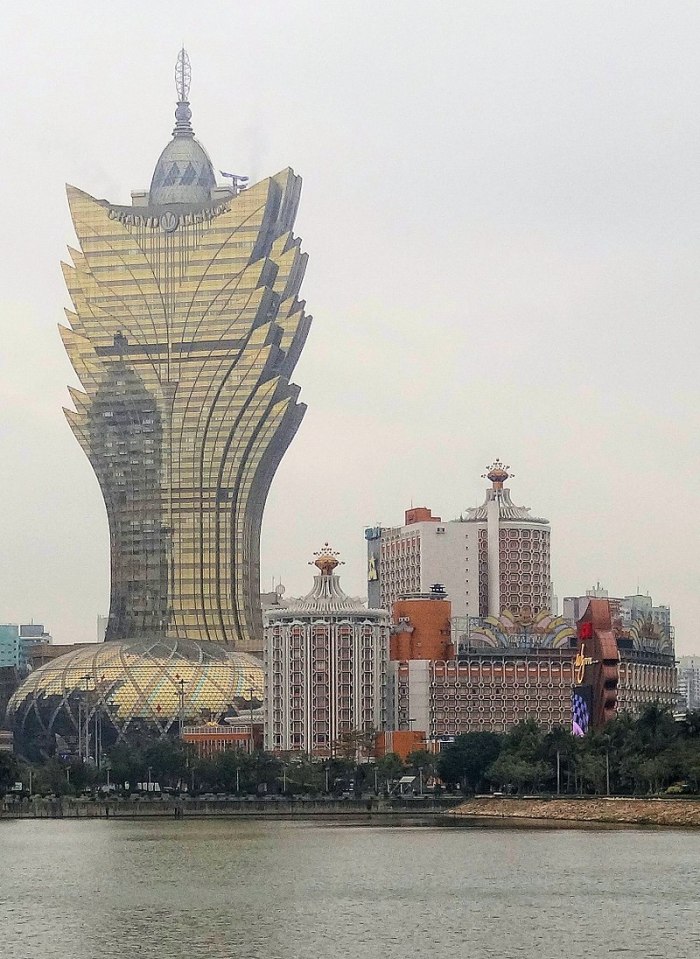
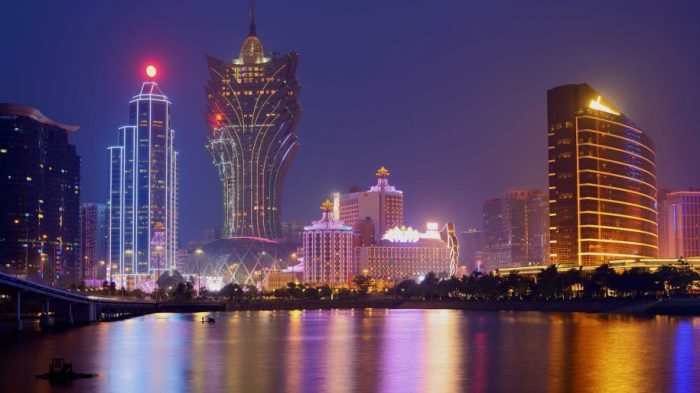
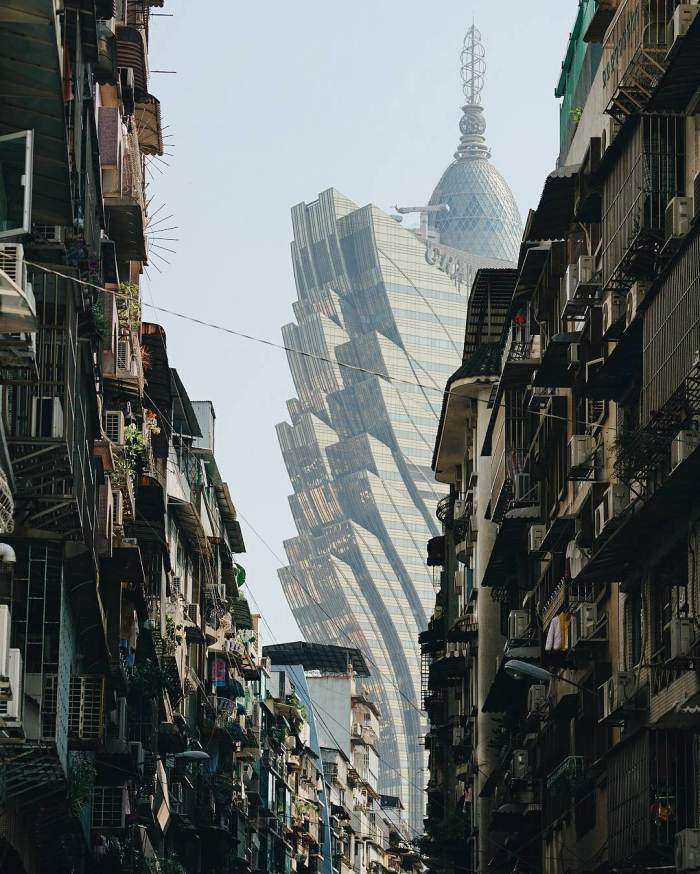
grand lisboa

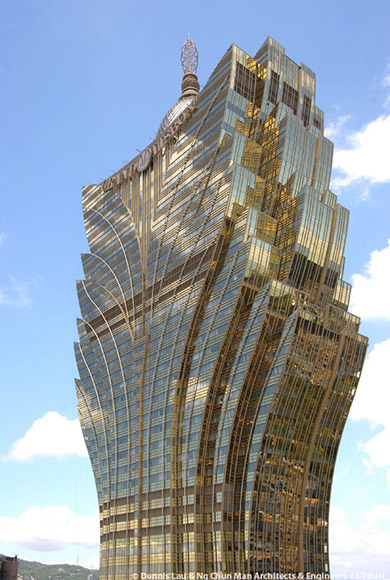
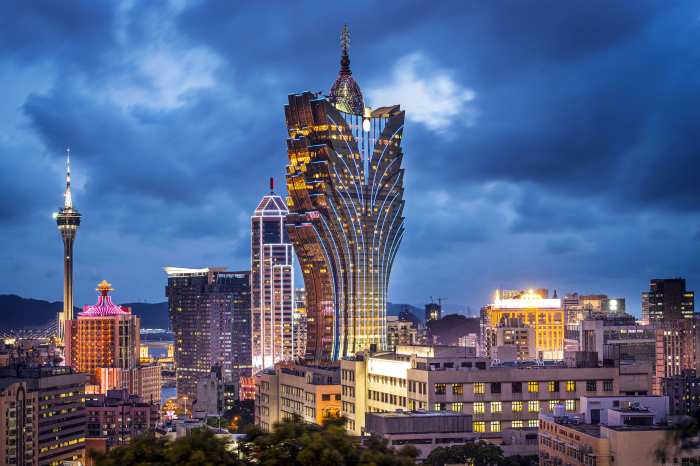
Grand Lisboa is a 47-floor,[1] 261-metre-tall (856 ft) hotel in Sé, Macau, China. It is owned by Sociedade de Turismo e Diversões de Macau and designed by Hong Kong architects Dennis Lau and Ng Chun Man. Its casino and restaurants were opened on February 11, 2007, while the hotel was opened in December 2008. The casino offers 800 gaming tables and 1,000 slot machines. The hotel contains 430 hotel rooms and suites. The Grand Lisboa is the tallest building in Macau and the most distinctive part of its skyline.

The casino is the first in Macau to offer Texas hold ’em poker ring games. It was also the first to offer craps, though several other casinos in Macau now offer the game.

In 2017 it was reported that the Grand Lisboa suffered a decline in revenue and profits during 2016.

grand

grand1

grand2.jpg

grand3


Inglis Grain Elevators National Historic Site

ingliss

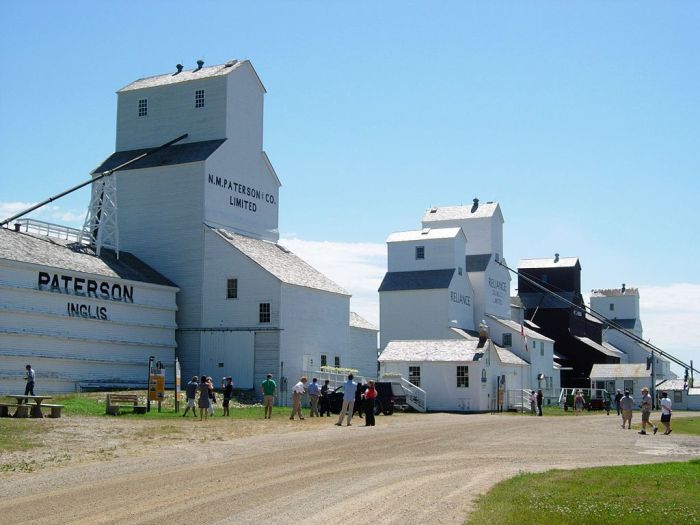
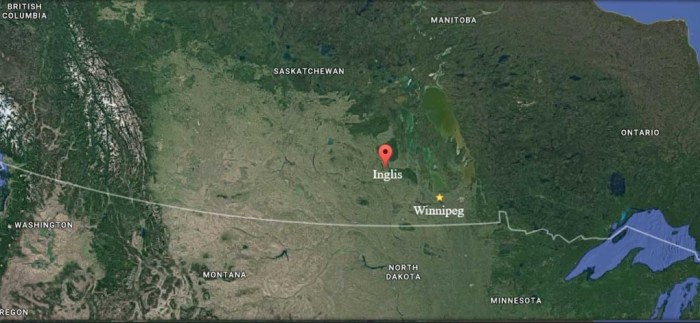
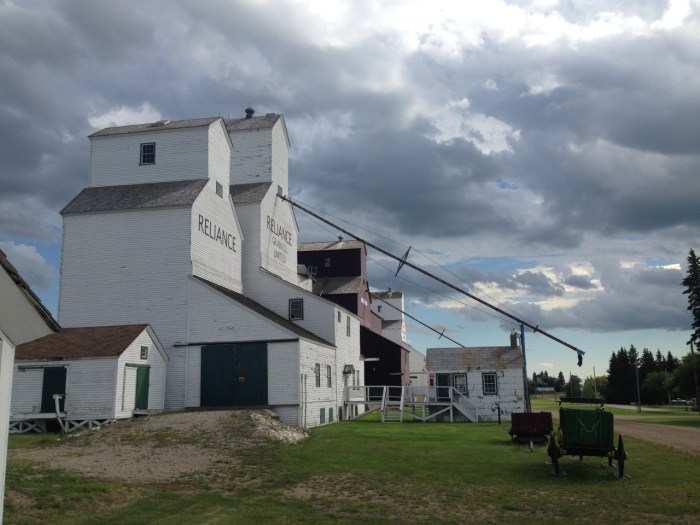
Inglis elevator row is a row of five wooden grain elevators located alongside the former Canadian Pacific Railway track bed, in the village of Inglis, Manitoba, Canada. Because so many grain elevators have been demolished throughout Western Canada, the Inglis elevator row preserves rare examples of a formerly common sight from “the golden age of grain.” In recognition of the elevators in Inglis being the last elevator row in Canada, they have been protected as a National Historic Site of Canada.

inglis1

The arrival of the railroad in the smaller communities of Manitoba offered both risk and reward for villages. When the railroad reached Inglis in 1922, allowing grain from the area to reach distant markets, the nearby town of Asessippi was quickly abandoned. By the end of 1922, four of the five elevators in Inglis were already built, quickly followed by a number of shops and businesses. The Inglis row consists of five wood-crib elevators:

N. M. Paterson Company, built in 1922 using then-state of the art dust control systems.
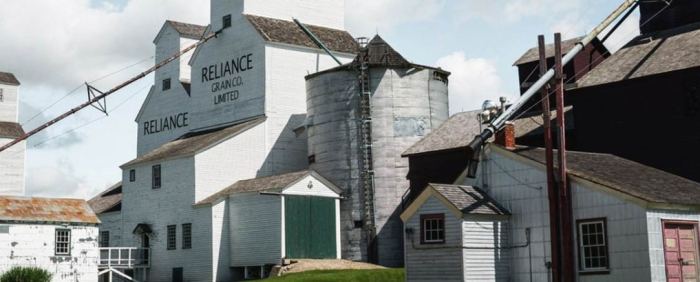
Reliance elevators, built by Matheson-Lindsay in 1922 as a single elevator. The elevator was then taken over by Province Elevator Co. later becoming Reliance Elevators in the 1930s. By 1941 a new “twin” elevator was added for more space. Manitoba Pool bought the elevators in 1952 and lastly sold to United Grain Growers in 1971. The elevators have since been fully restored back to their original signage as Reliance elevators.
United grain growers elevator, originally built by United Grain Growers in 1922 but replaced after it was destroyed by fire in 1925. Annexes were added 1949.
National elevator, built by the Northern Elevator Co. in 1922 later taken over by National in the 1940s and then Cargill and last Paterson Grain in 1979. The elevator has been completely restored as a gift shop.

With the loss of wooden grain elevators across western Canada, the “Five Prairie Giants” of Inglis have become a popular tourist destination and were named one of Manitoba’s top ten architectural icons.

inglis

inglis2

The grain elevators of the present time. Huge concrete structures.

inglis4

Goats Need to Climb

Goats are extremely curious animals and great climbers, known for their ability to climb and hold their balance in the most precarious places. Moroccan goats climb the Argan trees to eat argo nuts and Alpine ibex cling to a near-vertical rock face of a northern Italian dam to lick salts. When Charles Back brought goats to his Fairview Cheese and Wine Farm at Fairview in South Africa, he feared that the goats would miss the vertical aspect of their natural habitat in the flat yard of his farm house. So he decided to build a tower for the goats.

The goat tower is basically a multi-story tower built out of brick and mortar with a spiral wooden ramp on the outside leading up to the top. The tower includes windows with shallow floors so the animals can shelter inside in their own ‘rooms’. Since its creation in 1981 the tower has become the most identifiable symbol of Fairview Wine and Cheese.

goat-tower-6-1

The first goat tower was built by Fernando Guedes da Silva da Fonseca (1871-1946) at Aveleda, one of the oldest and most famous wineries in the Vinho Verde region of Portugal. The one at Fairview is the second, and now copies of the original have started appearing elsewhere around the world. There are now known goat towers at Ekeby Farm in Moss Norway, at a bar in Memphis, Tennessee called “Silky O’Sullivan”, and the “Tower of Baaa” in Findlay, Illinois.

The “Tower of Baaa”, built in 1998, is reportedly the highest goat tower in existence with a height of 9.5 meters and diameter of about 2.1 meters. Its 276 spiral shaped concrete steps allow the goats to climb up and down with ease passing each other on the ramp.

goat-tower-2


goat-tower-3


goat-tower-4


goat-tower-5


goat-tower-6

From Kaushik

The Super Mega Hotels of Mecca

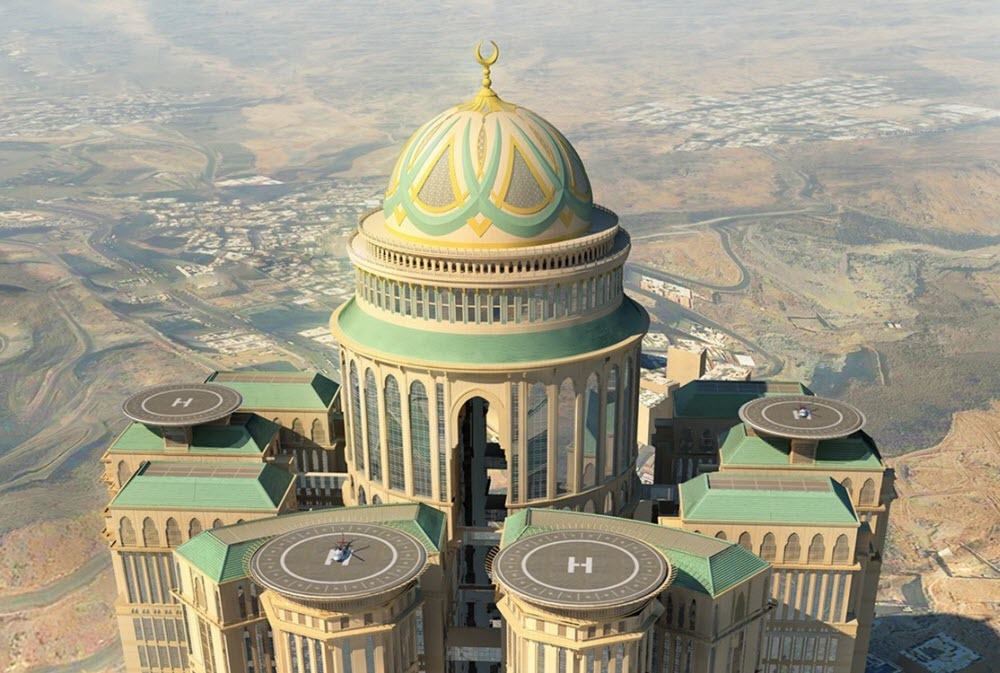
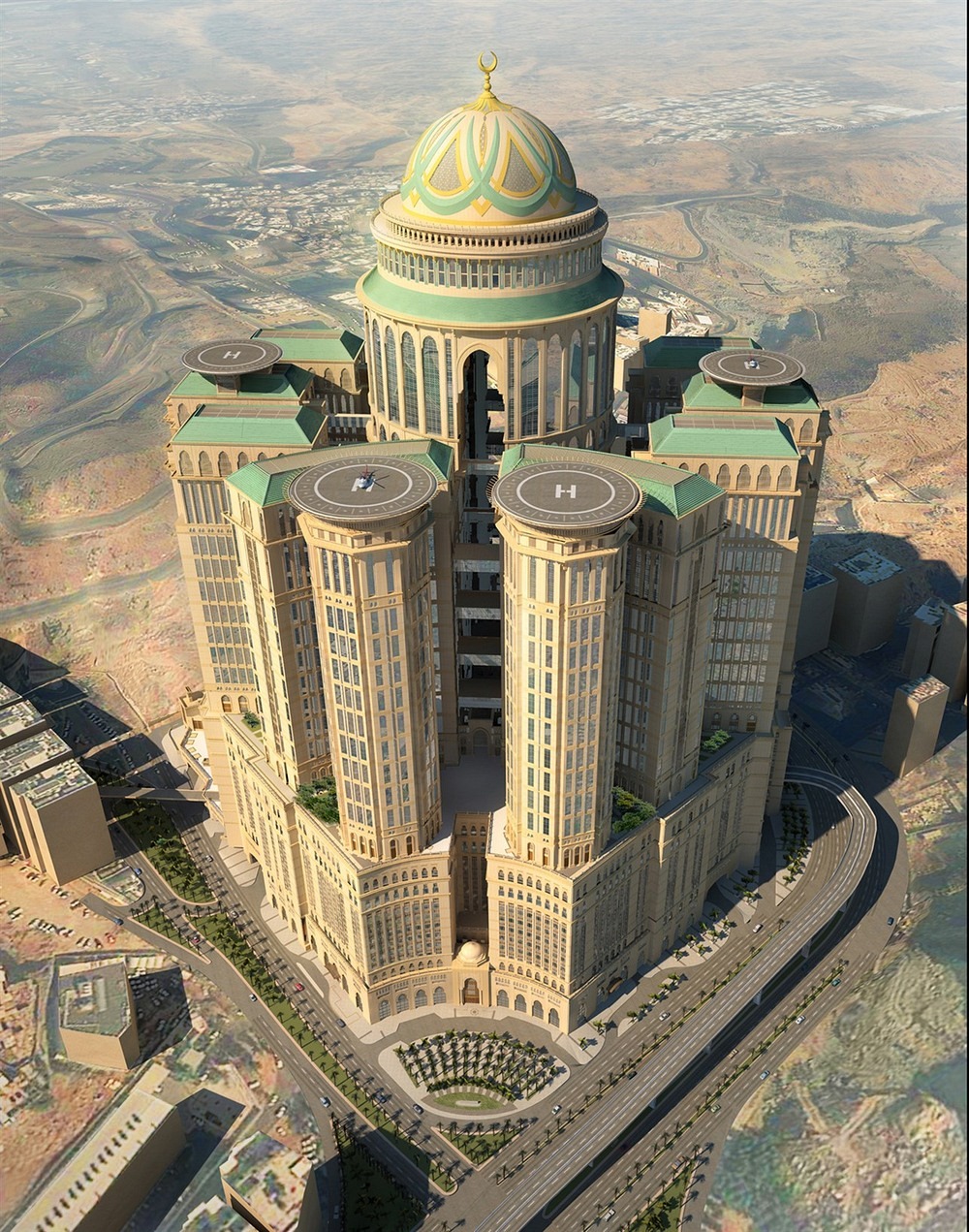
A mammoth new hotel is rising in Saudi Arabia’s holy city Mecca. When completed it will have 10,000 rooms spanning more than 1.4 million square meters, and 70 restaurants catering to the most affluent of pilgrims from the Gulf and abroad.

Resembling a traditional fortress, the hotel Abraj Kudai consist of a ring of 12 towers soaring 45 stories into the sky. Atop its central tower will be one of the world’s largest domes. Surrounding this dome will be five helipads. The world’s biggest hotel will also feature a bus station, food courts, and a shopping mall on the lower levels and a ballroom housed inside the dome. The interiors, as expected, will be lavishly decorated.

Abraj-Kudai

A computer-generated 3D model of the under-construction hotel Abraj Kudai.


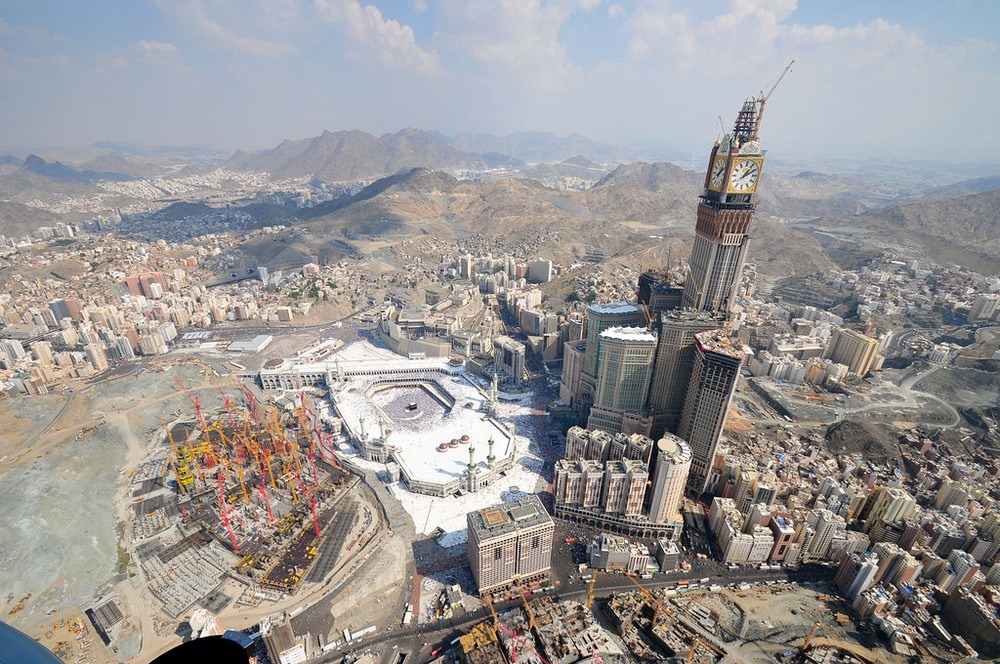
Located just 2 km away from the Holy Haram in Mecca, Abraj Kudai is the latest attempt by the Gulf country to turn Mecca into Manhattan. In the past few years, the city has seen tremendous expansion in size and infrastructure, and home to structures such as the Abraj Al Bait, a mega complex consisting of seven skyscraper hotels overlooking the Kaaba – the black cube at the center of the world’s largest mosque around which Muslims walk during Haj. One of the hotels, the Makkah Royal Clock Tower Hotel is the world’s third tallest building and fifth tallest freestanding structure in the world. This tower also boasts of having the world’s largest clock face. At night, the glowing clock face is visible from 30 km away.

The construction of Abraj Al Bait caused quite a controversy. The developers razed a historic 18th century Ottoman-era fortress along with a small hill upon which the fortress stood to make room for the structure. The Ajyad Fortress was built in 1780 under Ottoman rule in order to protect the Kaaba from bandits and invaders.

abraj-al-bait-5

The Makkah Royal Clock Tower Hotel. Notice how it dwarfs the Great Mosque and the black Kabba, which itself is a gigantic structure.

Irfan Al-Alawi, director of the UK-based Islamic Heritage Research Foundation, has been trying with little success to campaign for the protection of what little heritage that is left in Saudi Arabia’s holy cities. “Everything has been swept away to make way for the incessant march of luxury hotels, which are destroying the sanctity of the place and pricing normal pilgrims out,” Al-Alawi told The Guardian.

The destruction of heritage sites associated with early Islam has been going on since centuries driven by the Wahabi belief that idol worship is sinful. In Mecca and Medina, the very structures associated with the prophet and his family such as tombs, mausoleums, mosques and homes were destroyed. The house of Khadija, Muhammad’s first wife, was demolished to make way for a library, according to Wikipedia, and public lavatories, according to The Guardian. Where the house of Islam’s first caliph, Abu Bakr, once stood now stands a Hilton hotel. The house where Muhammad was born now lies in ruins. The house where he lived in Medina, and the first Islamic school where Muhammad taught were leveled to the ground. The list of heritage crimes goes on.

“They are turning the holy sanctuary into a machine, a city which has no identity, no heritage, no culture and no natural environment. They’ve even taken away the mountains,” says Sami Angawi, an architect and founder of the Jeddah-based Hajj Research Centre, who has spent the last three decades researching and documenting the historic buildings of Mecca and Medina.

mina-tent-city

Thousands of tents housing Muslim pilgrims fill the landscape in Mina, near the holy city of Mecca. 

Religious pilgrimages make up the bulk of the tourists to Saudi Arabia, especially to Mecca, where non-Muslims are not allowed to enter. During the annual Hajj, Mecca receives over three million pilgrims but during the rest of the year more than 20 million visit the city, which has become a popular place for weddings and conferences. To accommodate the growing influx, the Saudi authorities has deemed it necessary to raze large tracts of formerly residential neighborhoods as well as heritage sites to make way for pilgrimage-related infrastructure.

In the city of Mina, 8 km away from Mecca, the Saudi government has installed more than 100,000 air-conditioned tents to accommodate Hajj pilgrims. Although their accommodation is temporary, the tents are permanent.

Another large ongoing construction project in Mecca is the Jabal Omar development consisting of 40 residential towers that will accommodate 160,000 Islamic pilgrims, and a prayer area for 200,000 worshippers. The Grand Mosque itself is undergoing a USD 50 billion expansion to double the capacity of its prayer halls, from 3 million to nearly 7 million. To make room for the gigantic project, a vast part of the old city was flattened to the ground. Residents were evicted with one week’s notice, and many have still not been compensated—a common story across Mecca’s developments, says Irfan al-Alawi. “They are now living in shantytowns on the edge of the city without proper sanitation. Locals, who have lived here for generations, are being forced out to make way for these marble castles in the sky.”

The most anticipated is the Jeddah Tower, also known as Kingdom Tower, in the port city of Jeddah, which is expected to stand a kilometer tall with over 250 floors. It will be the tallest building in the world outranking the 828-meter-tall Burj Khalifa in Dubai.

“It is the end of Mecca,” says Alawi. “And for what? Most of these hotels are 50% vacant and the malls are empty – the rents are too expensive for the former souk stall-holders. And people praying in the new mosque extension will not even be able to see the Kaaba.”

holy-mosque-expansion

This is how the northern side of the Grand Mosque will look like. The black Kabba is a tiny speck on the bottom right.

mecca-mosque

The sky behind the Great Mosque is bristling with cranes heralding one tower hotel after another.

jabal-omar

The Jabal Omar development, also under construction.

abraj-kudai-1

The Abraj Kudai hotel, the largest hotel in the world, as it will appear when completed.

abraj-al-bait-1

The Makkah Royal Clock Tower Hotel when still under construction.

abraj-al-bait-2

The towers of the Makkah Royal Clock Tower Hotel, as visible from the mosque.