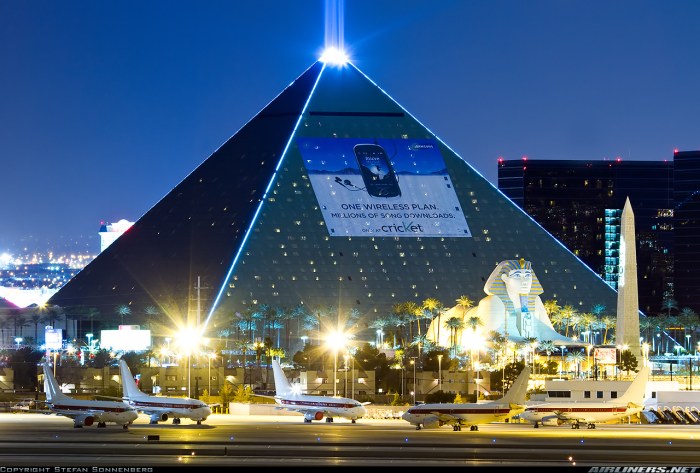
Area 51 flights? Top-secret government airline seeks flight attendant

janet

Janet 737 airliners at McCarran

Are you a Las Vegas-based flight attendant looking for work and able to keep a secret(s)? Do you feel positively about working for an airline that sort of doesn’t exist? Happen to have a Top-Secret clearance with the U.S. government, or think you could snag one?

If so, the perfect job just opened up.

Janet, a classified airline that runs commuter flights to some of the most secretive and closely guarded government facilities in the U.S., appears to be hiring a flight attendant. The job posting appeared recently on the website for AECOM, which operates a small fleet of aircraft out of a discreet but heavily guarded terminal at McCarran International Airport in Las Vegas.

Very little is known about Janet, which is so secretive that the U.S. government does not admit that it exists. The planes use the call sign “Janet,” which some suggest stands for “Just Another Non-Existent Terminal.”

janet2

The airline operates a fleet of white Boeing 737-600s, with a prominent red stripe down the middle of the fuselage. It also likely operates a smaller fleet of commuter-sized turboprops, also white but with a blue stripe. Passengers flying into or out of Las Vegas often can see such planes parked out on the ramp in the middle of the day — if they know what to look for.

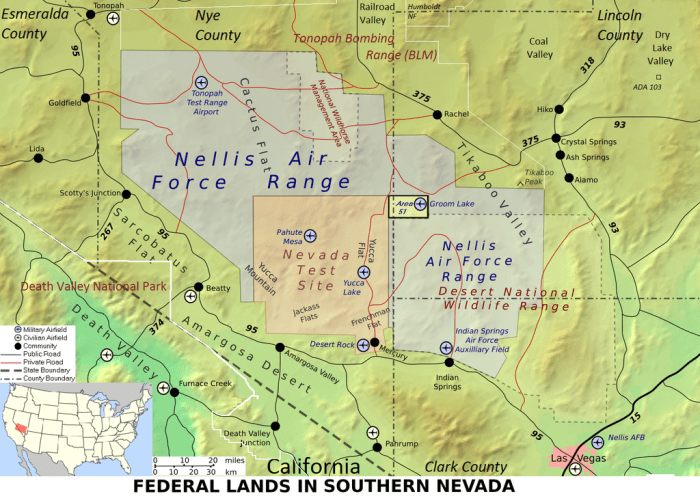
Where exactly they fly to, other than Las Vegas, has been the subject of debate and speculation. The jets have long been assumed (and have been seen on rare occasion) to be flying workers to and from an airstrip inside Area 51, as well as to several military bases and secret locations throughout the western U.S.

But while the destinations may be classified, the prerequisites for the carrier can be seen on the job posting.

Among other items, the posting says applicants “must be level-headed and clear thinking while handling unusual incidents and situations (severe weather conditions, including turbulence, delays due to weather or mechanicals, hijackings or bomb threats).”

Another prerequisite: “Active Top Secret Clearance Highly Desired.”

janet1

The fleet is operated for the United States Air Force to transport military and contractor employees. It mainly serves the Nevada National Security Site (most notably Area 51 and the Tonopah Test Range), from their terminal at Las Vegas’ McCarran International Airport.

Due to the airline’s secretive nature, little is known about its organization. It is operated for the USAF by infrastructure and defense contractor AECOM through AECOM’s acquisition in 2014 of URS Corporation, which acquired EG&G Technical Services in 2002, as derived from URS’s history of providing this service to the Air Force and job openings published by URS. For example, in 2010, URS announced it would be hiring Boeing 737 flight attendants to be based in Las Vegas, requiring applicants to undergo a Single Scope Background Investigation in order to be able to obtain a Top Secret security clearance. More recently, AECOM has posted similar openings.
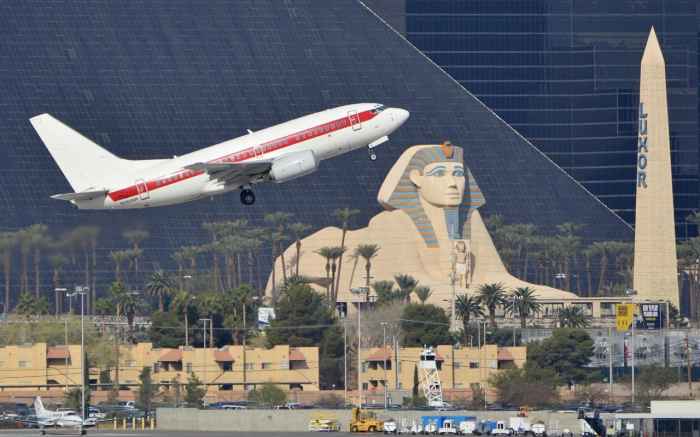
janet-airline-xlarge

In the photo below Area 51 is inside the red circle.
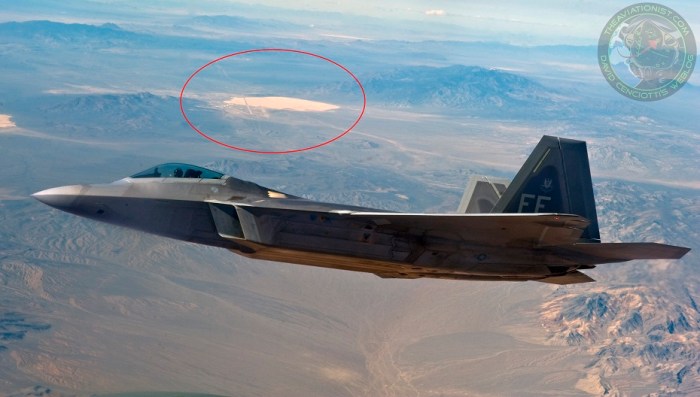
Red Flag 13-3 F-22 Tanker

area 51


Private Company to Launch Bold New Search for Malaysian Flight 370

Private Company to Launch Bold New Search for MH370

An American-based company has reached a rather unique agreement with the Malaysian government to revive the search for infamous lost airliner MH370 using a remarkably sophisticated approach.

The ambitious expedition, put together by a group known as Ocean Unlimited, is expected to be announced next week and could begin in just a few days.

What makes this new search particularly promising is the incredible technology to be used by the group.

Oceans Unlimited plans to deploy a whopping eight unmanned submarines to scour a patch of the Indian Ocean believed to be where MH370 may rest.

Each of the UAV subs will communicate with an unmanned companion boat floating above them which will relay data back to a massive main vessel, allowing the search to fan out to an enormous area.

Even more reason to optimistic is that the batteries for the subs allow them to operate for two-and-a-half days at a time.

Incredibly, the previous multinational search that was ended last year only deployed one UAV submarine and it was far less advanced than the devices to be used by Oceans Unlimited.

And, adding another intriguing layer to this development, the agreement between the Malaysian government and Oceans Unlimited makes the search something of a gamble for the group.

That’s because the deal struck between the two parties says that Oceans Unlimited will not get any money from the Malaysian government for their work unless they find MH370.

Although the exact parameters of the ‘no find, no fee’ agreement have yet to be announced, it is believed that the group will receive somewhere between $20 and $70 million dollars should they be successful within 90 days.

And so in the next three months, we’ll either see the story of MH370 solved once and for all or some brave individuals will have lost a considerable sum of money to create the next chapter in the mystery.

Not to be left out of the equation.

370

This is fake.

Operation Christmas Drop

For the last sixty four years the US Air Force has been playing Santa Claus to some 20,000 people inhabiting dozens of tiny Micronesian islands spread across a vast area in the western Pacific Ocean. Each year in December, these islanders receive all sorts of gifts and useful supplies packed in approximately a hundred crates and dropped gently to earth on green military parachutes. Known as Operation Christmas Drop, this effort on the part of the United States Air Force has been called the “longest running humanitarian mission in the world.”

Operation Christmas Drop has its roots to the Christmas of 1952, when the crew of an Air Force B-29 aircraft, flying a mission to the south of Guam, saw some of the islanders waving at them. In the spirit of the season, the crew gathered some items they had on the plane, placed them in a container, attached a parachute and dropped the bundle to the islanders below.


drop

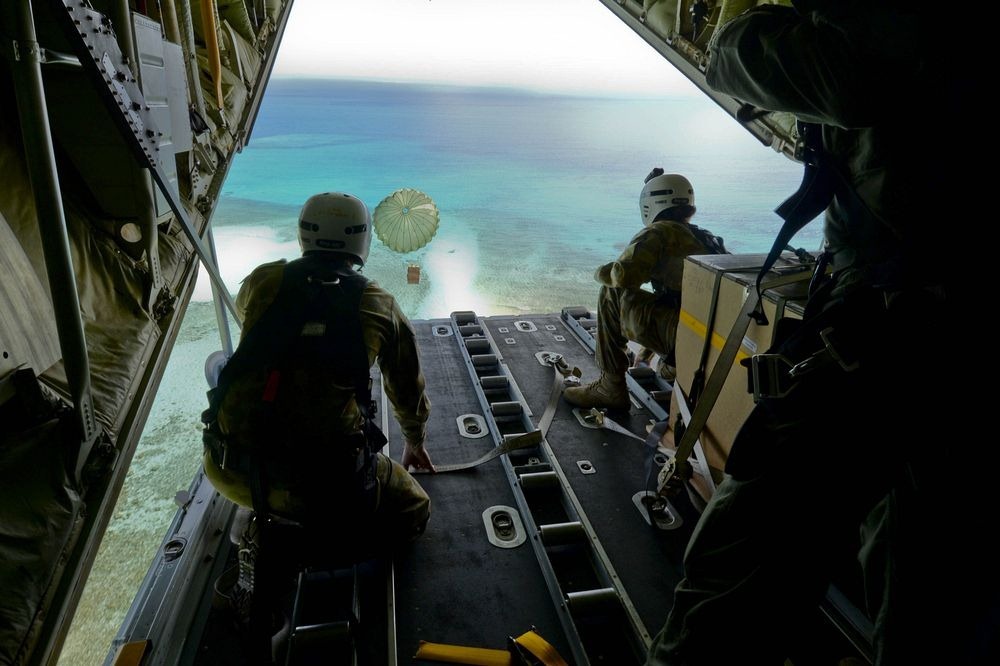
An airman of the US Air Force pushes a bundle from a C-130 Hercules during Operation Christmas Drop over Guam on Dec. 5, 2016. Photo credit: U.S. Air Force/Senior Airman Delano Scott


drop1


A witness to the first drop on the island recalls, “We saw these things come out of the back of the airplane and I was yelling: ‘There are toys coming down’”. The effort grew from there into a major annual training exercise.

All the gifts are donated by residents, civic organizations, military personnel and businesses of Guam, which are collected by private organization and the US Air Force, and then sorted and packed into boxes. The items sent to the Micronesian include fishing nets, construction materials, powdered milk, canned goods, rice, coolers, clothing, shoes, toys, school supplies and so on.

The Air Force uses old parachutes that have outlived their military usefulness, but are still strong enough to support bundles weighing up to 500 pounds. The parachute is said to be the most important item on the bundle. Islanders use it for a variety of applications, from roofing their houses to covering their canoes.

Some of these islands are so remote that they receive supplies from passing ships only once or twice per year.

“Christmas Drop is the most important day of the year for these people,” said Bruce Best, a communications specialist at the University of Guam who has been volunteering his time to help Operation Christmas Drop for the last 34 year.

“The yearly success of this drop is a testament to the generosity of the civilian and military population of Guam,” said U.S. Air Force sergeant and Operation Christmas Drop committee president. “We continue to do this to help improve the quality of life of the islanders. We may take it for granted that we can go to a mall to purchase our daily needs, but these folks do not have the same privilege from where they live.”

In recent years, the US Air Force has received assistance from members of the Royal Australian Air Force and Japan Air Self-Defense Force in the collection and distribution of the Christmas Drop crates. According to organizational data, by 2006, the Christmas drop operations have delivered more than 800,000 pounds of supplies.


drop5

A bundle exits the ramp of a C-130H aircraft during an airdrop mission over the Federated States of Micronesia during Operation Christmas Drop 2013.


A pallet containing toys, holiday decorations and other donated items floats toward an island of the Western Pacific and Micronesia area, bringing holiday cheer Dec. 14 during Operation Christmas Drop. While Santa Claus must find a rooftop to land his reindeer on, America's Airmen and their four-propeller C-130 Hercules deliver the holiday items from the air and move on to their next target. (U.S. Air Force photo/Senior Airman Brian Kimball)


drop4


drop6

A resident of Mokil Atoll waves to the C-130 crew after receiving an air dropped aid package in 2012


operation-christmas-drop-3

Loadmasters from the 36th Airlift Squadron, Yokota Air Base, Japan, prepare humanitarian aid bundles destined for remote islands within the Micronesian Islands, Dec. 11, 2012.


operation-christmas-drop-15

Senior Airman Angel Torres, 36th Airlift Squadron C-130 Hercules loadmaster, pushes a low-cost, low-altitude bundle drop over the Federated States of Micronesia during Operation Christmas Drop 2016.


operation-christmas-drop-1

Airmen from the Royal Australian Air Force deliver a low-cost, low-altitude bundle during Operation Christmas Drop 2015 to the island of Mogmog. Photo credit: U.S. Air Force/Staff Sgt. Katrina Brisbin


operation-christmas-drop-9

A bundle exits the ramp of a C-130H aircraft during an airdrop mission over the Federated States of Micronesia during Operation Christmas Drop 2013.


operation-christmas-drop-11

Tech. Sgt. Magen Harger, 36th Medical Support Squadron medical lab technician, pushes a box of supplies to islanders Dec. 11, 2014, over the Pacific Ocean.


operation-christmas-drop-7

Packages make their way to the shore of Kayangel Island during Operation Christmas Drop 2013.


operation-christmas-drop-14

Islanders watch a C-130 Hercules fly overhead during Operation Christmas Drop 2015 at Fais Island, Federated States of Micronesia, Dec. 8, 2015.


operation-christmas-drop-8

Micronesian islanders receive supplies airdropped from a C-130 Hercules near Andersen Air Force Base, on December 16, 2013

Operation Christmas Drop is primarily conducted from Andersen Air Force Base on Guam and Yokota Air Base in Japan.

micro

The Little HondaJet

Honda has always had a reputation of building vehicles that the average person could afford.  They started off building smaller cars, trucks and motorcycles.  And these vehicles were extremely reliable and durable.  Honda is continuing the tradition, but this time on the aviation side of things.  The HondaJet.

The HondaJet is the smallest corporate jet ever built.  It seats 4 passengers only, but that should be sufficient to fly around the top dogs in the company.  And this jet is very impressive to look at.


The Honda HA-420 HondaJet is the first general aviation aircraft developed by the Honda Motor Company.

Honda began to study small sized business jets in the late 1980s, using engines from other manufacturers. The Honda MH02 was fabricated and assembled at Mississippi State University’s Raspet Flight Research Laboratory in the late 1980s and early 1990s. The MH02 was a prototype using composites with an organic matrix.

The HondaJet made its maiden flight in December 2003. It debuted to the public at the EAA AirVenture air show  in Oshkosh, Wisconsin, in July 2005. On July 25, 2006, Honda returned to Oshkosh to announce it would commercialize the HondaJet. Honda established the Honda Aircraft Company to seek both type and production certification of the HondaJet. Production is to take place in the United States. The company began taking customer orders in the fall of 2006. The price was about $3.65 million US. The plan is to build 70 jets per year.

In August 2006 Honda and Piper Aircraft announced a partnership to market the HondaJet.

The aircraft is made at Piedmont Triad International Airport, Greensboro, North Carolina, USA. The plant for making the aircraft was started in 2007 and was completed in 2011.  In July 2011 the Honda Company allowed members of the media to tour the facility, which was still under construction. At that time company representatives announced that certification was expected, and production of the airplane would begin late in 2012.


General characteristics

  • Crew: 1-2 crew members
  • Capacity: 5 passengers (6 Passengers for AirTaxi)
  • Length: 41.70 ft (12.71 m)
  • Wingspan: 39.87 ft (12.15 m)
  • Height: 13.21 ft (4.03 m)
  • Max takeoff weight: 9,200 lb (4,173 kg)
  • Powerplant: 2 × GE Honda HF120 turbofan engines, 1,880lbf each (Bypass Ratio= 2.9) (8.04kN) each

Performance

  • Maximum speed: 420 KTAS (778 km/h, 483 mph)
  • Cruise speed: 420 KTAS (FL300)
  • Range: 1400 nm (1611 mi, 2,593 km) (VFR Range)
  • Service ceiling: 43,000 ft (13,107 m)
  • Rate of climb: 3990 ft/min (20.27 m/s)

Avionics
Garmin G3000 glass cockpit


Honda plans to ramp up production to 80 units per year after March 2019. Sixteen aircraft were delivered in the first three quarters of 2016, reaching a 36 per year production rate. In 2017, 15 were produced in the first quarter, and the annual target is between 55 and 60 aircraft. In the first half of 2017, a total of 24 aircraft were delivered to customers and it became the most-delivered jet in its category for that period. As of late August 2017, a total of 53 jets had been delivered to customers in the U.S., Mexico and Europe.


Smallest Jet in the World

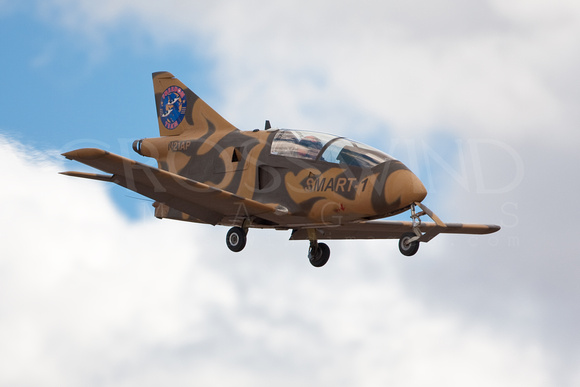
The BD-5 Micro is a series of small, single-seat homebuilt aircraft created in the late 1960s by US aircraft designer Jim Bede and introduced to the market primarily in “kit” form by the now-defunct Bede Aircraft Corporation in the early 1970s.

In total, only a few hundred BD-5 kits were completed, although many of these are still being flown today. The BD-5J version holds the record for the world’s lightest jet aircraft, weighing only 358.8 lb (162.7 kg).

jet1806342


jet5907685284_0d4d740546_z

With the demise of the Bede Aircraft Company, the BD-5 entered a sort of limbo while builders completed their kits. The early safety problems and the challenge of adapting a suitable engine exacerbated delays. Over the next few years, however, solutions to most of these problems arrived in one form or another. Many other changes have also been incorporated to improve the original design. Today the BD-5 is a rewarding, if demanding aircraft.

jeta84a021dd1


jetBD-5_AP2011_0157_800


jetBede_BD-5B


jetFLS-microjet-worlds-smallest-jet


jetPhlog_BD-5_2168050525_84babac237_o


jetsp195489496-3

General Characteristics

  • Crew: one, pilot
  • Length: 12 ft to 13.5 ft w/stretch kits (3.88 m to 4.11 m)
  • Wingspan: 14 ft to 21 ft 6 in (4.26 m to 6.55 m)
  • Height: 5 ft 2 in (1.6 m)
  • Wing area: Depends on wing used (-5A, -5B or -5J)
  • Empty weight: 167 kg and up
  • Loaded weight: 407 lb to 809 lb
  • Max. takeoff weight: 1,100 lb (530 kg)
  • Powerplant: 1 × Various reciprocating engines, from Rotax to Turbo Honda; turboprop with modified Solar T62; jet with Microturbo Couguar or TRS-18,

Performance

  • Maximum speed: 200+ mph (320+ km/h) recip, 300 mph (500 km/h) jet
  • Range: 720+ miles (1,152+ km) recip, 300+ miles (500 km) jet
  • Service ceiling: 12,000 ft (3,700 m) recip, 23,000 ft (7,000 m) jet
  • Rate of climb: 1,900 ft/min (579 m/min) recip, 4,000 ft/min (1,219 m/min) jet
  • Wing loading: Varies depending on wing selected and aircraft weight


jetxMG_2899

Airstream Travel Trailer Goes Airborne

c17a

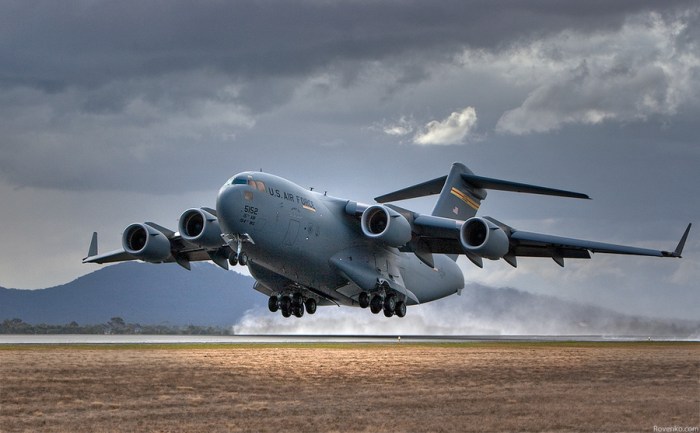
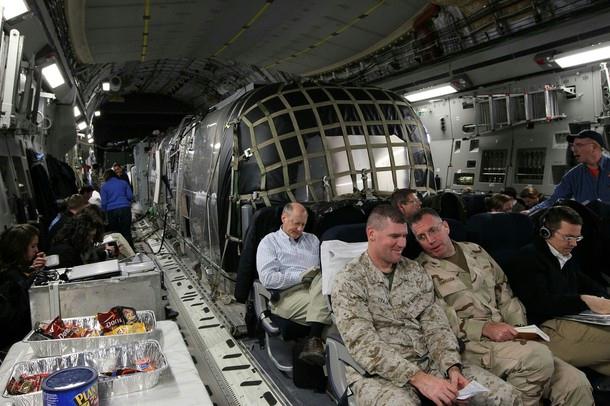
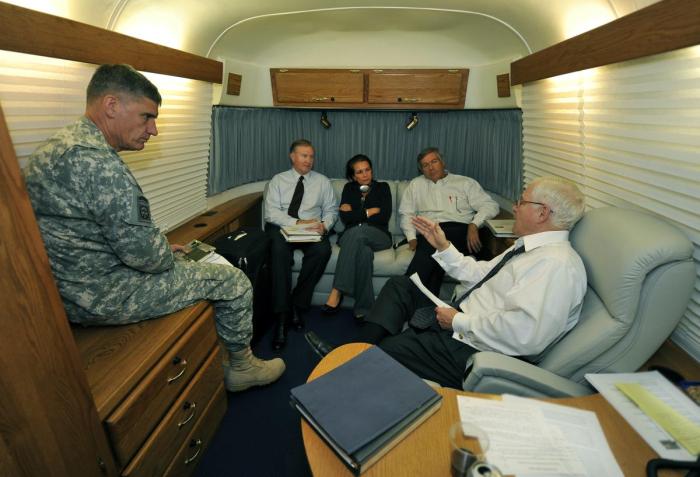
Back in the early 1990’s the United States Air Force (USAF) was tasked with a mission to develop an airborne mobile command center which could provide a long-range transportation and global communications capability for use by travelling VIP’s. This Distinguished Visitor (DV) program required that the USAF create a command and control module (CCM) that can quickly and easily be loaded on to a variety of different military transport aircraft – like the C-141, C-17, KC-10, KC-135 & C-130 – and be rapidly dispatched to any theatre of operations. Although a number of bespoke solutions were offered at the time, the provisional (and by far the cheapest) option was a palletized 36-foot Airstream travel trailer with an embedded communications suite. This asset package – designated as the “C2” in military parlance – came to be known as the “Silver Bullet.”

C-17 Globemaster III

c17b

An Airstream being loaded into a C-17

c17

c173

The help sit in the cargo cabin

c171

c172

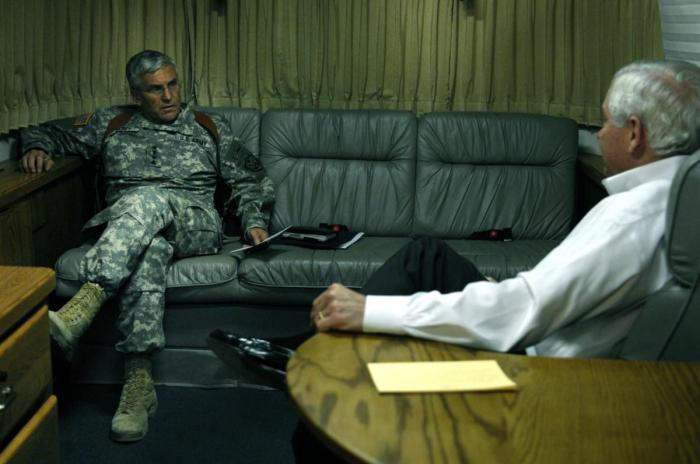
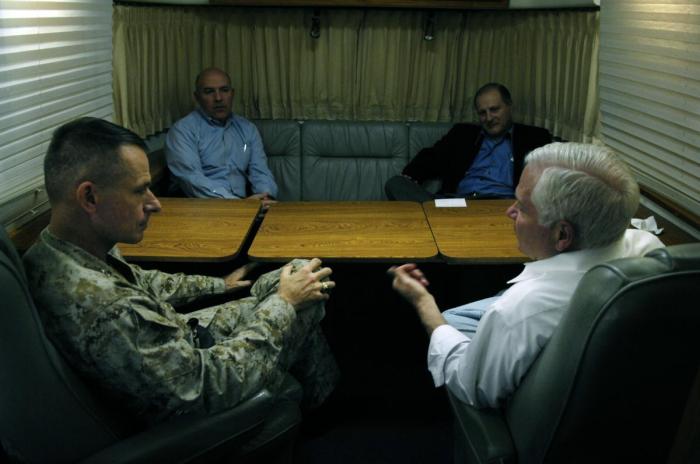
Former Secretary of Defense Robert Gates in the airborne Airstream

c175

c176

c174


Some very bizarre aircraft that you may have not seen before


air

The Caspian Sea Monster, also known as the “Kaspian Monster”, was an experimental amphibious cargo plane, developed at the design bureau of Rostislav Alexeyev in 1966.


Stipa-Caproni

air1

Stipa-Caproni, an experimental Italian aircraft with a barrel-shaped fuselage (1932).  Didn’t the engineers have any sense of aesthetics?


Blohm & Voss BV 141

air2

Blohm & Voss BV 141, a World War II German tactical reconnaissance aircraft, notable for its uncommon structural asymmetry.

This thing just looks terrible. A real mutant.


Libellula

air3

Libellula, a tandem-winged and twin-engined British experimental plane which gives the pilot an excellent view for landing on aircraft carriers (1945).


Northrop XB-35

air4

Northrop XB-35, an experimental flying wing heavy bomber developed for the United States Army Air Forces during and shortly after World War II. Let the imagination soar. Photo: U.S. Air Force


McDonnell XF-85 Goblin

air5

McDonnell XF-85 Goblin, an American prototype jet fighter, intended to be deployed from the bomb bay of the Convair B-36 (1948). A real eye-catcher. Photo: U.S. Air Force

Lockheed XFV

air7

Lockheed XFV, “The Salmon,” an experimental tailsitter prototype escort fighter aircraft (1953).


De Lackner HZ-1 Aerocycle flying platform

air8

De Lackner HZ-1 Aerocycle flying platform, designed to carry one soldier to reconnaissance missions (1954).

I wouldn’t want to be on a recon mission standing on top of this thing. The guy would be a sitting duck.


Snecma Flying Coleoptere (C-450)

air9

Snecma Flying Coleoptere (C-450), a French experimental, annular wing aeroplane, propulsed by a turbo-reactor, able to take off and land vertically (1958).


Avro Canada VZ-9 Avrocar

air10

Avro Canada VZ-9 Avrocar, a VTOL disk-shaped aircraft developed as part of a secret U.S. military project (1959).  This contraption had a hard time getting 2 feet (.7 meters) off the ground.


Vought V-173

air11

Vought V-173, the “Flying Pancake”, an American experimental fighter aircraft for the United States Navy (1942). Terrible to look at.


Bartini Beriev VVA-14

air13

Bartini Beriev VVA-14, a Soviet amphibious aircraft (1970s). This could be mistaken for a UFO.


Ames-Dryden (AD)-1 Oblique Wing, a research aircraft designed to investigate the concept of a pivoting wing (1979 – 1982).

air14


X-36 Tailless Fighter Agility Research Aircraft, a subscale prototype jet built by McDonnell Douglas for NASA (1996 – 1997).

air15


The Caproni Ca.60 Noviplano

air16

The Caproni Ca.60 Noviplano was a nine-wing flying boat intended to be a prototype for a 100-passenger trans-atlantic airliner. It featured eight engines and three sets of triple wings. Two pontoons, mounted on each side, were intended to give the aircraft stability. Only one example of this aircraft was built by Caproni. The prototype only made one short flight on 4 March 1921 over Lake Maggiore in Italy. The aircraft attained an altitude of only 18 m (60 ft), then dived and crashed, breaking up on impact. The pilot escaped unscathed. Caproni had the wrecked airplane towed to shore, and announced that he would rebuild it, but that night it burned to ashes.

This is how to fly, but there is only two seats

BBC

In the compendium of complaints about air travel, we have not yet encountered “I do not have an unencumbered, horizon-to-horizon view of the entire planet.” At some point, we surmise, someone must have shared that frustration, because Windspeed Technologies has come up with a solution.

The company’s SkyDeck is a clear bubble that pokes up out of the top of an airplane. One or two passengers access this viewing dome via a staircase, or (rather showily) in an elevator. Once they are head and shoulders above the fuselage, they may rotate their seats to view some particular object — the sunset, or a constellation, or a cloud that looks a lot like a bunny. The bubble is made of the same material as the canopies of a supersonic fighter jet, and it’s a teardrop shape mounted just before the tail to have the smallest possible effect on aerodynamics. Its feasibility has been studied a thousand different ways, patents and trademarks have been applied for, and an aircraft manufacturer has begun offering it as an option on its custom builds — though there are not yet reports of orders taken.


Windspeed-Technologies


windspeed

Does the SkyDeck seem a bit… erm… over the top? Yes, but certainly that is the point. Windspeed identifies business and VIP aircraft as their primary market, where amenities like the SkyDeck make sense because airplanes made of solid gold are too heavy to fly. But the company also sees a commercial application, where, they say, “Current in-flight entertainment offerings have not changed much over the decades” (as if SkyDeck were the logical successor to seatback entertainment systems). In this bright future, airlines would charge passengers for a trip up to the SkyDeck, providing an additional revenue stream for beleaguered airlines that have not yet found enough things to charge for.

Still, it’s awesome. To merely propose cutting a hole in the top of a jet — and then actually figuring out how to make it happen — is an admirable engineering feat. And who hasn’t imagined what the view might be like the outside of a plane, rather than through the tiny windows we’re now supposed to keep shuttered so as not to interfere with the seatback entertainment systems? Given the chance, we’d certainly spend a few minutes enjoying a 360° at 36,000 feet — though we admit to having some concerns about the availability of beverage service up there.

windspeed1