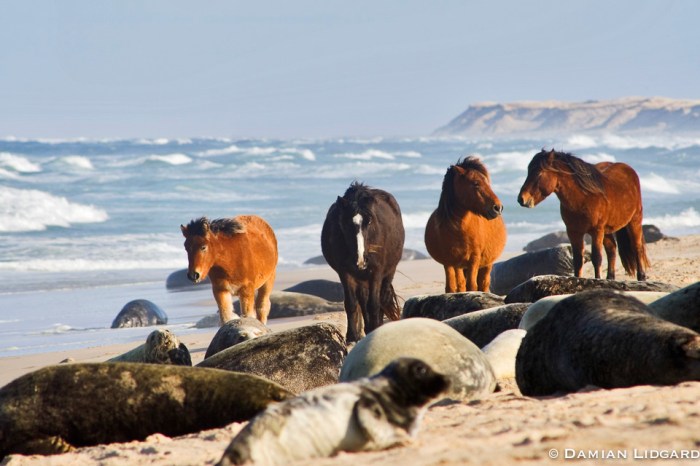
Sable Island is a small island situated 300 km (190 mi) southeast of Halifax, Nova Scotia, and about 175 km (109 mi) southeast of the closest point of mainland Nova Scotia in the Atlantic Ocean. The island is staffed year round by four federal government staff, rising during summer months when research projects and tourism increase. Notable for the Sable Island horse, the island is protected and managed by Parks Canada, which must first grant permission before anyone may visit. Sable Island is part of District 7 of the Halifax Regional Municipality in Nova Scotia. However, the Constitution of Canada specifically names the island as being under the authority of the federal government. The island is also a protected National Park Reserve.
The island is home to over 550 free-roaming horses, protected by law from human interference. This feral horse population is likely descended from horses confiscated from Acadians during the Great Expulsion and left on the island by Thomas Hancock, Boston merchant and uncle of John Hancock. In 1879, 500 horses and cattle were estimated to live on the island, and the island vegetation was described as covered with grass and wild peas. In the past, excess horses were rounded up, shipped off the island, and sold, many used in coal mines on Cape Breton Island, Nova Scotia. In 1960, the Canadian Government, under the Canada Shipping Act, gave the horse population full protection from human interference.
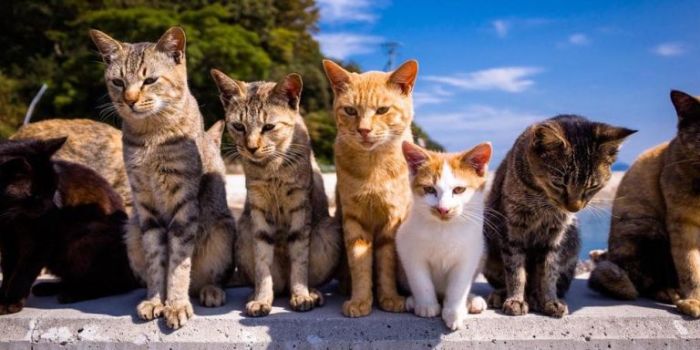
Tashirojima (田代島) is a small island in Ishinomaki, Miyagi Prefecture, Japan. It lies in the Pacific Ocean off the Oshika Peninsula, to the west of Ajishima. It is an inhabited island, although the population is quite small (around 100 people, compared to around 1000 people in the 1950s). It has become known as “Cat Island” due to the large stray cat population that thrives as a result of the local belief that feeding cats will bring wealth and good fortune. The cat population is now larger than the human population on the island. There are no pet dogs on the island due to the large cat population.
The island is divided into two villages/ports: Oodomari and Nitoda. Ajishima, a neighbouring island, used to belong to the town of Oshika, while Tashirojima was a part of the city of Ishinomaki. On April 1, 2005, Oshika merged with Ishinomaki,so now both islands are a part of Ishinomaki.
Since 83% of the population is classified as elderly, the island’s villages have been designated as a “terminal village” which means that with 50% or more of the population being over 65 years of age, the survival of the villages is threatened. The majority of the people who live on the island are involved either in fishing or hospitality.
The island is also known as Manga Island, as Shotaro Ishinomori planned to move to the island. There are manga-themed lodges on the island, resembling cats.
Ōkunoshima (大久野島) is a small island located in the Inland Sea of Japan in the city of Takehara, Hiroshima Prefecture. It is accessible by ferry from Tadanoumi and Ōmishima. There are campsites, walking trails and places of historical interest on the island. It is often called Usagi Shima (うさぎ島, “Rabbit Island”) because of the numerous feral rabbits that roam the island; they are rather tame and will approach humans.
Ōkunoshima played a key role during World War II as a poison gas factory for much of the chemical warfare that was carried out in China.
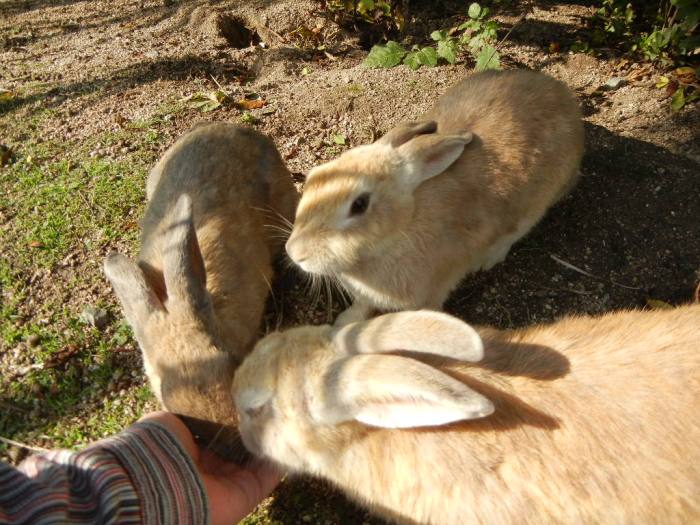
Many rabbits live on the island that are descended from rabbits intentionally let loose when the island was developed as a park after World War II. During the war, rabbits were also used in the chemical munitions plant to test the effectiveness of the chemical weapons. Those rabbits were killed when the factory was demolished and are not related to the rabbits currently on the island. Hunting the rabbits is forbidden, and dogs and cats are not allowed on the island.
The ruins of the old forts and the gas factory can be found all over the island; entry is prohibited as it is too dangerous. Since it is part of the Innland Sea National Park system of Japan, there is a resource center and across the way is the museum.
In 2015, the BBC presented a short television series called Pets – Wild at Heart, which featured the behaviours of pets, including the rabbits on the island. The series depicted various tourists coming to feed the rabbits.
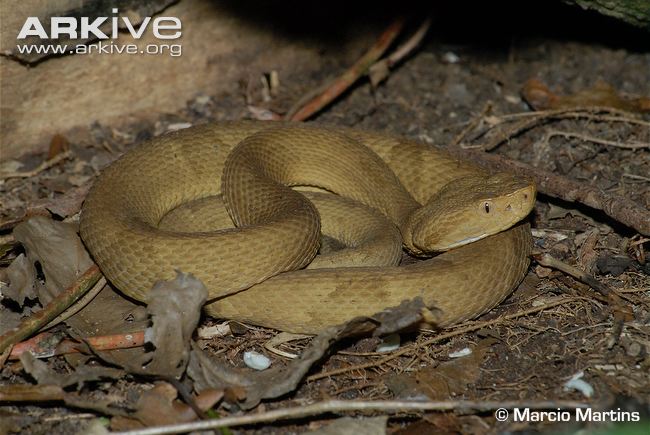
Ilha da Queimada Grande, also known as Snake Island, is an island off the coast of Brazil in the Atlantic Ocean. It is administered as part of the municipality of Peruíbe in the State of São Paulo. The island is small in size and has many different types of terrain, ranging from bare rock to rainforest, and a temperate climate. It is the only home of the critically endangered, venomous Bothrops insularis (golden lancehead pit viper), which has a diet of birds. The snakes became trapped on the island when rising sea levels covered up the land that connected it to the mainland. It has 90,000 snakes on it This left the snakes to adapt to their environment, increasing rapidly in population and rendering the island dangerous to public visitation. Queimada Grande is closed to the public in order to protect this snake population; access is only available to the Brazilian Navy and selected researchers vetted by the Chico Mendes Institute for Biodiversity Conservation, the Brazilian federal conservation unit.
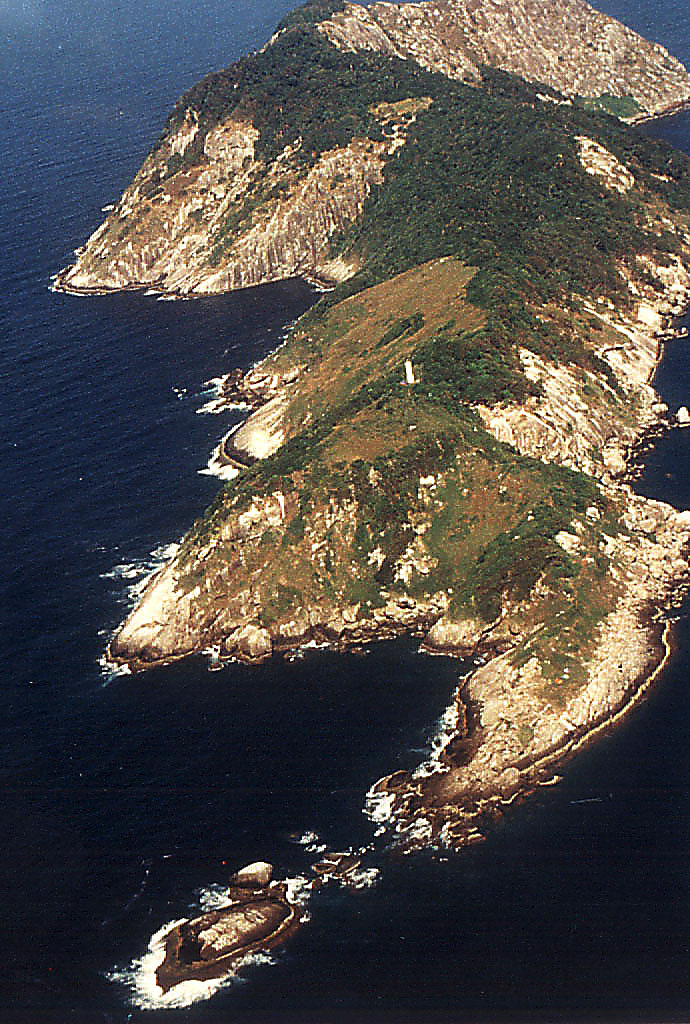
Golden Lancehead pit viper, very very dangerous snake.




 The MarkoZen Blog