Wildlife Pics

geo

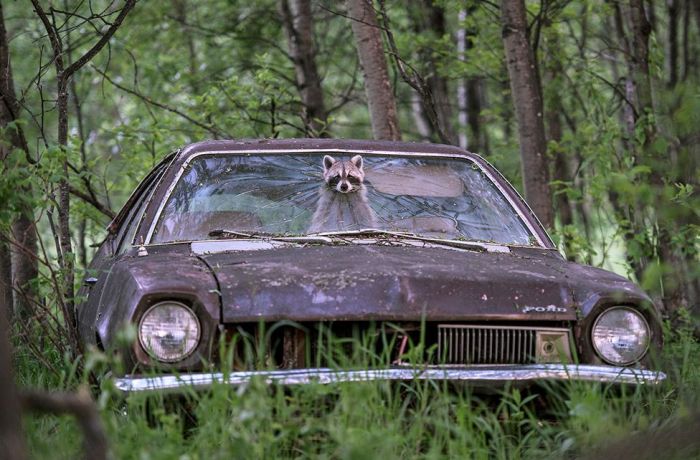
A raccoon pokes her face out of a 1970s Ford Pinto on a deserted farm in Saskatchewan, Canada. She was using the car as a safe place to bring up her young. The hole was too small for predatory coyotes to pass through. Category – Urban Wildlife.

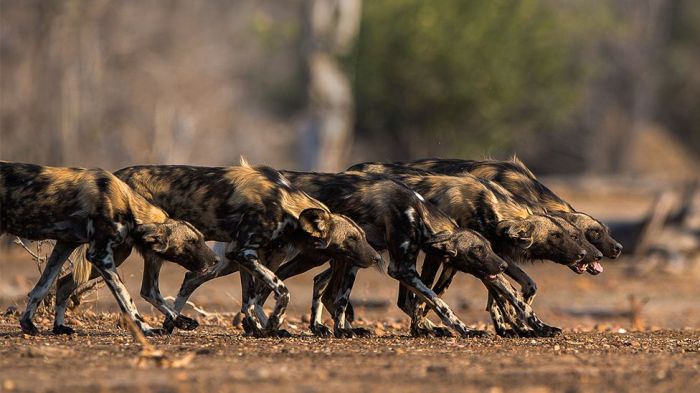
Wild Dogs of Zimbabwe

geo1

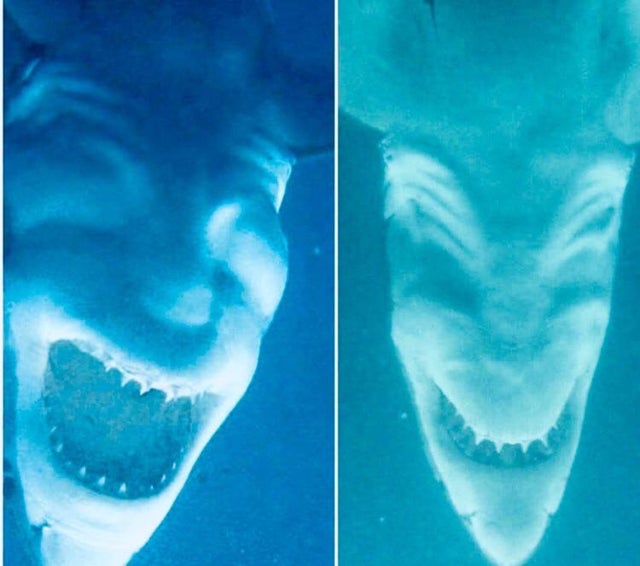
Sharks photographed upside down.

geo2

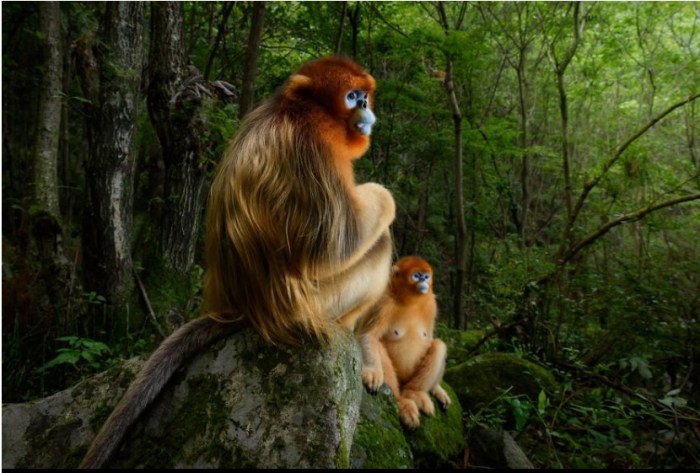
Dutch photographer Marsel van Oosten won the grand title with his photo of critically endangered golden snub-nosed monkeys in China.

geo3

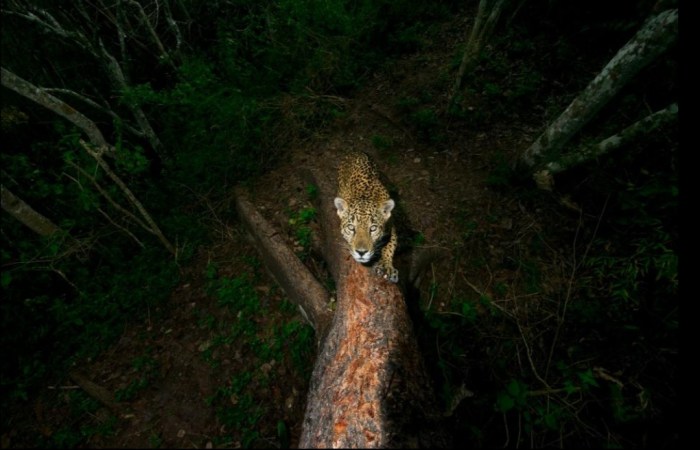
Jaguar in Mexico

geo4

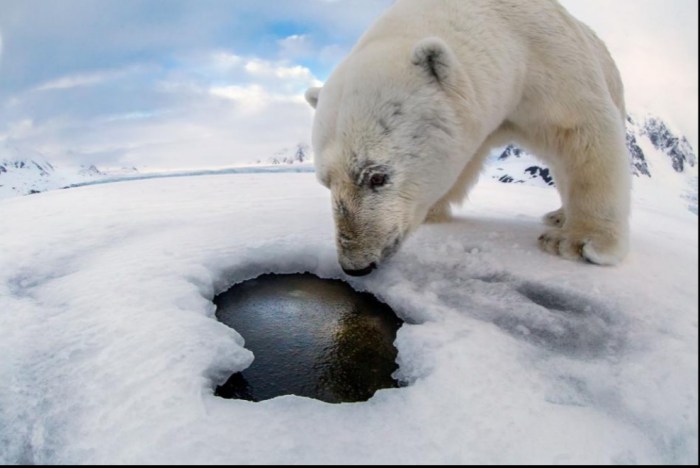
Motion sensor camera captures a polar bear waiting for seals at hole in the ice.

geo5

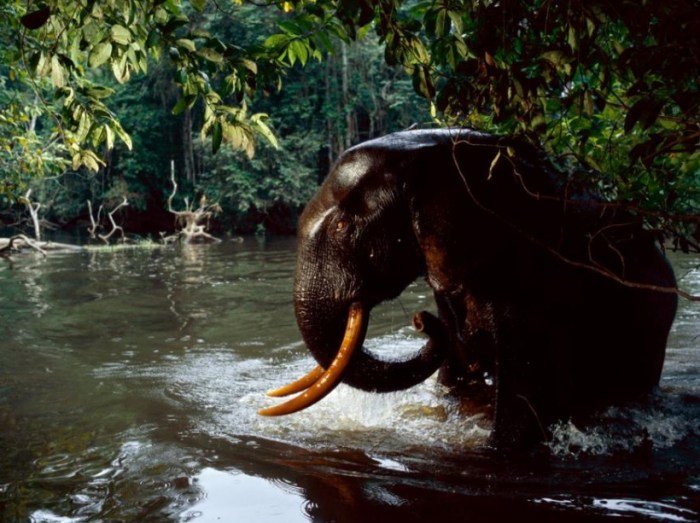
A camera trap captures a forest elephant wading through water. Gabon, Africa.

geo6

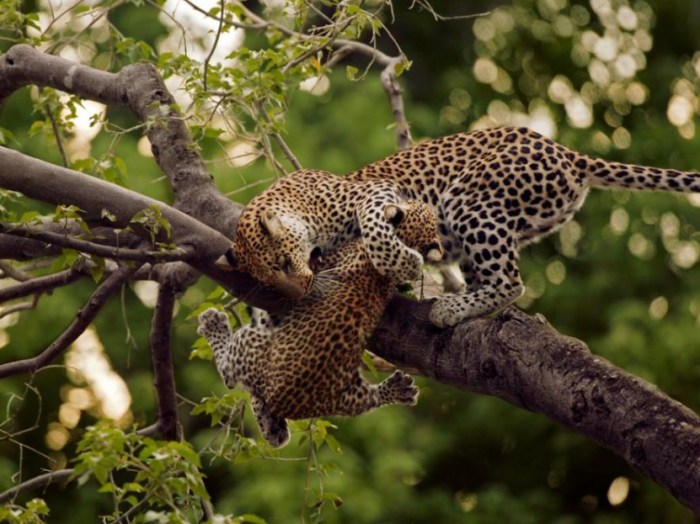
A mother holds onto her cub as it dangles from a high tree branch in Botswana’s Okavango Delta.

geo7

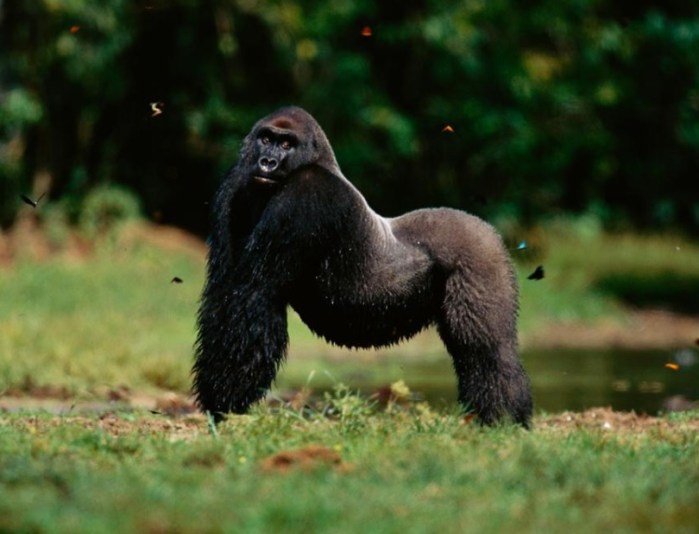
SILVERBACK GORILLA, REPUBLIC OF THE CONGO

geo8

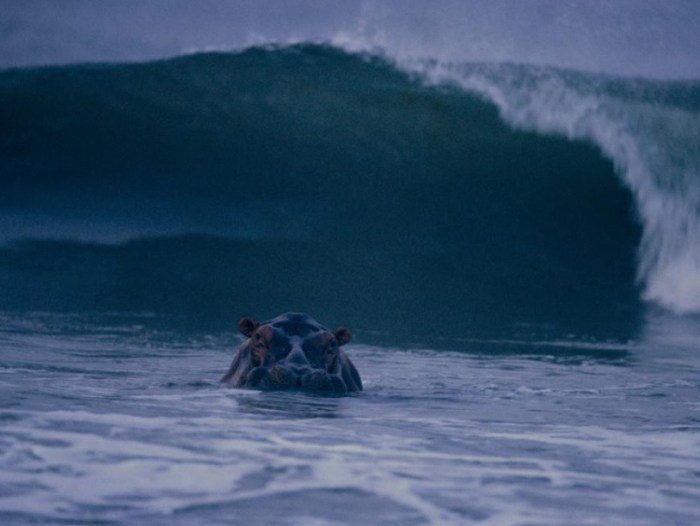
A hippopotamus surfs the waves off the coast of Gabon.

geo9


Polar Bear goes for a big swim, a very big swim!

BBC

A polar bear swam continuously for over nine days, covering 687km (426 miles), a new study has revealed.

Scientists studying bears around the Beaufort sea, north of Alaska, claim this endurance feat could be a result of climate change.

Polar bears are known to swim between land and sea ice floes to hunt seals.

But the researchers say that increased sea ice melts push polar bears to swim greater distances, risking their own health and future generations.

In their findings, published in Polar Biology, researchers from the US Geological Survey reveal the first evidence of long distance swimming by polar bears (Ursus maritimus).

“This bear swam continuously for 232 hours and 687 km and through waters that were 2-6 degrees C,” says research zoologist George M. Durner.

“We are in awe that an animal that spends most of its time on the surface of sea ice could swim constantly for so long in water so cold. It is truly an amazing feat.”

Although bears have been observed in open water in the past, this is the first time one’s entire journey has been followed.

By fitting a GPS collar to a female bear, researchers were able to accurately plot its movements for two months as it sought out hunting grounds.

The polar bear is the largest terrestrial carnivore, being more than twice as big as the Siberian Tiger.  It shares the title of largest land predator (and largest bear species) with the Kodiak bear.  Adult males weigh 350–680 kg (770–1500 lbs) and measure 2.4–3 m (7.9–9.8 ft) in length.   Adult females are roughly half the size of males and normally weigh 150–249 kg (330–550 lb), measuring 1.8–2.4 metres (5.9–7.9 ft) in length. When pregnant, however, they can weigh as much as 499 kg (1,100 lb).

Polar Bear swimming underwater at San Diego Zoo.

As of 2008, the World Conservation Union (IUCN) reports that the global population of polar bears is 20,000 to 25,000, and is declining.  In 2006, the IUCN upgraded the polar bear from a species of least concern to a vulnerable species.  It cited a “suspected population reduction of >30% within three generations (45 years)”, due primarily to global warming. Other risks to the polar bear include pollution in the form of toxic contaminants, conflicts with shipping, stresses from recreational polar-bear watching, and oil and gas exploration and development.  The IUCN also cited a “potential risk of over-harvest” through legal and illegal hunting.

Goats can perceive each other’s emotions from their voices

National Geographic

New research shows that goats can hear subtle emotional changes in goats’ calls, furthering our understanding about how animals perceive the world.

HOW ANIMALS PERCEIVE the world around them is still a mystery to us in so many ways.

That’s true even for smart, social animals like goats, whose charisma has inspired a whole YouTube sub-genre: dozens of videos that highlight funny and cute goat moments and have racked up millions of views. Sanctuaries like Goats of Anarchy that care for neglected goats have hundreds of thousands of highly engaged followers on Instagram.

It can be tempting to anthropomorphize these expressive and gregarious animals. But in truth, we still know very little about what—and how—non-human animals think and feel. Little by little, however, our window into animal cognition may be opening.

A new study published in Frontiers in Zoology on July 10, 2019 has confirmed that goats can differentiate between other goats’ happiness or displeasure by listening to their voices. In other words, they can tell how one another is feeling. This finding carries potential implications for how goats in captivity—whether they’re kept for meat, milk, wool, or companionship—are treated.

At the most basic level, says Luigi Baciadonna, the study’s lead author, it shows that “they’re aware of the environment they’re living in.” They join the ranks of horses, primates, sheep, and others as non-human animals capable of perceiving emotion in their kin.

Researchers involved in the study had previously concluded that goats can express emotion through their voices. Next, a larger team decided to explore whether goats can detect it in others. “If you’re not actually studying the effect of emotions on others, we’re missing an important social aspect,” says Luigi Baciadonna, postdoctoral research assistant at the Queen Mary University of London and lead author of the study.

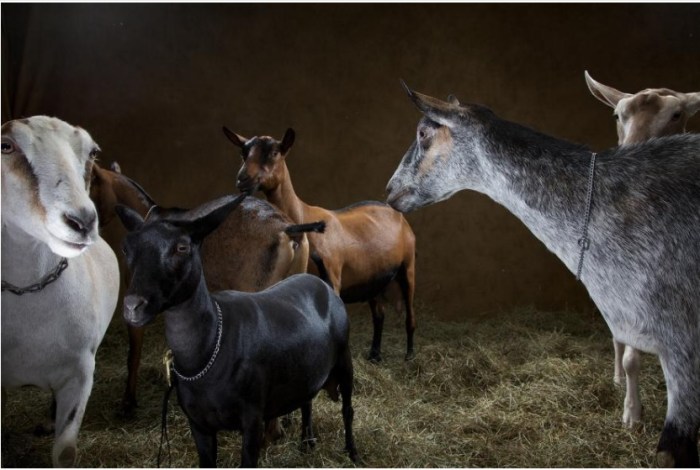
The group worked with 24 goats at Buttercups Sanctuary for Goats in Kent, England, which rescues abandoned and abused goats in and around the southeast part of the country.

A listening test

Researchers recorded calls that individual goats made when expressing happiness—upon being approached with food—and when expressing mild frustration—with being isolated from the herd for five minutes, or with watching other goats eating without being able to reach the food.

Then they played back the vocalizations to different goats outfitted with heart monitors. They found that the goats became more attentive when the emotions in the vocalizations changed, indicating they can detect a difference. And listening to happy vocalizations correlated to a greater variation in the length of time between heartbeats—a sign of positive wellbeing in mammals.

The researchers didn’t put the “frustrated” goats through particularly distressing scenarios, and so the sounds they made were far from anguished cries, says Baciadonna. To the human ear, they sound almost identical to the happy sounds. Yet goats were more attentive to the negative sounds than the positive sounds.

It’s logical, says Baciadonna. “You should be more vigilant with [potential] danger than if you’re at a party eating with friends.”

Kristina Horback, an assistant professor in the Department of Animal Science at the University of California, Davis, isn’t surprised at all by the findings. “This just makes evolutionary sense,” she says via email. She points out that it’s beneficial for all animals, including humans, to be able to rely on cues from others “that communicate something is in the environment”—whether good or bad—“that can impact their survival.”

What this means for goats
The key, Baciadonna says, is to next try to determine if emotions are contagious in any way. For instance, when a goat recognizes that another goat is in distress, would the first goat start to feel stress as well?

If the answer is yes, he wonders what people who care for and raise goats might do with that information. “If we treat an animal in bad conditions,” he says, triggering a call of distress, “there could be consequences…that could [potentially] spread in a group of animals. It’s up to us if we want to use that in a positive or negative way.”

Baciadonna hopes the study helps further highlight the complexity of goats and can be a building block for further research into how they communicate and the relationships they have with each other. “It’s not unusual that we see the same goats hanging out together for the rest of their lives,” he says.

Empathy and animals
There’s also a question of empathy—the ability to not just sense but vicariously understand another’s emotions. Entire studies have been done on just how difficult it is to evaluate empathy in non-human animals. Some studies have shown that many animals, including rats, chickens, and dogs, at least appear to exhibit signs of empathy. But other studies question whether these animals experience empathy as we do.

Leanne Lauricella, founder of Goats of Anarchy, a sanctuary for special-needs goats in New Jersey, would not be surprised in the least if further studies prove that goats can feel each others’ emotions. She has countless stories about the complex relationships her rescued goats have formed with each other.

“They feed off each other. The bonded pairs or groups eat together, play together, and lay in the sun together,” she says. “When one of our baby twins lost her twin sister, another one of our goats laid next to her and snuggled and comforted her.”

“The abilities of goats are sometimes underestimated,” Baciadonna says.


Superhero Bear Makes Daring Escape

Italy hunts bear after ‘genius’ escape over electric fences

A fugitive bear likened to a superhero for its daring escape over an electric pen in northern Italy is being hunted by forest rangers.

The brown bear, named M49, was snared in the Trentino region on Sunday.

Italian authorities had ordered the wild bear’s capture after deeming it a danger to humans and farm animals.

But the animal fled just hours after it was caught, reportedly scaling three electric fences and a 13ft (4m) high barrier.

The runaway bear (not pictured here) is believed to be roaming the Marzoil woods near Trento

Park rangers with sniffer dogs are hunting the animal, which is currently believed to be in the Marzoil woods near Trento.

Trentino’s governor Maurizio Fugatti gave forestry authorities permission to “shoot it down”, saying the bear’s escape over an electric fence “carrying 7,000 volts shows how dangerous it is”.

But his orders provoked fury among animal rights activists and were rebuked by Italy’s environment ministry.

“M49’s escape from the enclosure cannot justify an action that would cause its death,” said Environment Minister Sergio Costa.

‘Gifted with superpowers’

WWF Italy, a global conservation organisation, questioned how the bear was able to climb the electrified fence, suggesting the structure was probably “not working properly, since bears do not fly”.

Italy’s League for the Abolition of Hunting (LAC) gave the bear credit for a getaway Italian media have compared to the 1963 WWII film, The Great Escape.

“Evidently, M49 is an escape genius… gifted with superpowers akin to a hero of Marvel Comics,” it said.

Michela Vittoria Brambilla, president of the Italian Defence League for Animals, told M49 to “run and save yourself!”

The bear has received support on social media, too.

The hashtag #fugaperlaliberta – meaning #escapeforfreedom in Italian – has been shared widely on Twitter as animal lovers cheer on the runaway bear.

Although WWF Italy insisted the animal’s “danger to people is still to be demonstrated”, there was a case of a brown bear attack in 2017.

A female bear was shot dead by foresters in the Alps after it seriously mauled an elderly man walking his dog.

M49 is part of the Life Ursus conservation project, and is one of around 50 to 60 brown bears living in the Trentino region.

Since the 1990s, conservationists have worked to reintroduce brown bears into the region, where they had been exterminated by hunters.

BBC
Cat Uses Up One of its Nine Lives after Washing Machine Ordeal

Cat survives 45-minute ordeal in washing machine

Felix the cat used up one of his nine lives last week after he survived a 45-minute trip through a washing machine.

“The personality on this guy is … it’s one of a kind,” said Felix’s owner, Stefani Carroll-Kirchoff of Maplewood. “He’s lovable, but he does get himself into trouble.”

The year-old black-and-white tabby is recovering from the Wednesday incident, when, unnoticed, he climbed into a front-loading washing machine. He got water in his lungs and suffered a concussion, and veterinarians feared he could be permanently blinded by the laundry detergent.

Felix the cat, who survived a 45-minute ordeal in a washing machine on June 19, 2019, is pictured in an oxygen chamber at an Oakdale animal hospital. Felix climbed into the front-loading washing machine, unnoticed. (Courtesy of Stefani Carroll-Kirchoff)

But he’s proving to be resilient.

He still needs help breathing in an oxygen chamber while he recovers at the Animal Emergency and Referral Center of Minnesota in Oakdale. But he’s standing and eating and seems to be regaining his sight.

Carroll-Kirchoff said he must have climbed into the washing machine when she left for a moment to fetch more clothes.

Unknowingly, she shut the door and started the wash cycle. She said it was fortunate she had selected the express wash, which uses less water and takes less time. When she opened the door, she found the soaked Felix wrapped up in a towel and in bad shape. He was rushed to the animal hospital.

Carroll-Kirchoff’s daughter, Asha Carroll, started a GoFundMe page when the veterinary bills climbed into the thousands. As of Saturday night, more than $3,000 of the $5,000 goal had been met.

“I said to my daughter, ‘This is a feel good thing,’” said Carroll-Kirchoff. “I didn’t know there were this many good people in the world. I have people reaching out and helping that I have never met before. I could never repay what they have done.

Felix is missed at his household by two other cats, Nala and Bleu, who make up the Three Musketeers, Carroll-Kirchoff said.

The family noted on the GoFundMe page that such incidents have been reported before. They issued a warning to others:

“To those of you with cats, PLEASE always close your washing machine and dryer doors in between washes, and ALWAYS check your washing machine and dryer doors prior to beginning a wash. You can prevent an accident like this from happening.”