Ten Convincing Bigfoot Videos

If this Sasquatch creature does exist, how does it stay so well hidden for so long? It has utterly amazing abilities of stealth and concealment.  But it does get photographed and videotaped. Footprints are found that have dermal ridges very similar to great apes. Thousands of witnesses. Many of the eye witnesses sightings are probably misidentified stumps, logs and bears etc.

But many witnesses are law enforcement people, university professors, doctors, game wardens and just average people that have nothing to gain by reporting a sighting. Just the opposite, by coming forward and admitting that a they saw one of these creatures, it opens up the witness to ridicule and the subsequent grief that comes with that. One investigator put forward the thesis that only 10-20 percent of people who see these things report it. Therefore there are many thousands of eye witness sightings that go unreported. If you were by yourself and you saw one of these big hairy monsters, would you say anything? The Bigfoot phenomenon is confusing, mysterious, illogical and just plain weird.


The Silver Star Mountain sighting from a few years ago in Washington state.

biggy1

biggy3

biggy5


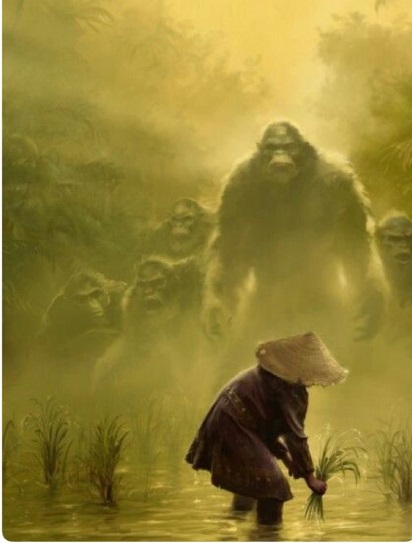
Similar creatures are reported in Asia.


California fires: Goats help save Ronald Reagan Presidential Library

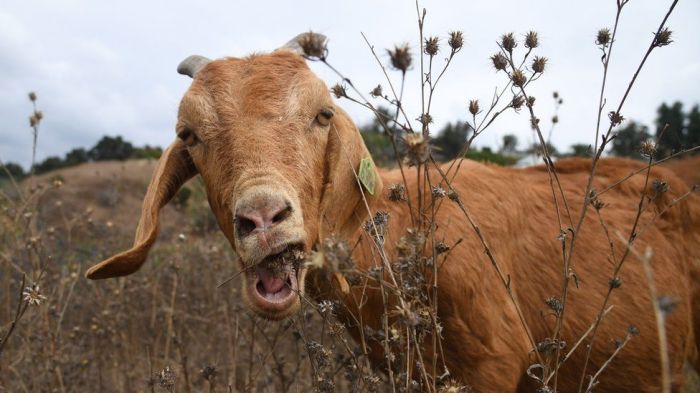
A goat grazes in South Pasadena last month as part of fire prevention efforts

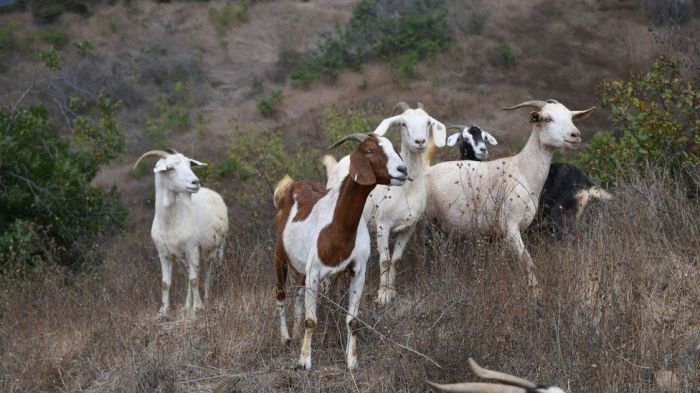
A hungry herd of 500 goats has helped save the Ronald Reagan Presidential Library from the California wildfires.

In May, the library hired the goats to clear flammable scrub surrounding the complex as a preventative measure.

The goats ate the brush, creating a fire break that slowed the flames and gave firefighters extra time to react.

The library near Los Angeles was threatened by the Easy Fire, the latest in a spate of fires causing evacuations and power cuts across the state.

The caprine contractors included Vincent van Goat, Selena Goatmez and Goatzart. They helped save exhibits including an Air Force One jet and a piece of the Berlin Wall.

“We were told by one of the firefighters that they believe that fire break made their job easier,” Melissa Giller, a library spokeswoman, told Reuters.

Goat grazing is one way of removing highly flammable brush

The goats were hired from a local company – 805 Goats – to clear around 13 acres of land.

Scott Morris started the company last November and charges around $1,000 (£771) per acre of land.

As California continues to have more wildfires, Mr Morris says he will need to double his herd to meet demand.

Another large southern California institution – the Getty Museum in Los Angeles – was also protected this week by scrub-clearing work carried out by staff.

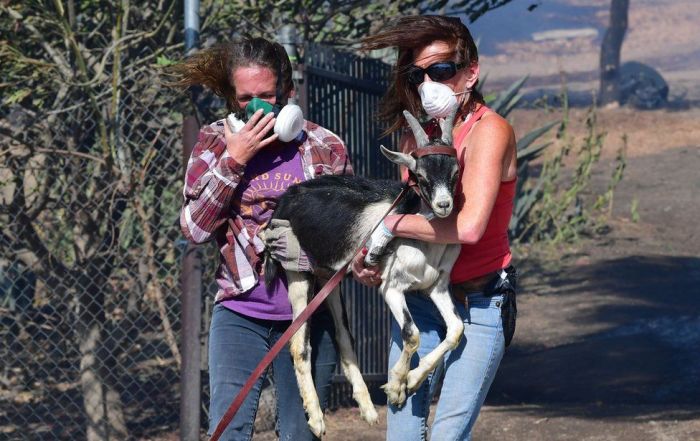
Goats from a ranch near the Reagan Library were also rescued from the Easy Fire

What has happened to animals caught in the path of fires?

Ranchers and volunteers have been scrambling to evacuate farm animals, carrying them away on trailers, dropping them somewhere safe, and then turning around to rescue more.

In some cases, when the flames move too quickly for trailer rescues, the animals are simply let loose in the hope they can escape on their own and be recovered later.

People attempt to load a frightened horse into a trailer in Canyon Country

BBC

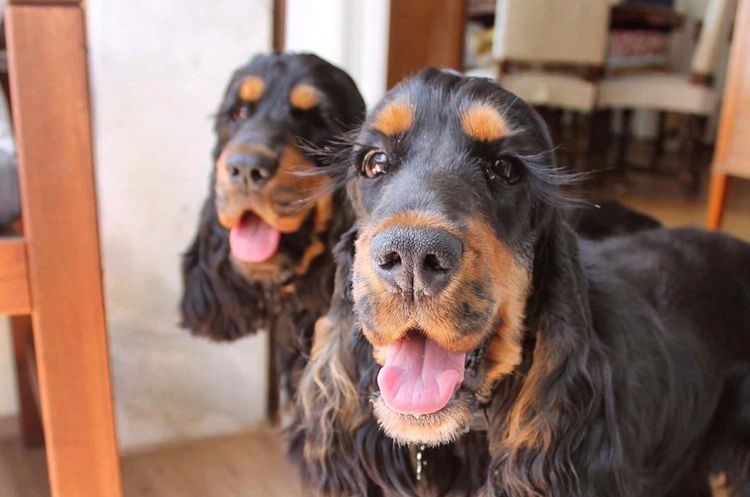
Luscious Eyelashes Turn Cocker Spaniels into Social Media Sensations

Cocker Spaniels are known for having long, beautiful eyelashes, but canine pair Cloe and Nena’s lashes are unusually long even for their breed, and they’ve turned the two pooches into overnight Instagram sensations.

If there was such a thing as a canine beauty influencer, Cocker Spaniel twins Cloe and Nena would most certainly fit the bill perfectly. Not only do they sport luscious eyelashes measuring a whopping 6-cm-long, but they also appear to love getting groomed by their owner, 22-year-old Vittoria Di Castri, including having mascara applied on their lashes to highlight their main features. Some people have a hard time believing the two pooches’ eyelashes aren’t fake, but Di Castri insists they are all natural.


“Cloe and Nena’s eyelashes are 100 per cent natural and often I need to cut them, trim them and even comb them,” the 22-year-old Italian told Storytender. “I have seen Cloe’s growing up to six-centimetres-long. She has had them very long since she was born, while Nena started growing hers when she was around eight-months-old.”

View this post on Instagram

Hey Human, what’s up?

A post shared by Cloe & Nena 🐾 (@cockertwinss) on

While certainly surprising in size, Cloe and Nena’s eyelashes aren’t even close to setting a record for the world’s longest canine lashes – currently standing at 5.35 inches – but their natural affinity for modelling and the way they look into the camera with puppy eyes has made them very popular on photo-sharing sites like Instagram.

The House Hippo

The house hippo is the subject of a Canadian television public service announcement (PSA) produced by Concerned Children’s Advertisers (now known as Companies Committed to Kids) in May 1999 and reintroduced by MediaSmarts in 2019. The original sixty-second clip was directed by Tim Hamilton of Avion Films. Effects were produced by Spin Productions.

The narration of the piece is spoken in the style of a Hinterland Who’s Who spot, showing footage and describing the behaviour of the “North American house hippo”, a fictional animal found “throughout Canada, and the eastern United States.” The hippo is shown foraging for the crumbs of peanut butter toast in a kitchen, escaping from a house cat, and making a nest from lost mittens to go to sleep.

Their stated intent is to educate children about critical thinking with regard to what they see in television advertising, and remind them that “it’s good to think about what you’re watching on TV, and ask questions”. Nevertheless, some viewers on social media have expressed that as children, they completely believed that house hippos were real based on this commercial.

This bear couldn’t break into a pot shop’s dumpster — so it took the whole thing

Bud Depot employee nicknames the bear Cheeseburger ‘because of all the good food he’s been trying to get’

When a Colorado black bear was unable to pry open a dumpster behind a cannabis shop, the animal made off with the whole thing instead.

Surveillance footage from The Bud Depot in Lyons., Colo., caught the hungry creature bursting through a locked fence door to access the garbage bin.

After trying in vain to get through the dumpster’s metal locks, the bear stands up on its hind legs and carefully drags it through the fence door and out into the alley for several metres before finally giving up.

“Seeing the video of that definitely blew my mind,” Bud Shop employee Nikko Garza told As It Happens guest host Megan Williams.

Garza says he’s seen the bear — or at least one like it — around the area a few times in the small mountain town.

Usually, he said, it goes for the nearby restaurant dumpster, because The Bud Depot keeps its trash behind a locked fence.

But this time, he said, the bear burst through the door like Jack Nicholson in The Shining. 

“But I imagine he’s a lot friendlier,” he said. “Instead of running toward you, he’ll run away.”

Garza has nicknamed the bear Cheeseburger “just because of all the good food he’s been trying to get.”

“He loves this grease trap back there,” Garza said, referring to the restaurant’s dumpster. “He loves just rubbing up against that.”

And it’s a snack the bear was after at the Bud Depot too. Garza confirmed it wasn’t trying to score the shop’s weed supply.

“I imagine he could probably smell something from the shop, but as far as the dumpster goes, we don’t have any cannabis products in there.”

The animal ran off, but Garza says he’s spotted another bear, or possibly the same one, once more since the dumpster incident.

Local wildlife officials say they are keeping an eye out for more.

Cats, dolphins and one smart raven: the CIA’s secret animal spies

Washington (AFP) – In early 1974, Do Da was top in espionage class, on the way to becoming a high-flying CIA agent: he handled himself better in the rough, carried heavier loads, and could brush off attackers.

But on his toughest-yet spy school test, he disappeared — done in by some of his own kind: ravens.

The bird was a central figure in a decade-long US Central Intelligence Agency program to train animals as agents, helping Washington fight the Cold War against the Soviet Union.

On Thursday, the CIA released dozens of files from its tests on cats, dogs, dolphins and on birds from pigeons to some of the smartest: ravens and crows.

It studied cats as possible loose-roaming listening devices — “audio surveillance vehicles” — and put electrical implants in dogs’ brains to see if they could be remotely controlled.

Neither of those programs went very far. More effort was put into training dolphins as potential saboteurs and helping spy on the Soviet Union’s development of a nuclear submarine fleet, perhaps the most potent challenge to US power in the mid-1960s.

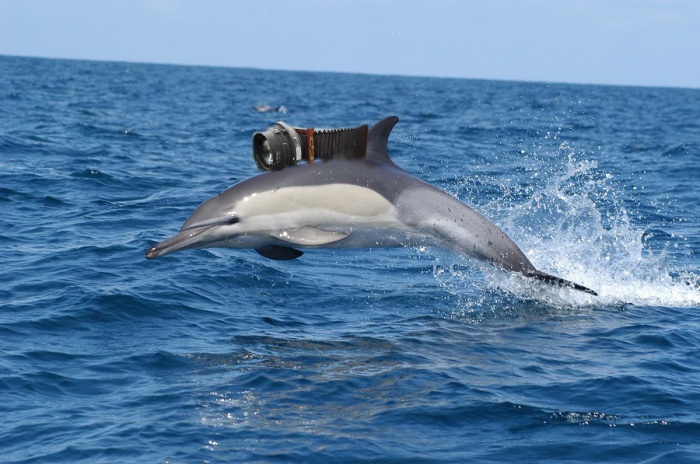
Projects Oxygas and Chirilogy sought to see if dolphins could be trained to replace human divers and place explosives on moored or moving vessels, sneak into Soviet harbors and leave in place acoustic buoys and rocket detection units, or swim alongside submarines to collect their acoustic signatures.

Those programs, too, were given up, left to the US Navy which to this day makes use of dolphins and seals.
camerax2

– Hawks and owls –

But what also grabbed the US spy chiefs’ imagination in the Cold War days was birds — pigeons, hawks, owls, crows and ravens, and even flocks of wild migratory birds.

For the latter, the agency enlisted ornithologists to try to determine which birds regularly spent part of the year in the area of Shikhany in the Volga River Basin southeast of Moscow, where the Soviets operated a chemical weapons facility.

The CIA saw the migratory birds as “living sensors” which, based on their feeding, would reveal what kinds of substances the Russians were testing, in their flesh.

In the early 1970s, the CIA turned to birds of prey and ravens, hoping they could be trained for “emplacement” missions like dropping a listening device on a windowsill, and photo missions.

In project Axiolite, bird trainers working on San Clemente island off southern California taught the birds to fly miles over the water between a boat and land.

If the training went well, a chosen candidate would have a tough mission: being smuggled to Soviet Russia, where it would be released secretly in the field, tasked to fly 15 miles (25 kilometers) carrying a camera to snap pictures of a radar for SA-5 missiles, and fly back.

They had red-tailed and Harris’s hawks, great horned owls, a vulture, and a cockatoo.

It was not easy. A cockatoo was “a clever flyer” but “maybe too slow to avoid gull attacks.”

Two falcons died from illness; another promising candidate lost feathers and trainers had to wait for it to molt and grow them back.

– ‘Star’ of the project –

The most promising flyer was Do Da, the raven. In just three months, Do Da went from a successful 3/4-mile trip to six miles from shore to boat, and then four miles back to shore on the same day.

He was the most promising candidate for the Russia mission, the “star of this project,” one scientist wrote, who figured out the right altitudes in the right winds, and acquired “sufficient guile to outwit the native ravens and gulls,” which hid for attacks on him.

But on a training mission he was attacked by “the usual pair” of ravens — and was not seen again.

The scientists were deeply dismayed. “He had a large bag of tricks and was loved by all,” one wrote.

cameraz1