‘Something extraordinary happened there. No one knows for certain what it was’
CBC Radio

Oak Island, Nova Scotia is the location of treasure hunts, investigations and excavations since the late 1700s.
It’s the world’s longest-lasting treasure hunt, yet explorers show no sign of giving up on uncovering the secrets of Oak Island.
Rumours began swirling more than two centuries ago that infamous pirate captain William Kidd buried treasure on the 57-hectare piece of land of the coast of Nova Scotia. Since then, the island has drawn in treasure hunters from all over the world, each thinking they’ll be the one to solve a piece of the mystery of where — and what — the so-called treasure is.
Loss of money, sanity and even life have occurred during expeditions. But explorers keep coming back.
“Something extraordinary happened there. No one knows for certain what it was,” said American author and journalist Randall Sullivan.
“There’s just something about the place that captivates people.”
Sullivan dug up some of the history and intrigue of the island in his new book, The Curse of Oak Island: The Story of the World’s Longest Treasure Hunt.
He discusses how Oak Island became such an alluring enigma with Anna Maria Tremonti on The Current. Here is part of their conversation.
How does the mystery of Oak Island begin?
Well, it begins historically in 1795 with three teenage boys on this little island.
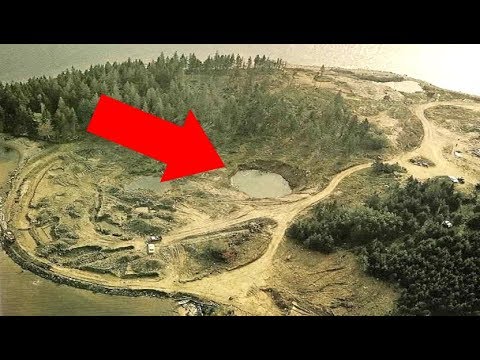
[One of the boys] found an area that was — the oak trees were younger. And then he saw the stumps of old oak trees had been cut down. Then he saw that there was sort of a circular depression that the new trees were growing in.
And he concluded that this was probably a pirate treasure, and he got two friends to join in. And what they found immediately started the intrigue.
They dug down a few feet and there was basically a patio of hand-laid stones. They dug down under that and in 10 feet struck wood. [They] thought they’d hit the top of a treasure chest. But what they’d actually hit was a platform of logs that were embedded in the walls of this round shaft. And they knew it was a manmade shaft, because the outer walls were rock-hard clay but inside it was all loose dirt that had been dug out. They dug down another 10 feet … it was another platform of logs.
At that point they looked up, saw 20 feet of earth towering above them and realized they’d be buried alive by any slippage, and so [they] covered it over and filled it in a bit and then went looking for someone who could mount a more exhaustive or elaborate search.
It wasn’t until the next group arrived and hit platforms at 30 feet, 40 feet, 50 feet, 60 feet, 70 feet, 80 feet, and at 90 feet hit one that had a large stone tablet on it.
Then when they flipped it over there was some sort of an inscription on it, something that had been carved or etched into the stone. And it was a code of some sort. … Whatever it was, they couldn’t decipher it.
So the theory was that [Captain Kidd] had gone to Oak Island and buried his treasure there?
This story was spread around the country about an old sailor who claimed that he’d been part of Captain Kidd’s crew and had buried treasure on some island off the Atlantic coast. … So that spread up and down from New England into the Maritime Provinces of Canada and so virtually everybody knew that story and thought that there was a Captain Kidd treasure somewhere buried. So these boys jumped to that conclusion.
There are so many other theories that it boggles the mind because it’s such a Rorschach blot for any treasure hunter or conspiracy theorist or amateur historian.
Some of them are a bit more mundane or obvious like that the Acadians, when they were pushed out of Nova Scotia, might have buried their treasure somewhere or created a bank to store it.
The two that are most attractive to people involve the fact that it may have been the Knights Templar who may have buried … the treasures they removed from under the temple in Jerusalem when they were occupying it. That would be the Holy Grail.
And then there’s a whole segment of people who believe it was the followers of Francis Bacon and all of this group of kind of the original Rosicrucians who gathered around him in England. That one sounded the most outlandish.
And if anybody finds anything, who gets to keep it?
Well, the Canadian government has a special Oak Island Law. It’s the only one of its kind in the country, whereby they permit treasure hunting on Oak Island … but they [the government] get 10 per cent of whatever is found.
People have been digging on Oak Island for more than 200 years. If something was really there, you’d think they would have found it by now.
That’s a fair point to make, but they have found a lot of really curious things. That’s what keeps them going.
I mean a couple of summers ago they found the remains of human beings at 180 feet. So what were people doing 180 feet below the ground on Oak Island other than performing these excavations? And they dated them to at least 300 years ago. So 300 years ago, people were down digging 180 feet below the ground on Oak Island for some reason.
The Money Pit




























 The MarkoZen Blog