Golden Gate Bridge Road Zipper

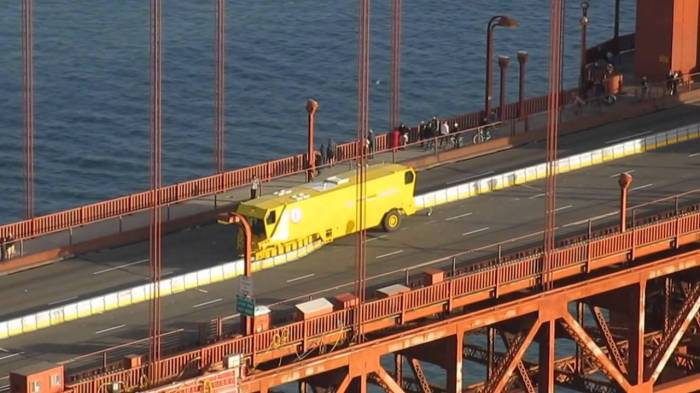
A barrier transfer machine, also known as zipper machine or road zipper, is a heavy vehicle used to transfer concrete lane dividers, such as jersey barriers, which are used to relieve traffic congestion during rush hours. Many other cities use them temporarily during construction work. The lanes created by the machine are sometimes referred to as “zipper lanes”.

One advantage of barrier systems over other lane management treatments (i.e. traffic cones or overhead directional lights) is that a solid, positive barrier prevents vehicle collisions due to motorists crossing over into opposing traffic flow. A disadvantage is that lane widths can be slightly reduced.

azipper

azipper1

Carhenge

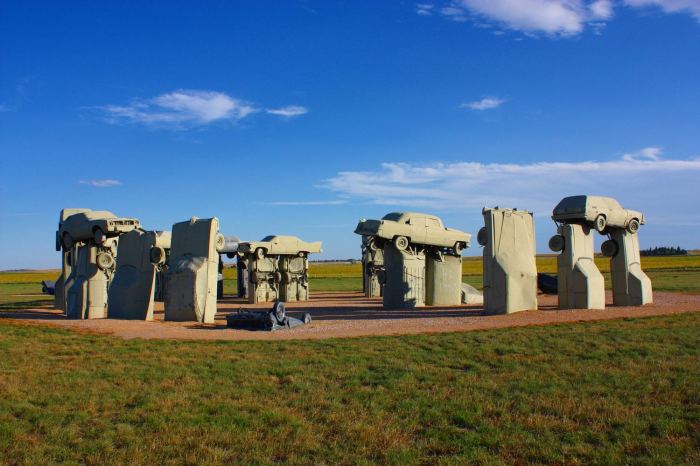
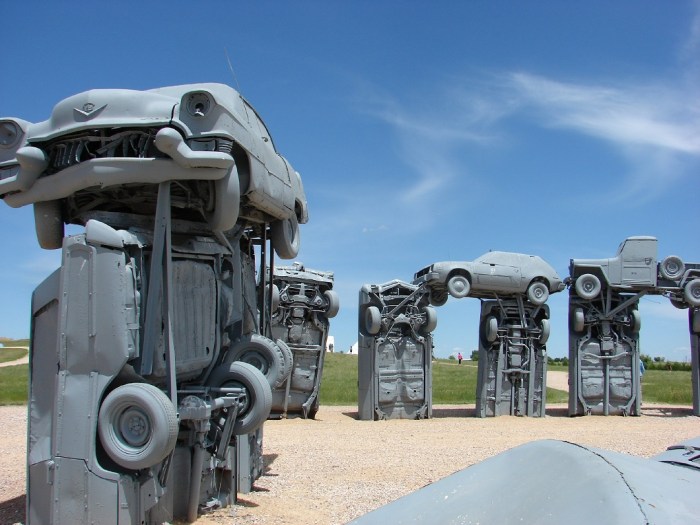
Carhenge is a replica of England’s Stonehenge located near the city of Alliance, Nebraska, in the High Plains region of the United States. Instead of being built with large standing stones, as is the case with the original Stonehenge, Carhenge is formed from vintage American automobiles, all covered with gray spray paint. Built by Jim Reinders, it was dedicated at the June 1987 summer solstice. In 2006, a visitor center was constructed to serve the site.

car4

car

Carhenge consists of 38 automobiles arranged in a circle measuring about 96 feet (29 m) in diameter. Some are held upright in pits 5 feet (1.5 m) deep, trunk end down, and arches have been formed by welding automobiles atop the supporting models. The heelstone is a 1962 Cadillac. Three cars were buried at Carhenge with a sign stating: “Here lie three bones of foreign cars. They served our purpose while Detroit slept. Now Detroit is awake and America’s great!”

Carhenge replicates Stonehenge’s current dilapidated state, rather than the original stone circle erected between 2500 BC and 2000 BC.

In addition to the Stonehenge replica, the Carhenge site includes several other artworks created from autos covered with various colors of spray paint.

car5

Carhenge was conceived in 1987 by Jim Reinders as a memorial to his father. While in England, he studied the structure of Stonehenge, which helped him to copy the structure’s shape, proportions, and size. Other automobile sculptures were subsequently added to the location of Carhenge, which is now known as the Car Art Reserve.

Reinders donated the 10-acre site to the Friends of Carhenge. In 2011 the Friends of Carhenge listed the attraction for sale for $300,000. In 2013 the Friends of Carhenge donated the site to the Citizens of Alliance.

Carhenge has appeared in film, popular music, television programs and commercials. It is the subject of the 2005 documentary Carhenge: Genius or Junk?, and features in the 2007 travel book 1,000 Places to See in the USA and Canada Before You Die.

The path of totality of the solar eclipse of August 21, 2017 included Carhenge. An estimated 4,000 people, including Nebraska governor Pete Ricketts, viewed the eclipse from the site. Reinders stated that at the time of Carhenge’s creation, he had not known about the eclipse that would occur 30 years later.

car2

car3


Wildlife Crossings around the World

Rapid deforestation and excessive human intervention into wildlife habitat has lead to frequent straying of wild animals into human habitation. Intrusion into wildlife habitat typically occurs due to illegal encroachment and also when roads, railroads, canals, electric power lines, and pipelines penetrate and divide wildlife habitat. Wild animals attempting to cross roads often find themselves in front of speeding vehicles.

Road mortality has significantly impacted a number of prominent species in the United States and elsewhere, including white-tailed deer, Florida panthers, and black bears. According to a study made in 2005, nearly 1.5 million traffic accidents involving deer occur each year in the United States that cause an estimated $1.1 billion in vehicle damage. In addition, species that are unable to migrate across roads to reach resources such as food, shelter and mates experiences reduced reproductive and survival rates.


Wildlife overpass in Banff National Park. Photo: Joel Sartore 

One way to minimize human-wildlife conflict is to construct wildlife crossings such as bridges and underpasses that allow animals to cross human-made barriers safely. The first wildlife crossings were constructed in France during the 1950s. Since then, several European countries including the Netherlands, Switzerland, Germany, and France have been using various crossing structures to reduce the conflict between wildlife and roads. In the Netherlands alone there are more than 600 tunnels installed under major and minor roads including the longest “ecoduct” viaduct, near Crailo that runs 800 meters.

Wildlife crossings have also become increasingly common in Canada and the United States. The most recognizable wildlife crossings in the world are found in Banff National Park in Alberta where the national park is bisected by a large commercial road called the Trans-Canada Highway. To reduce to effect of the four lane highway, 24 vegetated overpasses and underpasses were built to ensure habitat connectivity and protect motorists. These passes are used regularly by bears, moose, deer, wolves, elk, and many other species.


In the United States, thousands of wildlife crossings have been built in the past 30 years, including culverts, bridges, and overpasses. These have been used to protect Mountain Goats in Montana, Spotted Salamanders in Massachusetts, Bighorn Sheep in Colorado, Desert Tortoises in California, and endangered Florida Panthers in Florida.

The Netherlands contains an impressive number of wildlife crossings – over 600, that includes both underpasses and ecoducts. The Veluwe, a 1000 square kilometers of woods, heathland and drifting sands, the largest lowland nature area in North Western Europe, contains nine ecoducts, 50 meters wide on average, that are used to shuttle wildlife across highways that transect the Veluwe. The Netherlands also boasts the world’s longest ecoduct-wildlife overpass called the Natuurbrug Zanderij Crailo. This massive structure, completed in 2006, is 50 m wide and over 800 m long and spans a railway line, business park, river, roadway, and sports complex.

Ecoduct Borkeld in the Netherlands.

Banff.


Ecoduct Kikbeek in Hoge Kempen National Park, Belgium.


Banff


Elephant underpass in Kenya.


Around the World in 105 Cows

A book of bovine beauty shots seeks to revive the human-cattle bond.

cow

While Werner Lampert was living on an alpine pasture, he discovered that cows have an insatiable appetite for, among many things, poetry. Each morning, he’d clamber up a small hill to the pasture where his bovine neighbors were grazing. There, he’d read aloud the works of the German Romantic poet Friedrich Hölderlin. The cows would gather around him, listening attentively until he finished delivering the poem at hand. “When I stopped … they would soon scatter,” writes Lampert. “But the next morning they would be there waiting for me again.”

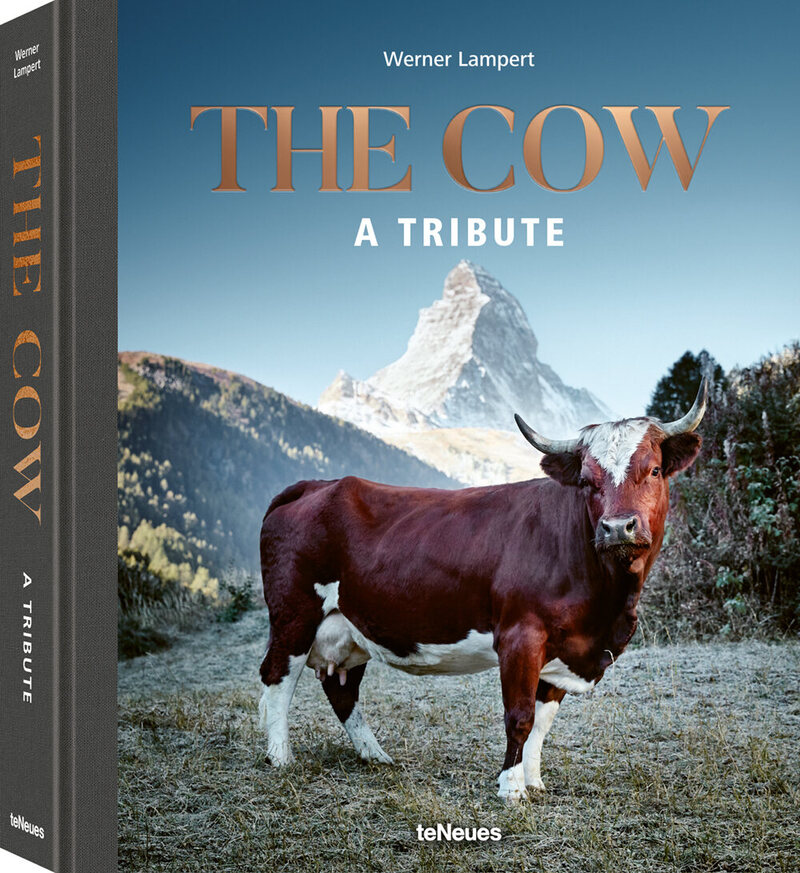
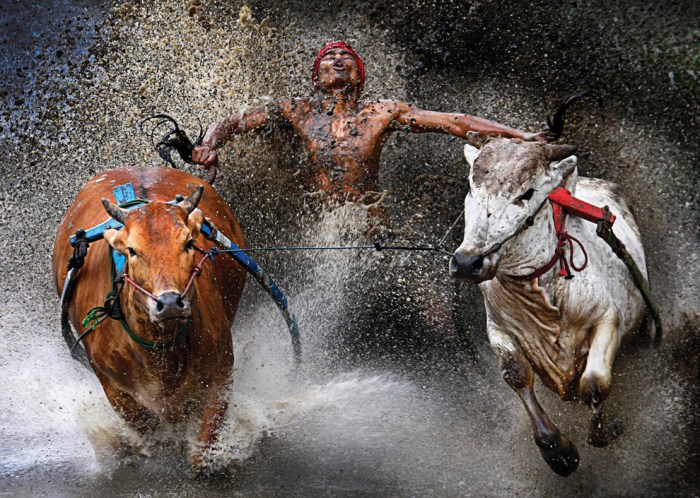
According to Lampert, cows and humans share a special relationship—one that goes way deeper than impromptu poetry readings. That’s why he partnered with a team of photographers to journey around the globe documenting the many breeds of cattle that populate the planet, as well as the humans who look after them, work with them, worship them, and eat them. His forthcoming book, The Cow: A Tribute, is an epic ode to the stunning diversity of cows and the many ways in which they’ve helped humans thrive over the past 10,000 years. From the skyward-pointing horns of Ethiopian Raya-Azebo cattle to the spellbinding eyes of Austrian Montafons, The Cow offers a comprehensive, striking mosaic of the global bovine body and soul. (Yes, Lampert asserts, cows have souls.)

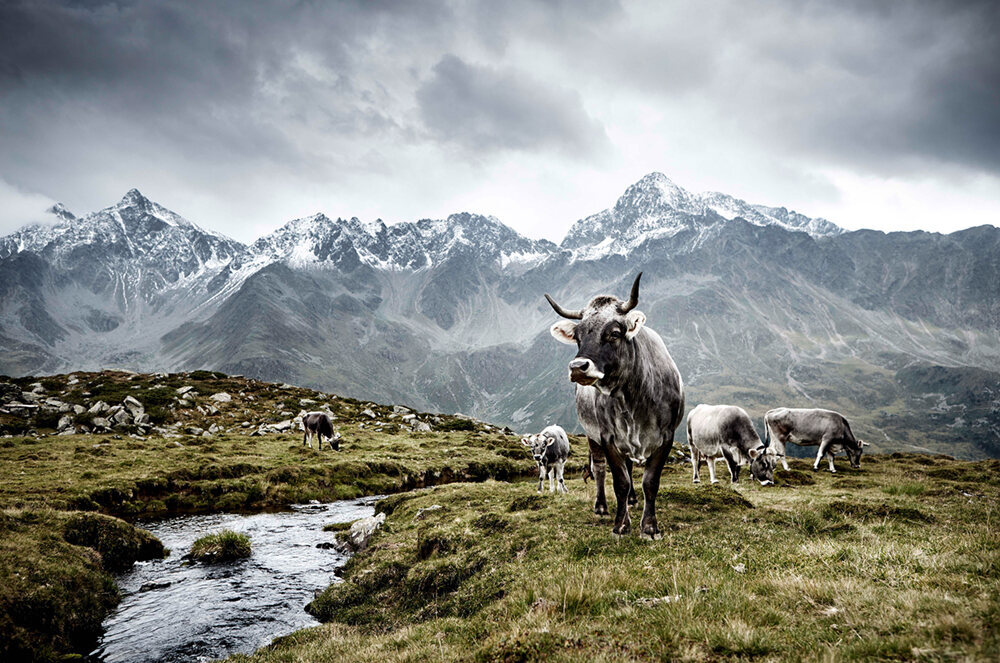
You should probably make this ridiculously stunning Grauvieh picture the background of whatever device you’re reading this article on.

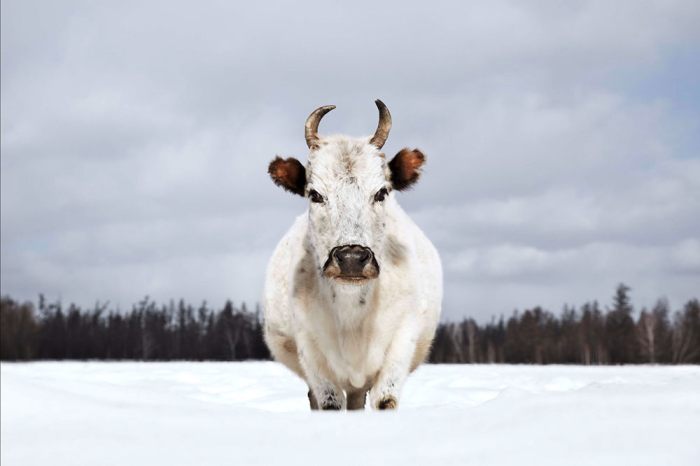
With the help of cows, writes Lampert, humans have been able to successfully inhabit even the most extreme environments. In parts of northeast Siberia, temperatures can dip as low as -90 degrees Fahrenheit. But, with thick, white hair covering its compact body and udder, the gritty Sakha Ynaga can still produce plenty of milk. The Sakha people rely on this high-fat beverage for nourishment and medicinal purposes, and use the Sakha Ynaga’s dung as insulation to keep their homes warm throughout the harsh winter.

The book itself.
The book itself. 

Lampert celebrates not only the resilience, strength, and utility of these age-old beasts of burden, but also the way they’ve shaped human communities, culture, and religion for thousands of years. Cows are spiritually revered within many religious communities, and have been since ancient times. “Sacrificial cattle were the link between man and the gods, a channel for sacred communication between them,” writes Lampert. “Cows were possibly the first sacred animals in human history.”

It’s with a similar tone of reverence that Lampert describes each breed of cow he profiles. He readily admits that an image of Tiroler Grauvieh, the silvery-grey, graceful cows that roam about the eastern Alps, currently features as the background image on his phone. “Of course!” he writes, “so I am reminded of their sheer beauty every day.”

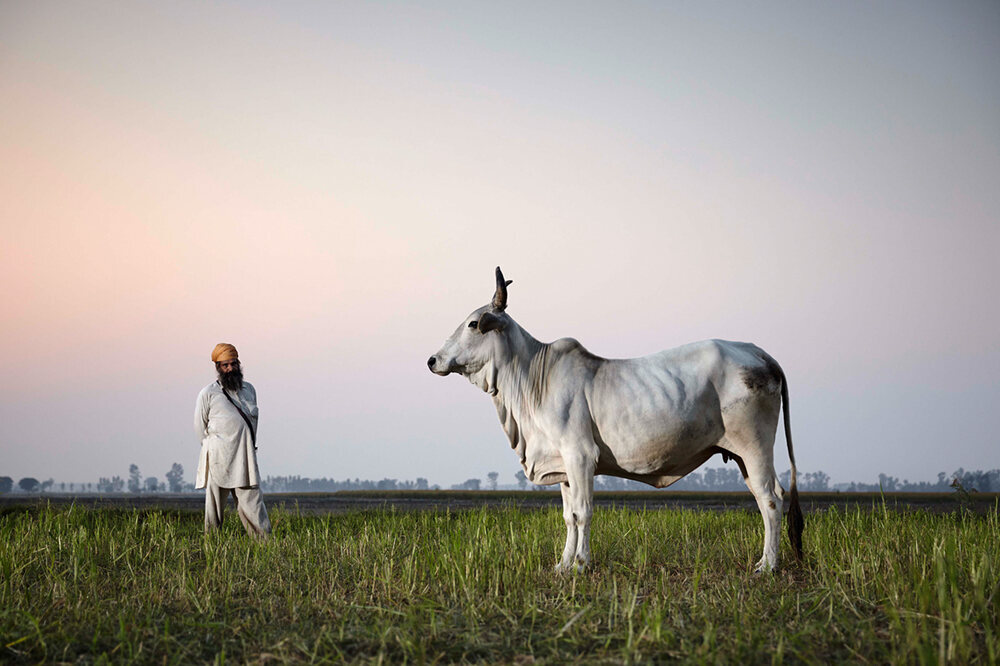
According to Lampert, the Hariana cow (Haryana, India) is a lie detector of a cow, and will “go quite crazy” if someone lies in its presence.
According to Lampert, the Hariana cow (Haryana, India) is a lie detector of a cow, and will “go quite crazy” if someone lies in its presence. WERNER LAMPERT GMBH, PHOTO JUDITH BENEDIKT

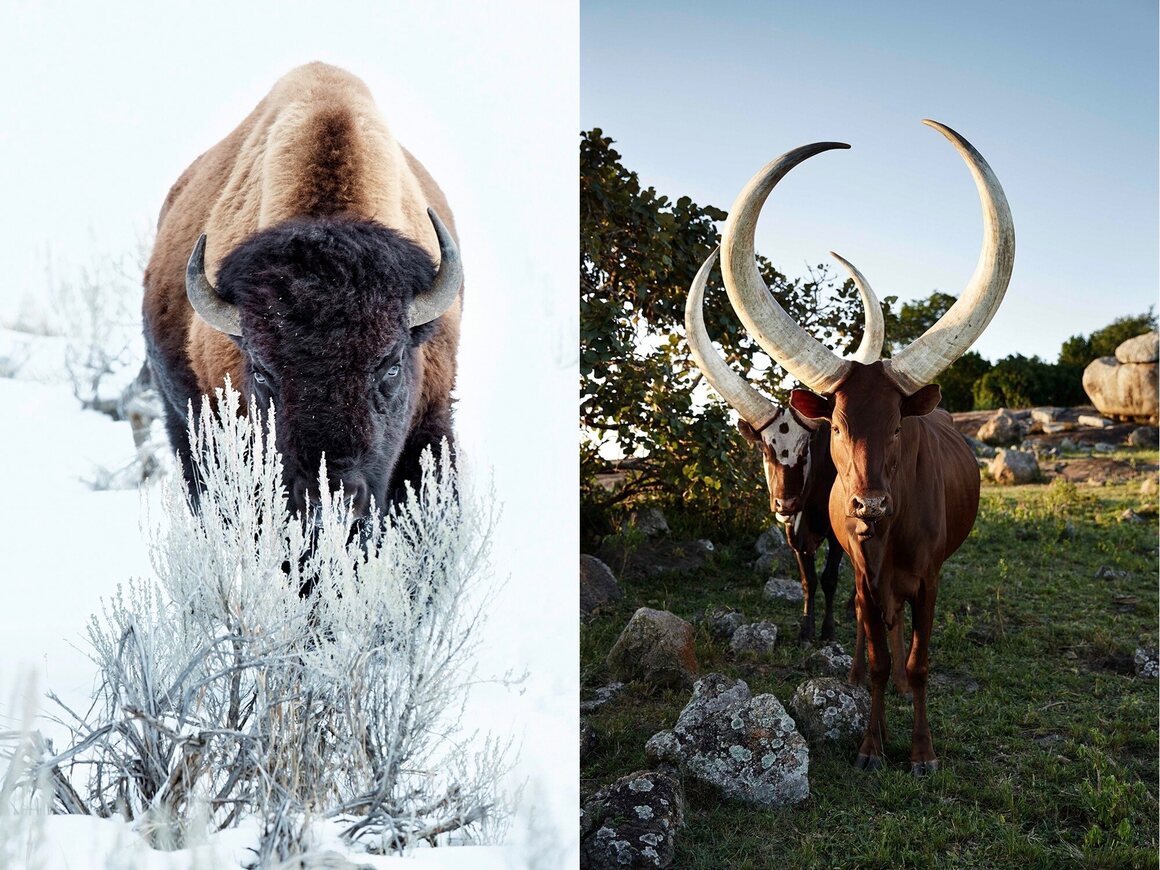
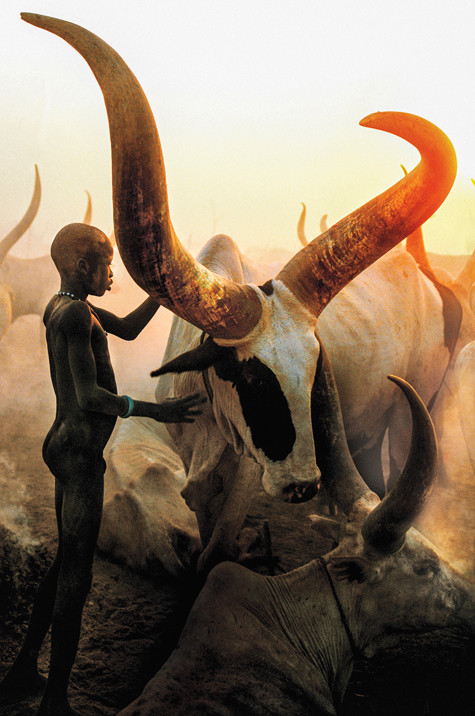
The Ankole, found in Uganda, as well as parts of the Congo, Burundi, Rwanda, and Tanzania, is characterized by its majestic gait and giant, twisting horns. Warm to the touch, the powerful, bony structures are believed to be crucial tools for keeping cool. Filled with supportive tissue, the horns usher in warm, circulating blood, which cools as it flows to the tip of the horn.

Lauded for its striking beauty, the Ankole is also integral to community structure and affairs. According to Lampert, these cows are never sold, but rather included in dowries, offered up as appeasement if someone has broken community rules, or gifted to those who have suffered some kind of misfortune. “Ankoles help maintain equilibrium between people,” writes Lampert.

But while some communities have embraced cattle and bolstered populations, others have essentially destroyed them. This is the history of the North American bison, which once numbered more than 30 million by some estimates, stretching in vast herds across the Great Plains. European colonization and decades of habitat destruction, reckless hunting, and mass killing of the creatures (intended to deprive Native American communities of a food supply), shrunk that number to nearly 1,000 by 1890.

A beautiful, fuzzy bison behind a bush (left) and two Ankoles and their iconic horns (right).
A beautiful, fuzzy bison behind a bush (left) and two Ankoles and their iconic horns (right)

In a way, Lampert’s tribute to the diversity of the world’s cows is also a eulogy. He searches desperately for the Kouprey, a beautiful, elusive, endangered ox believed to be living in the Cambodian jungle. But the team couldn’t find a single one. According to Lampert, they’ve likely fallen victim to poaching and habitat destruction. This is part of a larger trend, he says. According to the Food and Agriculture Organization, of about 1,408 breeds of cattle, 184 are listed as extinct and 490 as at risk.

There was, perhaps, a time when these utterly mystifying ungulates were more than just cash cows to most of us. But, Lampert points out, something in this special human-bovine bond has been broken. We’ve begun to take without giving—or even really appreciating—our bovine companions. We view them as products, not as the fascinating, resourceful, stunning creatures they are.

The cows seem to like music to.

bull1

bull7


The Star Trek Orion Women

Orion_slave_girls

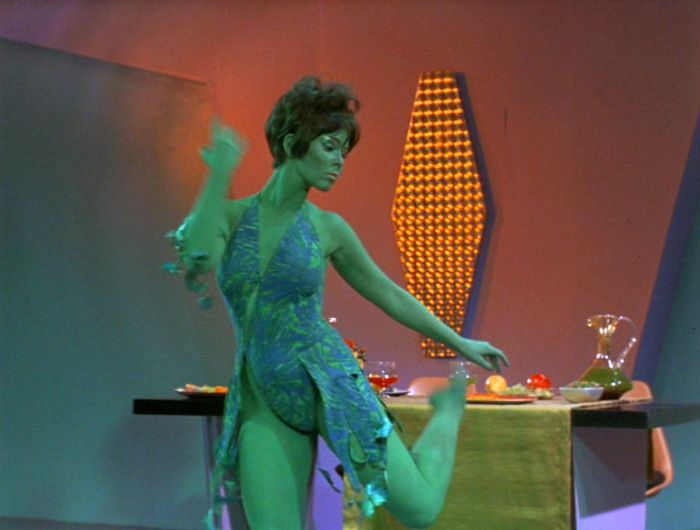
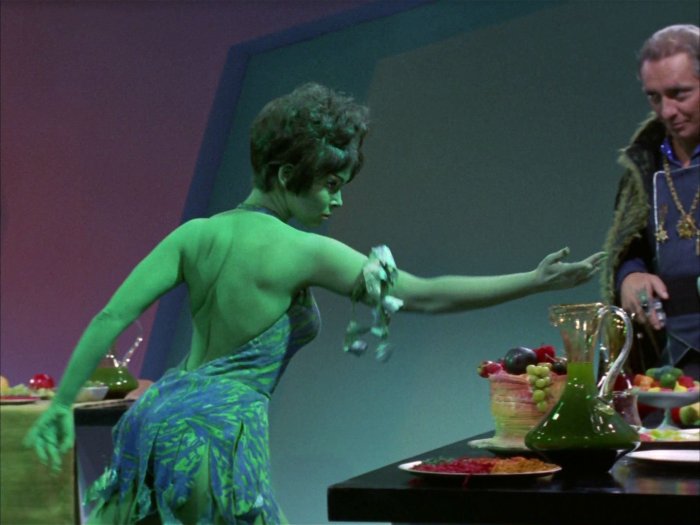
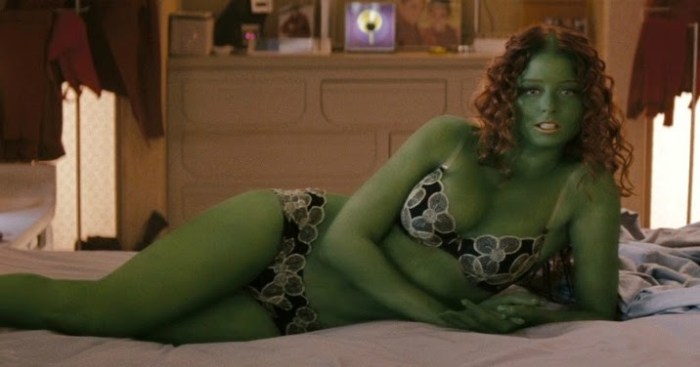
The Orions are a fictional extraterrestrial humanoid species in the American science fiction franchise Star Trek, making their first appearance in the initial pilot for Star Trek: The Original Series, “The Cage”. Susan Oliver portrayed the first Orion seen on screen, when her human character Vina was transformed into one, although it was Majel Barrett who underwent the original makeup test. The footage was subsequently used in the two-part episode “The Menagerie”. Yvonne Craig, who was considered for the role of Vina, later played an Orion in “Whom Gods Destroy”.

Yvonne Craig

orion6

orion7

Orion women have also been seen in the films Star Trek and Star Trek Into Darkness. Females of the species have become known as Orion slave girls, who have become popular among fans as costumes. These slave girls have been received negatively by critics, who have suggested that they are too sexual and that the in-universe reactions to them expresses a lack of sexual diversity among Star Trek characters.

orion

orion2

orion4

orion5

Male Orions made their first appearance in the Star Trek: The Animated Series episode “The Pirates of Orion” but did not appear in live action until the Star Trek: Enterprise episode “Borderland”, which also featured female Orions.

The male Orions look pretty badass.

orionmale3

Living in Grand opulence way up high in the Big Apple

432 Park Avenue is a residential skyscraper in New York City that overlooks Central Park. Originally proposed to be 1,300 feet (396.2 meters) in 2011, the structure topped out at 1,396 ft (425.5 m). It was developed by CIM Group and features 125 condominium apartments. Construction began in 2012 and was completed on December 23, 2015.


432a


The building consists of 89 floors. Considering the height of the building, the low floor count is due to the 12 foot high ceilings. The tower’s condominium units range from a 351-square-foot studio to a six-bedroom, seven-bath penthouse with a library, already under agreement for $95 million.


432c


Talk about living in luxury.  What the almighty money can’t buy.


432d


432f


432g


Status Built
Type Hotel, Residential
Location 432 Park Avenue New York City, United States
Construction started foundation phase: Sept 2011 construction phase: May 2012
Opening Topped out: Early 2015 Completion: mid-2015 Occupancy: late 2015 or early 2016
Height
Roof 1,398 feet (426.1 m)


432s