







The total external length of the building, including the Lady Chapel (dedicated to the Blessed Virgin), is 207 yards (189 m) making it the longest cathedral in the world; its internal length is 160 yards (150 m). With a height of 331 feet (101 m) it is also one of the world’s tallest non-spired church buildings and the third-tallest structure in the city of Liverpool.


It is the tallest church in the world, and the 4th tallest structure built before the 20th century, with a steeple measuring 161.5 metres (530 ft) and containing 768 steps.


The hardcore fan has to express his devotion to his team somehow. A man cave is one way of going about that in the extreme. But lord, these guys must hurt bad when their team loses. And hysterically rejoice when they win!

This one almost looks like a bar.



This guy is more into the beer than the team.
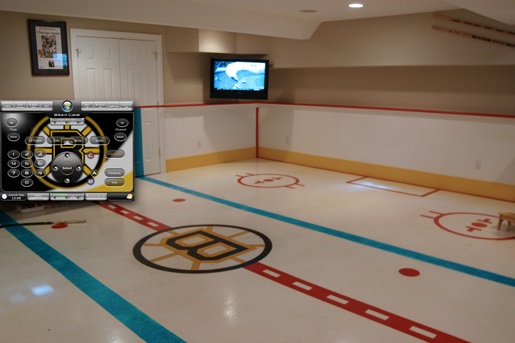


But the best one is in good old Winnipeg. A Winnipeg Jets man cave!
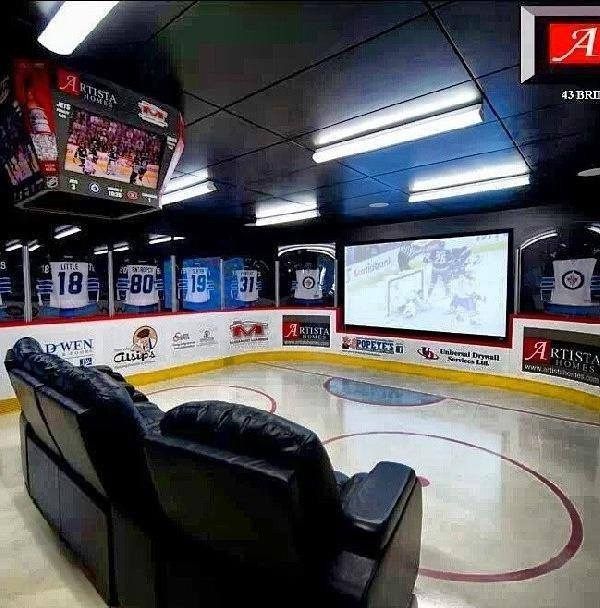


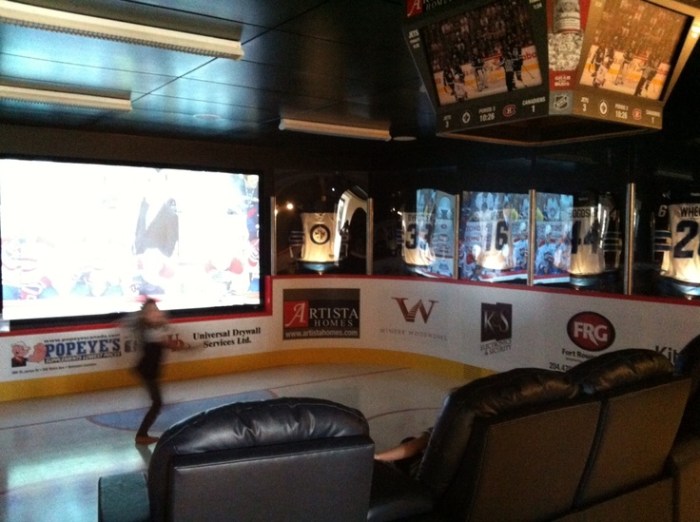
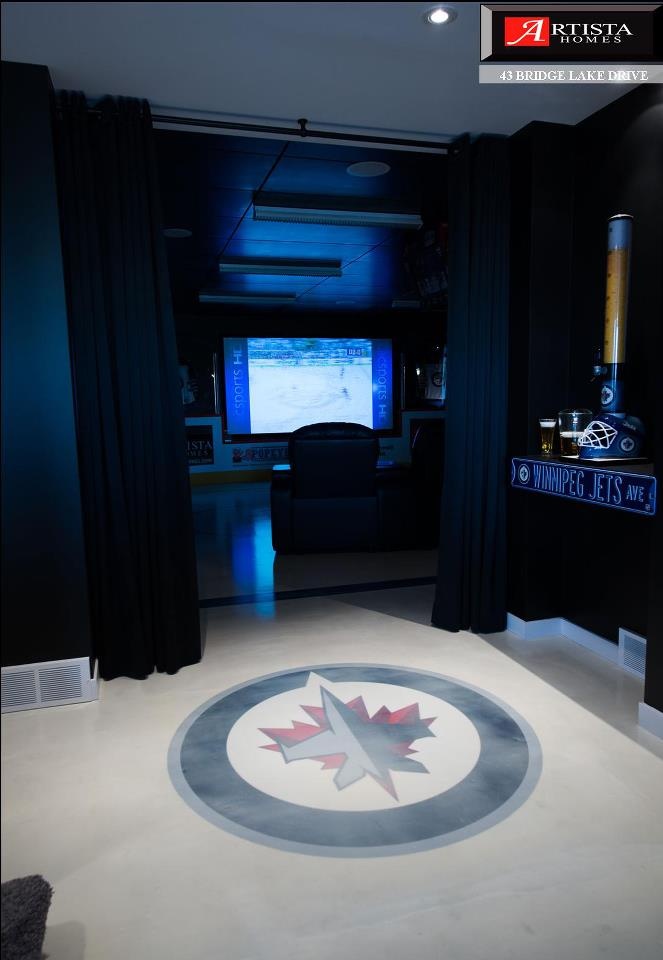
Below normal temperatures in mid-April might not appeal to Manitobans, but the slower warming trend has its benefits in fighting floods.
Thanks to the cold, the melting process has been slowed. As a result, the anticipated flood level has been lowered to something on par with what the province experienced in 2011 — or even slightly less — and well below the 2009 level predicted earlier.
The revised forecast was released Tuesday afternoon.
Prior to that, the province was expecting the Red River to crest around 32.5 feet in the Red River Valley, south of Winnipeg. Now it should be closer to 30 feet.
Inside Winnipeg — which is protected by the 47-kilometre floodway that diverts part of the Red River’s flow around the east side of the city — the crest was expected to reach 20.5 feet at the James Avenue pumping station.
Now, officials are expecting it to be closer to 19.5 feet.
The crest of the Red River is expected at the border, in Emerson, between April 16 and 19, and in Winnipeg between April 20 and 23.
The province expects to begin using the floodway between April 12 and 14, a news release said.
South of the city, where there is no floodway, a warning has been issued all the way to the international border.
Provincial crews have been deployed in a number of communities to prepare for potential ring dike closures. A partial ring dike closure is currently underway at Emerson, but the community remains accessible by road.
As for other river systems prone to flooding, the province says the Assiniboine, Qu’Appelle and Souris river basins have peaked in all but a couple of locations.
The towns shown are St. Jean Baptiste and Morris. Both located south of Winnipeg.


Inspired by 17th century German monks who allegedly survived on a rich beer called doppelbock during Lent, an Ohio man has embarked on a 46-day beer diet, dropping all solid food until Easter Sunday.
Many Christians choose not to consume beer during Lent, as a way of abstaining for something they find pleasurable, but Dell Hall, the director of sales at Fifty West Brewing Company in Cincinnati, Ohio, is doing the exact opposite. On March 6th, he embarked on a 46-day beer diet, dropping all solid food and getting his nutrients only from beer and vitamin supplements. Although he admits the first few days were rough, Hall claims he now feels amazing and is 25 pounds lighter than when he started.
Dell Hall

“Day two and three were pretty rough. I wanted to bash some Taco Bell after a few beers because that’s what we do,” Dell Hall told the Cincinnati Enquirer. “The last couple days I haven’t been hungry at all. I hope that’s going to be a good sign and I maintain this level of clarity.”
Although the monks that inspired his diet consumed a hearty type of beer they called “liquid bread” due to the high levels of carbohydrates it contained, Hall has opted for variety, drinking whatever beer he craves at that moment. Dell has his first beer at around noon, when the hunger really kicks in, and then a few more after work. He also drinks black coffee, unsweetened tea and sparkling water to keep himself from getting sick of beer.
Even though he claims the beer diet has nothing to do with wanting to shed extra pounds, Dell Hall has been monitoring his weight ever since he started, and by April 7th – a month into his Lent challenge – he had already lost 34 pounds. He’s already dreaming about having a steak After Easter Sunday, but plans to take it easy and allow his stomach to re-adjust to solid food.
“Your digestive system sort of shuts down,” he told Insider. “So you have to slowly reintroduce food.”


| Rank | Country | 2019 Population | 2018 Population | Growth Rate | Area | 2018 Density |
| 1 | China | 1,420,062,022 | 1,415,045,928 | 0.35% | 9,706,961 km² | 146/km² |
| 2 | India | 1,368,737,513 | 1,354,051,854 | 1.08% | 3,287,590 km² | 416/km² |
| 3 | United States | 329,093,110 | 326,766,748 | 0.71% | 9,372,610 km² | 35/km² |
| 4 | Indonesia | 269,536,482 | 266,794,980 | 1.03% | 1,904,569 km² | 142/km² |
| 5 | Brazil | 212,392,717 | 210,867,954 | 0.72% | 8,515,767 km² | 25/km² |
| 6 | Pakistan | 204,596,442 | 200,813,818 | 1.88% | 881,912 km² | 232/km² |
| 7 | Nigeria | 200,962,417 | 195,875,237 | 2.60% | 923,768 km² | 218/km² |
| 8 | Bangladesh | 168,065,920 | 166,368,149 | 1.02% | 147,570 km² | 1,139/km² |
| 9 | Russia | 143,895,551 | 143,964,709 | -0.05% | 17,098,242 km² | 8/km² |
| 10 | Mexico | 132,328,035 | 130,759,074 | 1.20% | 1,964,375 km² | 67/km² |
| 11 | Japan | 126,854,745 | 127,185,332 | -0.26% | 377,930 km² | 336/km² |
| 12 | Ethiopia | 110,135,635 | 107,534,882 | 2.42% | 1,104,300 km² | 100/km² |
| 13 | Philippines | 108,106,310 | 106,512,074 | 1.50% | 342,353 km² | 316/km² |
| 14 | Egypt | 101,168,745 | 99,375,741 | 1.80% | 1,002,450 km² | 101/km² |
| 15 | Vietnam | 97,429,061 | 96,491,146 | 0.97% | 331,212 km² | 294/km² |
| 16 | DR Congo | 86,727,573 | 84,004,989 | 3.24% | 2,344,858 km² | 37/km² |
| 17 | Turkey | 82,961,805 | 81,916,871 | 1.28% | 783,562 km² | 106/km² |
| 18 | Iran | 82,820,766 | 82,011,735 | 0.99% | 1,648,195 km² | 50/km² |
| 19 | Germany | 82,438,639 | 82,293,457 | 0.18% | 357,114 km² | 231/km² |
| 20 | Thailand | 69,306,160 | 69,183,173 | 0.18% | 513,120 km² | 135/km² |
| 21 | United Kingdom | 66,959,016 | 66,573,504 | 0.58% | 242,900 km² | 276/km² |
| 22 | France | 65,480,710 | 65,233,271 | 0.38% | 551,695 km² | 119/km² |
| 23 | Tanzania | 60,913,557 | 59,091,392 | 3.08% | 945,087 km² | 64/km² |
| 24 | Italy | 59,216,525 | 59,290,969 | -0.13% | 301,336 km² | 197/km² |
| 25 | South Africa | 58,065,097 | 57,398,421 | 1.16% | 1,221,037 km² | 48/km² |
| 26 | Myanmar | 54,336,138 | 53,855,735 | 0.89% | 676,578 km² | 80/km² |
| 27 | Kenya | 52,214,791 | 50,950,879 | 2.48% | 580,367 km² | 90/km² |
| 28 | South Korea | 51,339,238 | 51,164,435 | 0.34% | 100,210 km² | 512/km² |

Appears to be from New Zealand.
Pictures of accident on St Johns Bridge …
The people in the blue car had a 25-litre bucket of paint on the back seat.


Nose art is a decorative painting or design on the fuselage of a military aircraft, usually located near the nose, and is a form of aircraft graffiti.
While begun for practical reasons of identifying friendly units, the practice evolved to express the individuality often constrained by the uniformity of the military, to evoke memories of home and peacetime life, and as a kind of psychological protection against the stresses of war and the probability of death.

The practice of putting personalized decorations on fighting aircraft originated with Italian and German pilots. The first recorded piece of nose art was a sea monster painted on the nose of an Italian flying boat in 1913. This was followed by the popular practice of painting mouths underneath the propeller spinner, initiated by German pilots in World War I. The cavallino rampante (prancing horse) of the Italian ace Francesco Baracca was another well-known symbol, as was the red-painted aircraft of Manfred von Richthofen. However, nose art of this era was often conceived and produced by the aircraft ground crews, not by the pilots.
The Americans took Nose Art to a whole new level during World War II. Nose art especially appeared on B-17 Flying Fortresses and B-25 Mitchells. All bomber aircraft and many fighter aircraft had Nose Art. At the height of the war, nose-artists were in very high demand in the USAAF and were paid quite well for their services while AAF commanders tolerated nose art in an effort to boost aircrew morale. The U.S. Navy, by contrast, prohibited nose art, while nose art was uncommon in the RAF or RCAF.
Some examples:


Bockscar was the B-29 bomber that dropped the “Fat Man” atomic bomb on Nagasaki, Japan on 9 August 1945.

Drawings of very attractive women improved morale. Especially when these pilots had been away from home for months on end. Sometimes years.


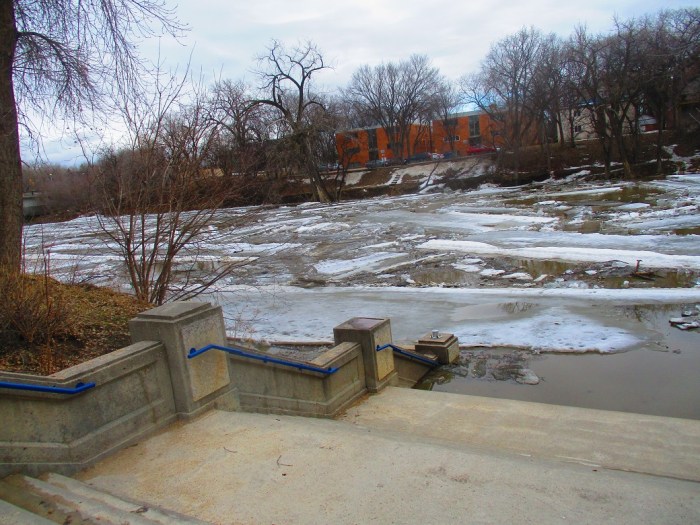
River break-up


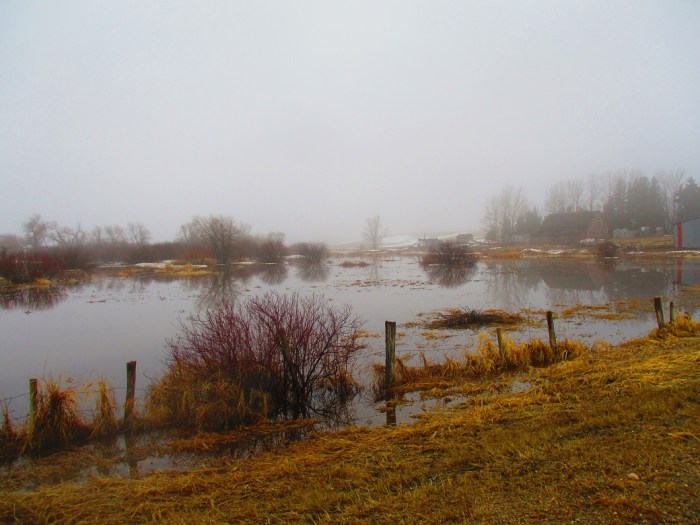
Foggy morning
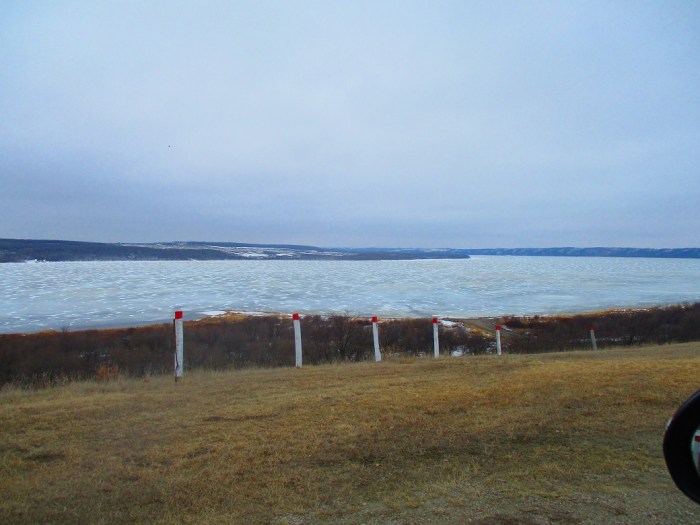
Frozen lake

 The MarkoZen Blog