Get a boat, and along with some friends, go exploring this rugged yet beautiful paradise.
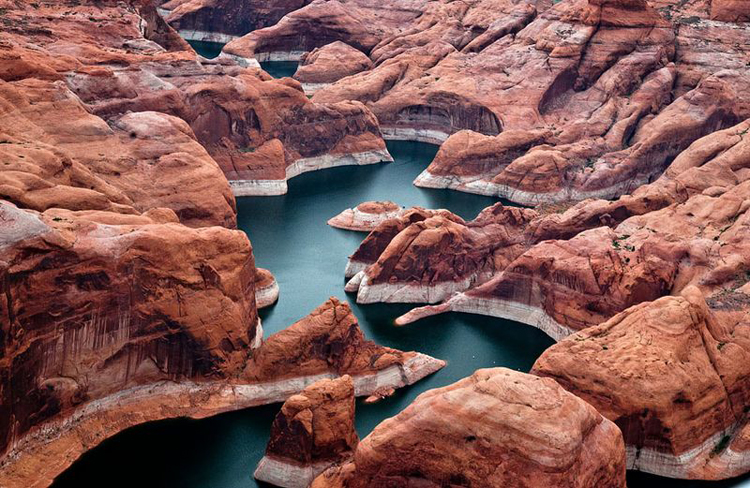
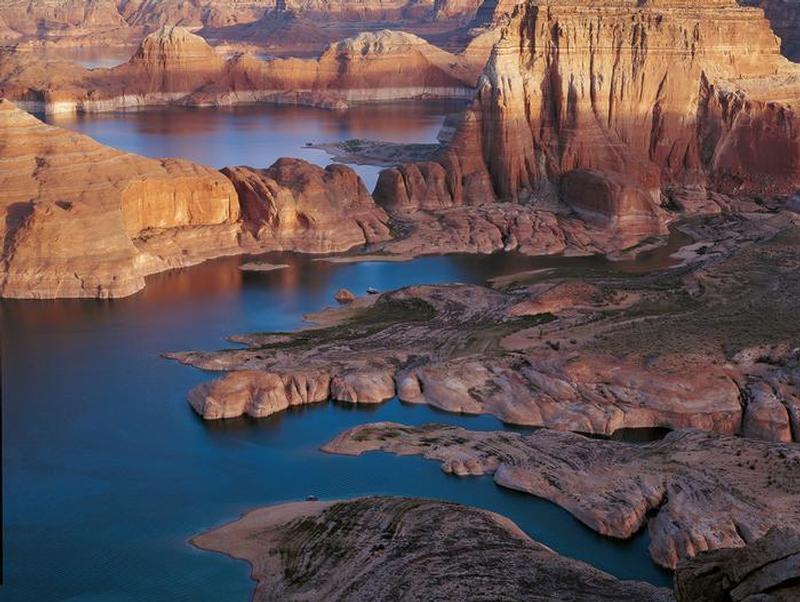
Lake Powell is a reservoir on the Colorado River, straddling the border between Utah and Arizona (most of it, along with Rainbow Bridge, is in Utah). It is a major vacation spot that around 2 million people visit every year. It is the second largest man-made reservoir by maximum water capacity in the United States behind Lake Mead, storing 24,322,000 acre feet (3.0001×10¹⁰ m3) of water when full. Due to high water withdrawals for human and agricultural consumption, and because of subsequent droughts in the area, Lake Powell is currently the largest reservoir in the United States in terms of capacity of water currently held, depth and surface area. Lake Powell was created by the flooding of Glen Canyon by the Glen Canyon Dam, which also led to the creation of Glen Canyon National Recreation Area, a popular summer destination. The reservoir is named for explorer John Wesley Powell, a one-armed American Civil War veteran who explored the river via three wooden boats in 1869.
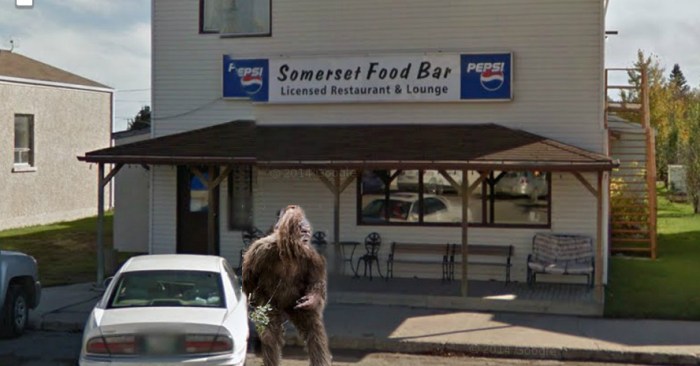
A North Carolina woman claims that her homemade bug spray has a remarkable side effect: it attracts Bigfoot!
Allie Megan Webb says that she initially created the concoction, dubbed ‘Bigfoot Juice,’ to help her husband fend off mosquitoes during expeditions in search of the legendary cryptid.
After a few times using the spray, he asked her to tweak the recipe because it smelled too feminine for him and so she switched some of the ingredients to develop a more ‘outdoorsy’ scent.
And, as luck would have it, his Bigfoot research group happened to spot the creature the first time he wore the newly-developed bug spray.
This has led Webb to conclude that there must be something about her mix of fragrances which catches the attention of the creature.
“To attract a Bigfoot, you need a smell that is woodsy enough to keep from scaring him off,” she explained to the Charlotte Observer, “but slightly different enough to make him curious, and come to investigate.”
She also theorizes that the spray masks human odors, which allows researchers combing the woods for signs of the cryptid to hide their presence in the wilderness.
As one might expect, Webb is now selling bottles of bug spray for a mere $7 for aspiring Bigfoot hunters who may wish to give the alleged cryptid-attracting smell a test.
Should the ‘Bigfoot juice’ prove successful, Webb advises users to make sure they take a picture of the creature when it shows up and starts sniffing around the area.
For their sake, let’s just hope that the spray doesn’t serve as an aphrodisiac for Bigfoot or else their hunt for the creature could take a rather terrifying turn.
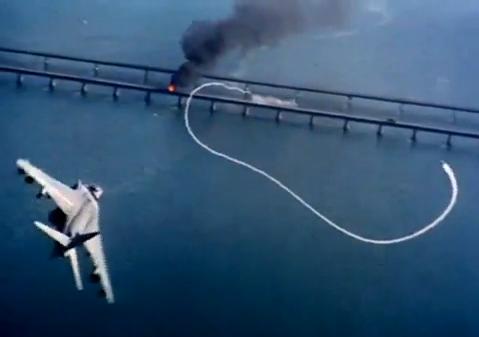
True lies was one of the Terminator’s better movies. Especially if you are a fighter jet buff. The Marine Corps Harrier jet scenes were really cool. But in the movie what was that awesome bridge? Well it is described below.
Scenes from the movie:
The Harriers moving in to attack the terrorists
The Harriers evade anti-aircraft missiles fired by the terrorists
The terrorists are on their way to fornicate with the virgins and drink free wine in Muslim Martyr heaven. Not to mention play some cards with Osama Bin Laden and watch porn movies.
More on the bridge
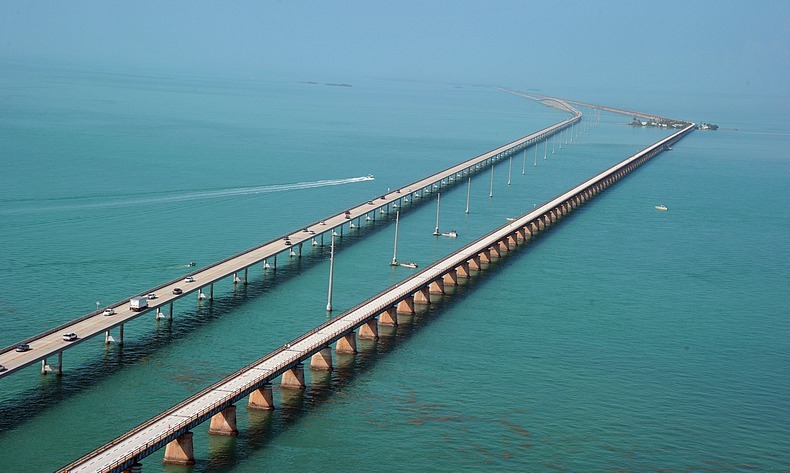
The Seven Mile Bridge is an iconic bridge in the Florida Keys of United States, stretching out into the open sea, connecting Knight’s Key in the Middle Keys to Little Duck Key in the Lower Keys. At the time of its completion in 1982, it was the longest continuous concrete segmental bridge in the world, and is currently one of the longest bridges in America.
Seven Mile Bridge actually consist of two bridges in the same location. The older bridge, originally known as the Knights Key-Pigeon Key-Moser Channel-Pacet Channel Bridge, was constructed from 1909-1912 as part of the Overseas Railroad. After the railroad sustained considerable damage during the Labor Day Hurricane of 1935, the bridge was refurbished for automobile use only. Dismantled tracks was recycled, painted white, and used as guardrails. It had a swing span that opened to allow passage of boat traffic, near where the bridge crosses Pigeon Key – a small island that once served as the work camp for the Florida East Coast Railway. When Hurricane Donna in 1960 inflicted further damage, decision to construct a new bridge was made.
A new, wider and sturdier Seven Mile Bridge was built right next to it from 1978 to 1982. When that happened, the original Seven Mile Bridge was nudged out of Florida’s transportation system. The vast majority of the original bridge still exists, used as fishing piers and access to Pigeon Key, but the swing span over the Moser Channel of the Intracoastal Waterway has been removed.
The total length of the new bridge is just under seven miles at 6.79 miles (10.93 km), and is shorter than the original. Each April the bridge is closed for approximately 2.5 hours on a Saturday and a “fun run,” known as the Seven Mile Bridge Run, of 1,500 runners is held commemorating the Florida Keys bridge rebuilding project. The event began in 1982 to commemorate the completion of a federally funded bridge building program that replaced spans that oil tycoon Henry Flagler constructed in the early 1900s to serve as a foundation for his Overseas Railroad.
The old bridge is still a popular spot with both locals and tourists, but it’s slowly falling apart. Salt water and storms are eroding the bridge faster than the state can afford to repair it. Much of the bridge is now closed – only a 2.2 mile section of the Old Seven Bridge is still open to pedestrians and cyclists.
Two years ago, a nonprofit community group called “Friends of Old Seven” was formed to try to preserve, and if possible, repair the bridge. The Florida Department of Transportation, which owns the bridge, cannot afford to sink a lot of money into the bridge’s upkeep, but is still willing to donate half of the $18 to $20 million required to repair the bridge. The community is now working hard to put up the other half.
C.I.S.O. (Canadian International Security Organization), from the Captain Canuck comic book series. Not to be confused with C.S.I.S., the current Canadian spy agency.
C.L.I.T.O.R.I.S. (The Committee for the Liberation and Integration of Terrifying Organisms and their Rehabilitation Into Society), from Red Dwarf
C.O.B.R.A. (Criminal Organization of Bloodiness, Revenge and Assassination), an international terrorist organization, headed by Cobra Commander, from the G.I. Joe series.
G.R.A.M.P.A. (Global Reaction Agency for Mysterious Paranormal Activity), an international intelligence agency in Marvel Comics.
I.S.I.S (International Secret Intelligence Service) is the agency employing the lead characters in Archer (TV series). Not to be confused with those blood thirsty Muslim terrorists.
K.A.B.O.O.M. (Key Atomic Benefits Organization of Mankind), from the movie The Naked Gun 2½: The Smell of Fear.
SPECTRE (Special Executive for Counter-intelligence, Terrorism, Revenge, and Extortion), from the James Bond series.
T.H.U.N.D.E.R.(The Higher United Nations Defense Enforcement Reserves), from Tower Comics.
U.G.L.I. (Undercover Global League of Informants) in the Hardy Boys book, Secret Agent of Flight 101.
U.N.C.L.E. (United Network Command for Law and Enforcement) and T.H.R.U.S.H., from The Man from U.N.C.L.E.. (The meaning of T.H.R.U.S.H. was never revealed on the series; but, in the novelizations it was stated to be “Technological Hierarchy for the Removal of Undesirables and the Subjugation of Humanity”.)
V.E.N.O.M. (The Vicious, Evil Network Of Mayhem), the evil mask-wearing cohort from the 1980s Saturday-morning cartoon M.A.S.K.
V.I.L.E. (The Villains’ International League of Evil), Carmen Sandiego’s band of international thieves.
Z.O.W.I.E. (Zonal Organization for World Intelligence and Espionage), from the movies Our Man Flint and In Like Flint.
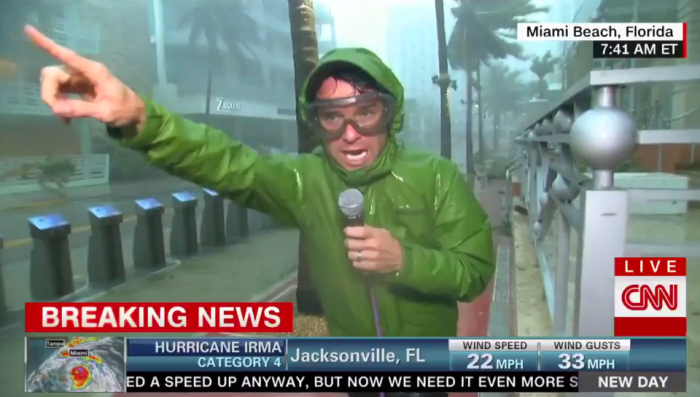
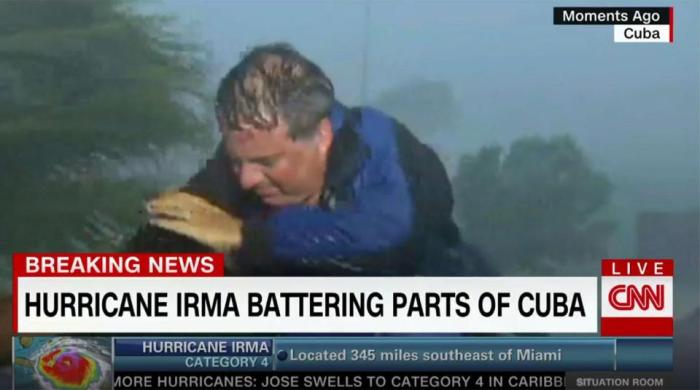
As Hurricane Maria barrels towards Puerto Rico right after the “nuclear Hurricane Irma” blasted through the Caribbean and Florida, CNN again intends on providing cutting edge coverage. The only problem this time is that many journalists that CNN tasked with covering Maria are calling in sick.
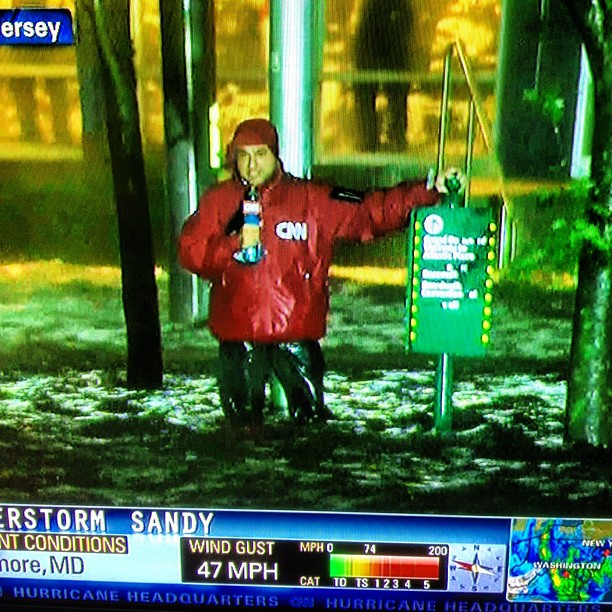
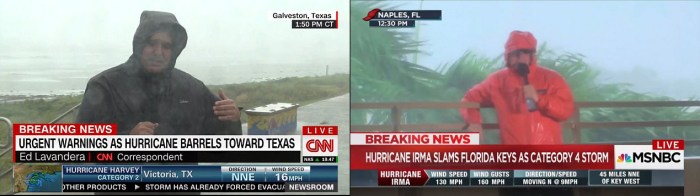
CNN drops the reporters right in the middle of the path of the Hurricane and expects them to deal with the punishing wind, blowing debris, storm surges and pelting rainfall as long as they can hold out. Some insiders have leaked that half a dozen CNN Hurricane Irma correspondents came down with wicked colds and skin wrinkling after being subjected to hours of being soaked and drenched by tidal flows and fire hose like rain.
At CNN headquarters in Atlanta upper management was purported to be panicking after a call for Hurricane volunteers has went unheeded. Some reporters have called in sick, others have claimed they have family funerals to attend and some said they have to take stress leave which are backed up by doctor’s notes.
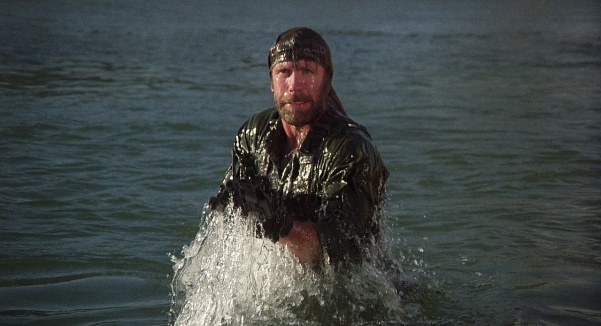
The Washington Post has just released a breaking news story that CNN has hired Chuck Norris to tackle Hurricane Maria. Rumour has it that Norris can beat anything. Chuck will be flown over the ocean miles off the Puerto Rico coast and parachute down to the surface. He wants to check the water temperature, wave speed and Hurricane induced super currents before swimming to land. He also doesn’t want to waste time landing at an airport and going through the baggage retrieval process.
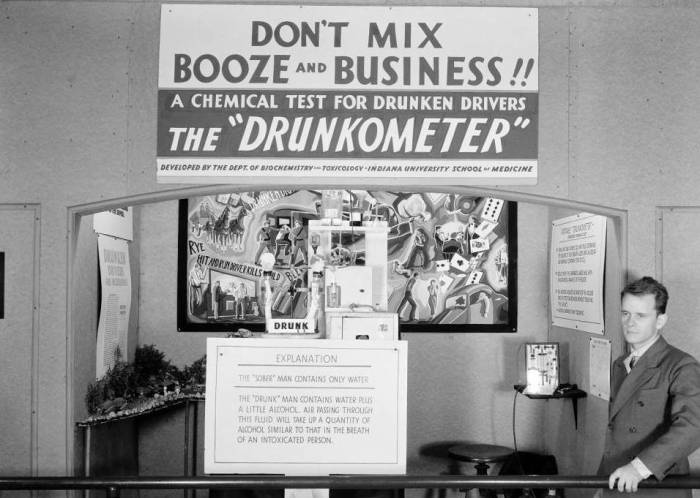
Thanks to the end of Prohibition and a boom in car sales, drunk driving had become a fast-growing problem in America in the 1930s. But on this New Year’s Eve, police in Indianapolis, Indiana went out armed with a new weapon to fight against people who had gotten behind the wheel after having too much to drink.
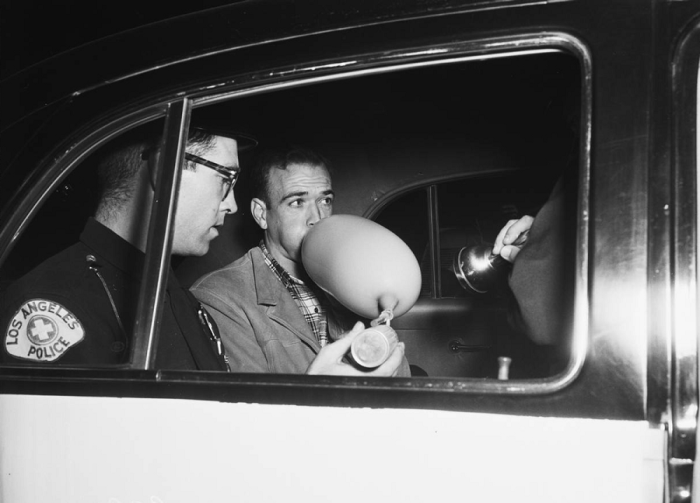
It’s a contraption called a “drunkometer” and it’s the invention of an Indiana University chemist named Rolla Harger. He had been working on the device since the early 1930s and had patented it two years earlier. The concept behind the drunkometer was pretty basic. Drivers suspected of being drunk were asked to breathe into a rubber balloon, which was attached to a tube of purple liquid—a weak solution of potassium permanganate in sulphuric acid.
If there was alcohol on their breath, the chemical solution changed color–the darker it got, the more alcohol they had in their system. From the shade of the liquid, the cops could use a simple equation to estimate the alcohol level in a person’s bloodstream. Previously, the only way police could check a driver’s alcohol level was to get a blood or urine sample; Neither was a very practical option on the roadside. While the drunkometer looked a bit like a mini chemistry set, it was portable, able to fit into a small suitcase.
Harger made the device as simple as possible so that judges and juries would understand how it worked and police officers could easily be trained to use it. He also made the drunkometer hard to beat. Experiments showed that no illness affected the result, and that nothing a person might eat – garlic, cloves, strong onions – would make any difference. Once police started using it, the drunkometer was found to have another advantage. A dramatic change in the color of the liquid could often make people admit how much they had drunk.
Sometimes Harger would ride along with the police to see how his invention was being used. What he discovered was that a lot more people were driving drunk than he ever imagined.
The drunkometer was used by police departments all over the country until the 1950s when it was replaced by the breathalyzer, invented by another Indiana University professor, Robert Borkenstein. The breathalyzer is a much smaller and more sophisticated device that uses infrared spectroscopy to measure blood alcohol levels.
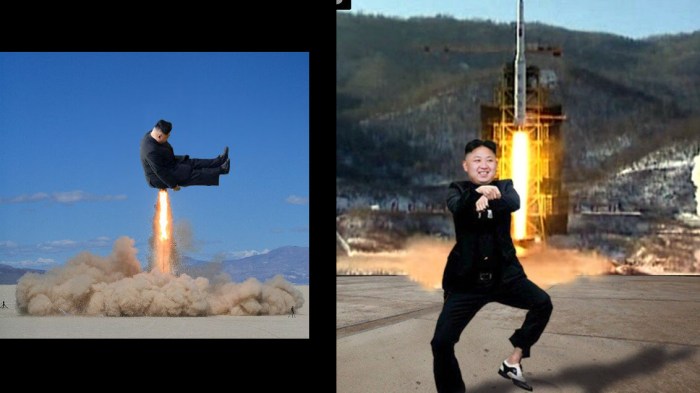
President Donald Trump addresses the 72nd Annual UN General Assembly in New York on September 19, 2017. Trump at UN: ‘Rocket Man’ Kim Jong Un ‘is on a suicide mission’ President Donald Trump addresses the 72nd Annual UN General Assembly in New York on September 19, 2017. Trump at UN: ‘Rocket Man’ Kim Jong Un ‘is on a suicide mission’
A wave of shock rippled through Twitter and the media after President Trump called North Korean President Kim Jong Un a “Rocket Man” in his speech before the United Nations Tuesday.
“‘Rocket man’ made the TelePrompTer?!?!” “Meet the Press” host Chuck Todd tweeted.
Another person wrote on Twitter that Trump’s use of the term showed that he doesn’t grasp the severity of the situation.
Oh, I think Trump knows EXACTLY what he is doing.
Remember when he ran against “Lyin’ Ted” Cruz and “Little Marco” Rubio in the primaries? Then, when he beat all of his GOP contenders, he ran – and won – against “Crooked Hillary” Clinton in the presidential election.
Kim Jong Un might be using missiles as his weapon of choice but when President Trump goes into battle, his weapon of choice seems to be ridicule – and a catchy nickname to make it stick.
Trump first debuted the nickname “Rocket Man” on Twitter over the weekend but pulled it out again at the United Nations on Tuesday, saying in his speech to the U.N. General Assembly:
“No nation on Earth has an interest in seeing this band of criminals arm itself with nuclear weapons and missiles. The United States has great strength and patience, but if it is forced to defend itself or its allies, we will have no choice but to totally destroy North Korea. Rocket man is on a suicide mission for himself and for his regime. The United States is ready, willing, and able, but hopefully this will not be necessary. That’s what the United Nations is all about. That’s what the United Nations is for. Let’s see how they do.”
Oh, it’s hard to count the multitude of ways this new moniker in the Trump ridicule machine works on so many levels. It’s insulting without being vulgar. It pigeonholes Kim down to his missile-test mania. And it’s even the title of one of the most popular pop songs of all time making it so easy to remember, parody, and enjoy. So you know who’s responsible when you hear “Rocket Man” on the radio even more than the usual 150 times per week right now.
President Trump may be the Commander-in-Chief, but he’s really the Marketer-in-Chief. And he may now be on the verge of marketing Kim Jong Un right out of power.
Think about it: Kim Jong Un’s most important commodity at his disposal is fear. That nuclear and missile program-created fear makes him a factor in a world that would otherwise not even care if he existed. Kim is certainly not loved outside his own country, and maybe not even in his own country, but he is not ignored or taken lightly.
Look for the president and the entire Trump team to start using this title when discussing Kim Jong Un more and more in the coming days and weeks. Trump’s already made it clear that he’s not afraid to use it anywhere — even on the floor of the United Nations.
The other brilliant marketing move President Trump used in his U.N. speech was repeating the term “America first” and explaining that idea in front of the entire world. That kind of naked patriotism may seem out of style in many parts of the world, but it’s part of the branding that got Trump elected especially in heartland states like Pennsylvania, Wisconsin, and Michigan. And saying something as nationalist as “America first” in the very building where nationalism is supposed to be supplanted by international common ground is brilliant marketing from a president who won’t ever stop branding and marketing himself.
If the U.N. weren’t such an abject failure in its stated mission to stamp out nationalism and aggression, perhaps President Trump’s words today would be an outrage. But the U.N. has failed to quell everything from North Korea’s nuclear tyranny, Iran’s funding of worldwide terror, a Syrian civil war that’s left hundreds of thousands dead, Russia’s bullying of its neighbors, and these are just the bad things that are happening this year.
Only a cloistered group of academics and self-important pundits would miss the fact that rhetorically defusing one of the world’s most feared dictators by calling him “Rocket Man” is a winning move.
Getting a ridiculous name, along with the catchy song it evokes, to stick will be absorbed by the populous and will likely help Trump gain support from voters in whatever strategy he decides to implement against Kim Jong Un – even if it’s something drastic like a removal strategy.
Think about it: If people have been saying “Rocket Man” and “suicide mission” around the water cooler for six months, they’re going to be a lot less shocked if they hear something in the news about Trump wanting to take out Kim Jong Un – and a lot more supportive of the solution.
Donald Trump may still be a political neophyte. But he knows marketing and branding and, if we’ve learned anything in the past year, it’s that it works.
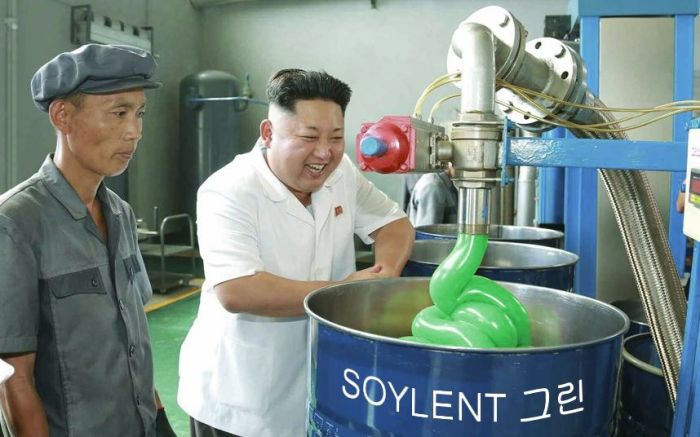
God knows what the little devil is up to here?
That green soylent must be pure steroids. In the Soylent Green movie (1973 starring Charlton Heston), the stuff is dead human remains processed into food. Mass cannibalism.























 The MarkoZen Blog