The Jets are now 2nd overall in the National Hockey League. The bubble could burst at any moment. But it is fun while it lasts.

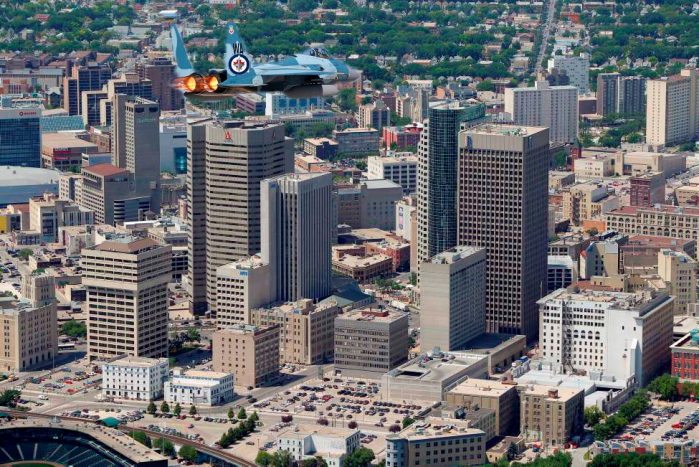
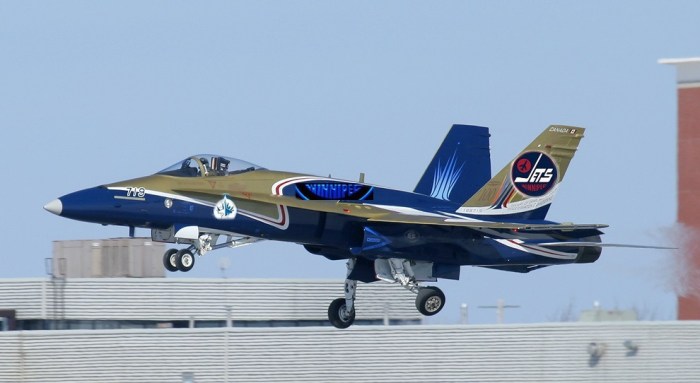



The Jets are now 2nd overall in the National Hockey League. The bubble could burst at any moment. But it is fun while it lasts.
In the last few years, news of unexpected sinkholes swallowing cars, houses and people have made headlines with disturbingly high frequency. These reports are mainly coming from Florida, the U.S., where almost the entire state is karst terrain (made of limestone), which means it has the potential for sinkholes. Mexico, Belize and parts of Italy and China are also karst area, but the phenomenon of sinkholes suddenly appearing in apparently stable grounds is mostly American. Experts estimate thousands of sinkholes form every year in Florida alone.
Sinkholes form when water flowing underground has dissolved rock, mostly limestone and sometimes clay, below the surface, leading to the formation of underground voids. When the surface layer can no longer take the weight of whatever that’s above, it collapses into the void forming sinkholes. These sinkholes can be dramatic, because the surface land usually stays intact until there is not enough support. Then, a sudden collapse of the land surface can occur.

A giant sinkhole caused by the rains of Tropical Storm Agatha is seen in Guatemala City on May 31, 2010. More than 94,000 people were evacuated as the storm buried homes under mud, swept away a highway bridge near Guatemala City and opened up sinkholes in the capital. (Casa Presidencial / Handout / Reuters)

An aerial view of the damaged Gran Marical de Ayacucho highway in the state of Miranda outside Caracas December 1, 2010. Thousands of Venezuelans fled their homes after landslides and swollen rivers killed at least 21 people and threatened to cause more damage. (Photo by Miranda Government/Reuters)

A construction vehicle lies where it was swallowed by a sinkhole on Saint-Catherine Street in downtown Montreal, August 5, 2013. (Photo by Christinne Muschi/Reuters)

Pamela Knox waits for rescue after a massive sinkhole opened up underneath her car in Toledo, Ohio in this July 3, 2013 handout photo provided by Toledo Fire and Rescue. Toledo firefighters later rescued Knox without major injuries. Fire officials told a local TV station that a water main break caused the large hole. Picture taken July 3, 2013. (Photo by Lt. Matthew Hertzfeld/Toledo Fire and Rescue/Handout via Reuters)

A stranded car is hoisted from a collapsed road surface in Guangzhou, Guangdong province, September 7, 2008. The road collapsed on Sunday afternoon and trapped the car in a hole, which measured 5 meters (16.4 feet) in depth and 15 meters (49.2 feet) in diameter, local media reported. Further investigation is underway. Picture taken September 7, 2008. (Photo by Reuters/China Daily)

An aerial view shows the debris of a residential building and a destroyed road in the village of Nachterstedt, July 18, 2009. Three residents were missing in the eastern German village of Nachterstedt after their lakeside home and another building suddenly collapsed early Saturday into the water. A 350-metre stretch of shoreline gave way next to an old open-cast coalmine converted to a lake, about 170 kilometres south-west of Berlin. (Photo by Reuters/Gemeindeverwaltung Nachterstedt)

Rescue workers remove a bus with a crane from a Lisbon street hole November 25, 2003. The bus was parked on a Lisbon street when the ground began to open up and gobble it. No casualties were reported. (Photo by Jose Manuel/Reuters)

A truck is seen in a hole after part of the structure of a bridge collapsed into a river in Changchun, Jilin province May 29, 2011. Two truck passengers were injured, while the cause of the accident is still under investigation, local media reported. (Photo by Reuters/China Daily)

Cars lie in a sinkhole, caused when a road collapsed into an underground cave system, in the southern Italian town of Gallipoli March 30, 2007. There were no injuries in the overnight incident, according to local police. (Photo by Fabio Serino/Reuters)

A giant sinkhole that swallowed several homes is seen in Guatemala City February 23, 2007. At least three people have been confirmed missing, officials said. (Photo by Reuters/Stringer)

A large sinkhole opened on East Monument Street in Baltimore in summer 2012. The sinkhole appeared above a 120-year-old drainage culvert after heavy rains, causing evacuations and closing the road. (Algerina Perna/Baltimore Sun Photo)
Watching the riots that developed at the memorial march in Brussels last year I again noticed a huge Water Cannon. Right-wing thugs showed up at the march screaming anti-migrant and white supremacist chants. The hooligans got washed good by a gigantic Belgium water cannon.

A water cannon is a device that shoots a high-velocity stream of water. Typically, a water cannon can deliver a large volume of water, often over dozens of meters. They are used in firefighting, large vehicle washing and riot control.
The first truck-mounted water cannon were used for riot control in Germany in the beginning of the 1930s.
The most modern versions do not expose the operator to the riot, and are controlled remotely from within the vehicle by a joystick. The German-built WaWe 10.000 can carry 10,000 litres (2,200 imp gal) of water, which can deploy water in all directions via three cannons, all of which are remotely controlled from inside the vehicle by a joystick. The vehicle has two forward cannons with a delivery rate of 20 litres per second (260 imp gal/min), and one rear cannon with a delivery rate of 15 litres per second (200 imp gal/min).
Water cannons designed for riot control are still made in the United States and the United Kingdom, but most products are exported, particularly to Africa and parts of Asia such as South Korea.
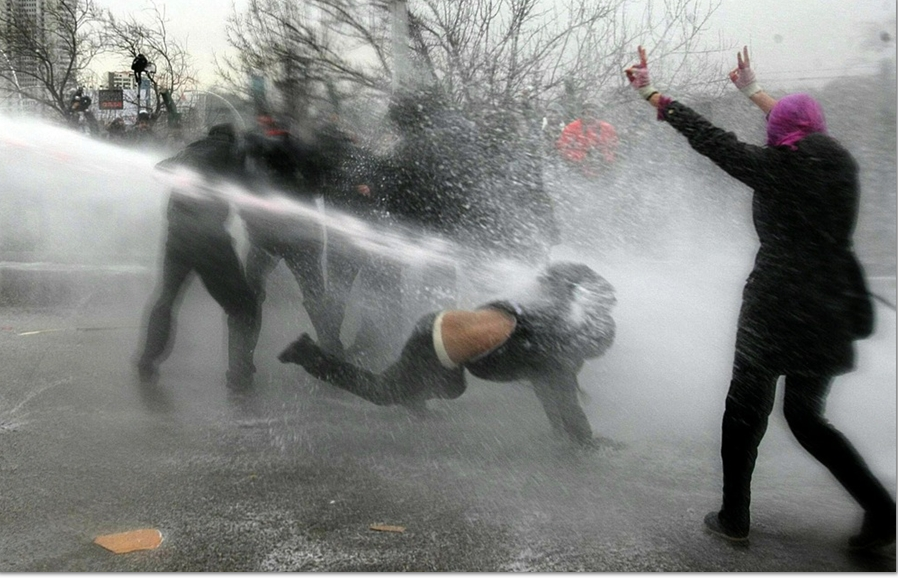
Use of water cannon in riot control contexts can lead to injury or death, with fatalities recorded in Indonesia (in 1996, when the cannon’s payload contained ammonia), Zimbabwe (in 2007, when the use of cannons on a peaceful crowd caused panic), Turkey (in 2013, when the payload was laced with “liquid teargas”), and Ukraine (in 2014, with the death of activist and businessman Bogdan Kalynyak, reportedly catching pneumonia after being sprayed by water cannon in freezing temperatures). South Korea used water cannons containing capsaicin and fluorescent dyes for later screening and arrest in recent protests against its citizens.
Water cannons in use during the 1960s, which were generally adapted fire trucks, would knock protesters down and on occasion, tear their clothes.
On 30 September 2010, during a protest demonstration against the Stuttgart 21 project in Germany, a demonstrator was hit in the face by a water cannon. Dietrich Wagner, a retired engineer, suffered from the damage to his eyelids, a fracturing of a portion of the retinal bone, and damage to the retinas. The eye injuries thus inflicted on the man resulted in near-complete loss of eyesight. Graphic imagery was recorded of the event, sparking a national debate about police brutality and proportionality in the use of state force.


Istanbul above

One of the first water cannon. Germany 1930’s.

France

Germany

Russia

Columbia

China. Typical Chinese approach, if the water cannon don’t knock them down, plow through the crowd with the big blade.
Winnipeg


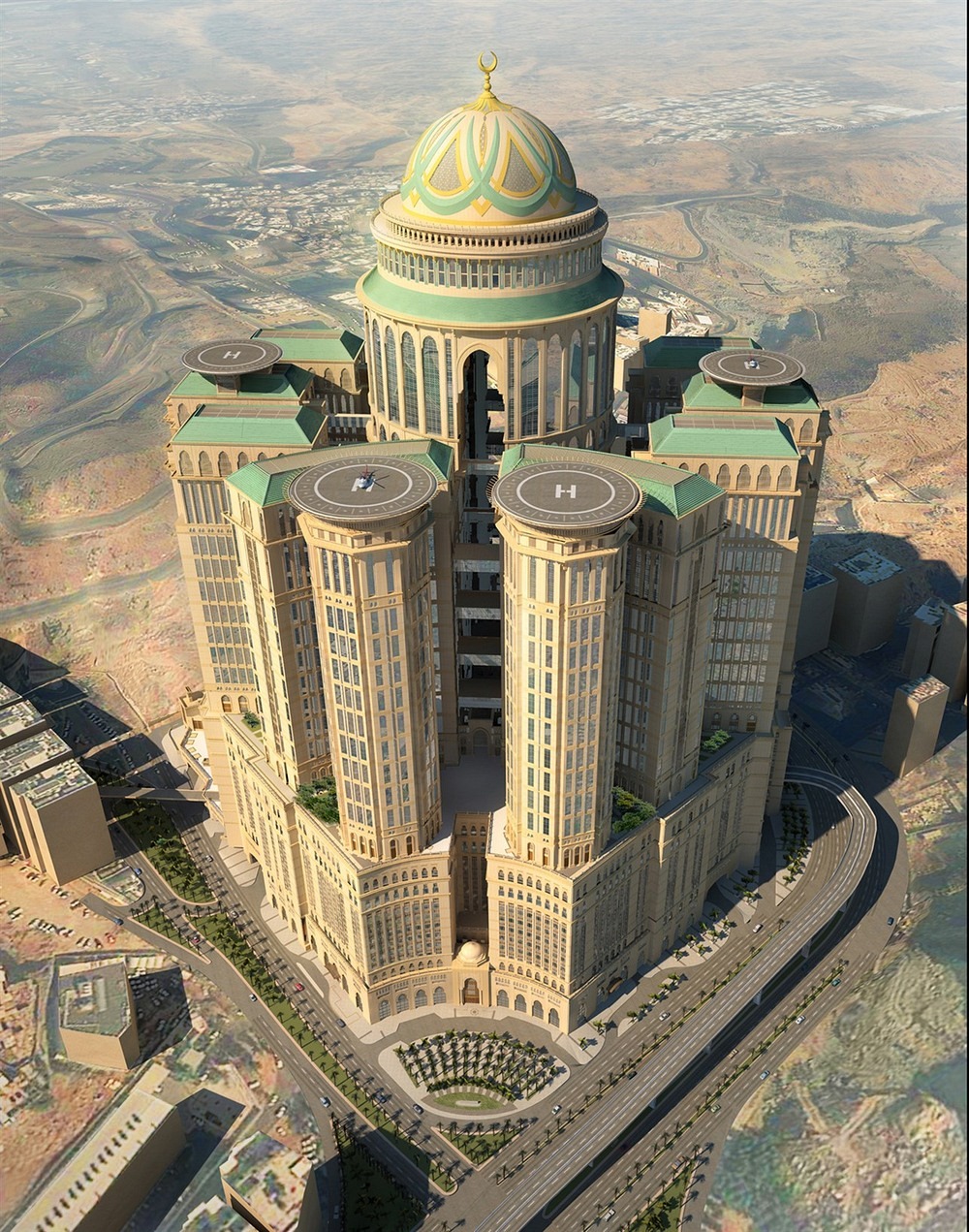
A mammoth new hotel is rising in Saudi Arabia’s holy city Mecca. When completed it will have 10,000 rooms spanning more than 1.4 million square meters, and 70 restaurants catering to the most affluent of pilgrims from the Gulf and abroad.
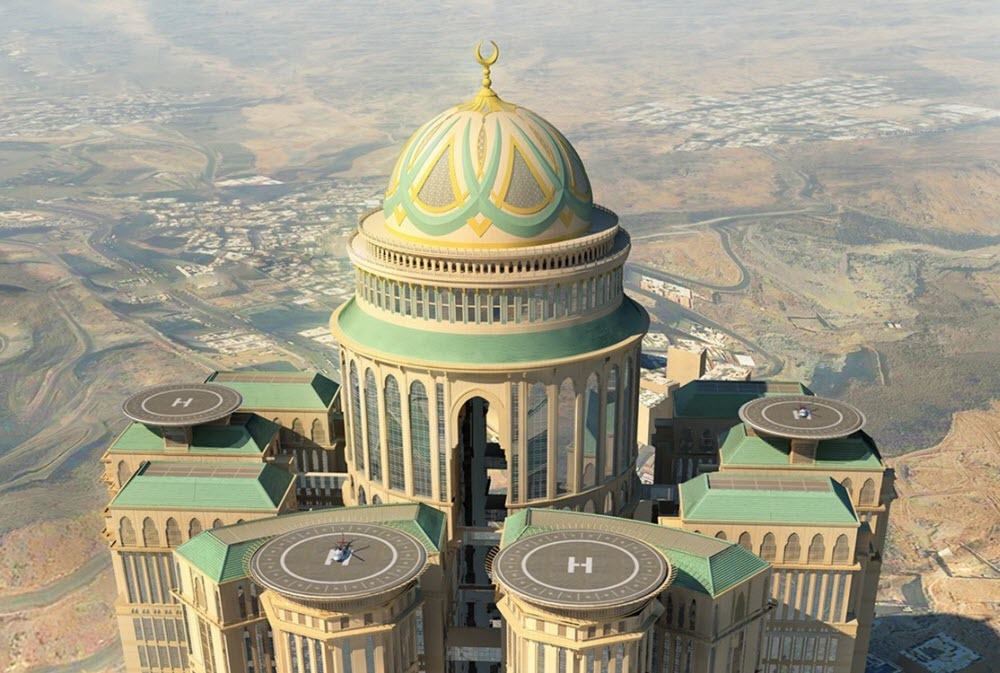
Resembling a traditional fortress, the hotel Abraj Kudai consist of a ring of 12 towers soaring 45 stories into the sky. Atop its central tower will be one of the world’s largest domes. Surrounding this dome will be five helipads. The world’s biggest hotel will also feature a bus station, food courts, and a shopping mall on the lower levels and a ballroom housed inside the dome. The interiors, as expected, will be lavishly decorated.
A computer-generated 3D model of the under-construction hotel Abraj Kudai.
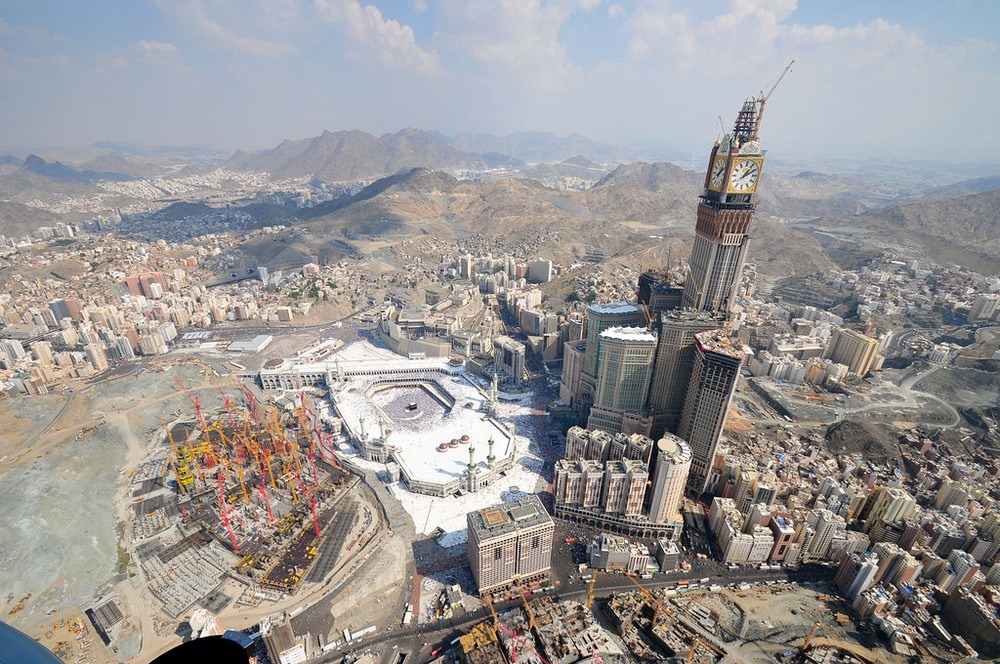
Located just 2 km away from the Holy Haram in Mecca, Abraj Kudai is the latest attempt by the Gulf country to turn Mecca into Manhattan. In the past few years, the city has seen tremendous expansion in size and infrastructure, and home to structures such as the Abraj Al Bait, a mega complex consisting of seven skyscraper hotels overlooking the Kaaba – the black cube at the center of the world’s largest mosque around which Muslims walk during Haj. One of the hotels, the Makkah Royal Clock Tower Hotel is the world’s third tallest building and fifth tallest freestanding structure in the world. This tower also boasts of having the world’s largest clock face. At night, the glowing clock face is visible from 30 km away.
The construction of Abraj Al Bait caused quite a controversy. The developers razed a historic 18th century Ottoman-era fortress along with a small hill upon which the fortress stood to make room for the structure. The Ajyad Fortress was built in 1780 under Ottoman rule in order to protect the Kaaba from bandits and invaders.
The Makkah Royal Clock Tower Hotel. Notice how it dwarfs the Great Mosque and the black Kabba, which itself is a gigantic structure.
Irfan Al-Alawi, director of the UK-based Islamic Heritage Research Foundation, has been trying with little success to campaign for the protection of what little heritage that is left in Saudi Arabia’s holy cities. “Everything has been swept away to make way for the incessant march of luxury hotels, which are destroying the sanctity of the place and pricing normal pilgrims out,” Al-Alawi told The Guardian.
The destruction of heritage sites associated with early Islam has been going on since centuries driven by the Wahabi belief that idol worship is sinful. In Mecca and Medina, the very structures associated with the prophet and his family such as tombs, mausoleums, mosques and homes were destroyed. The house of Khadija, Muhammad’s first wife, was demolished to make way for a library, according to Wikipedia, and public lavatories, according to The Guardian. Where the house of Islam’s first caliph, Abu Bakr, once stood now stands a Hilton hotel. The house where Muhammad was born now lies in ruins. The house where he lived in Medina, and the first Islamic school where Muhammad taught were leveled to the ground. The list of heritage crimes goes on.
“They are turning the holy sanctuary into a machine, a city which has no identity, no heritage, no culture and no natural environment. They’ve even taken away the mountains,” says Sami Angawi, an architect and founder of the Jeddah-based Hajj Research Centre, who has spent the last three decades researching and documenting the historic buildings of Mecca and Medina.
Thousands of tents housing Muslim pilgrims fill the landscape in Mina, near the holy city of Mecca.
Religious pilgrimages make up the bulk of the tourists to Saudi Arabia, especially to Mecca, where non-Muslims are not allowed to enter. During the annual Hajj, Mecca receives over three million pilgrims but during the rest of the year more than 20 million visit the city, which has become a popular place for weddings and conferences. To accommodate the growing influx, the Saudi authorities has deemed it necessary to raze large tracts of formerly residential neighborhoods as well as heritage sites to make way for pilgrimage-related infrastructure.
In the city of Mina, 8 km away from Mecca, the Saudi government has installed more than 100,000 air-conditioned tents to accommodate Hajj pilgrims. Although their accommodation is temporary, the tents are permanent.
Another large ongoing construction project in Mecca is the Jabal Omar development consisting of 40 residential towers that will accommodate 160,000 Islamic pilgrims, and a prayer area for 200,000 worshippers. The Grand Mosque itself is undergoing a USD 50 billion expansion to double the capacity of its prayer halls, from 3 million to nearly 7 million. To make room for the gigantic project, a vast part of the old city was flattened to the ground. Residents were evicted with one week’s notice, and many have still not been compensated—a common story across Mecca’s developments, says Irfan al-Alawi. “They are now living in shantytowns on the edge of the city without proper sanitation. Locals, who have lived here for generations, are being forced out to make way for these marble castles in the sky.”
The most anticipated is the Jeddah Tower, also known as Kingdom Tower, in the port city of Jeddah, which is expected to stand a kilometer tall with over 250 floors. It will be the tallest building in the world outranking the 828-meter-tall Burj Khalifa in Dubai.
“It is the end of Mecca,” says Alawi. “And for what? Most of these hotels are 50% vacant and the malls are empty – the rents are too expensive for the former souk stall-holders. And people praying in the new mosque extension will not even be able to see the Kaaba.”
This is how the northern side of the Grand Mosque will look like. The black Kabba is a tiny speck on the bottom right.
The sky behind the Great Mosque is bristling with cranes heralding one tower hotel after another.
The Jabal Omar development, also under construction.
The Abraj Kudai hotel, the largest hotel in the world, as it will appear when completed.
The Makkah Royal Clock Tower Hotel when still under construction.
The towers of the Makkah Royal Clock Tower Hotel, as visible from the mosque.



 The MarkoZen Blog