The Jet Plane that Shot Itself Down

An F11F-1 Tiger, tail number 138620, is a plane that became famous as being the first documented incident of a jet plane that shot itself down!
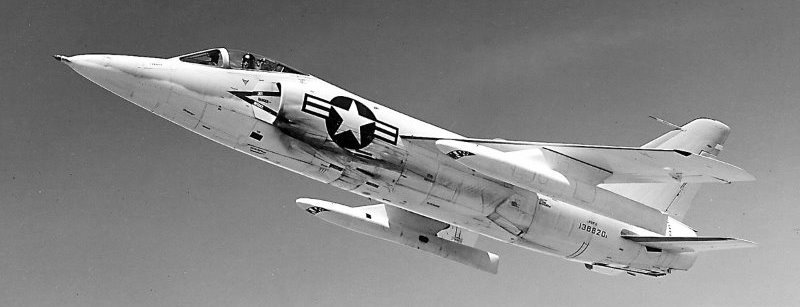
On September 21st, 1956, Thomas W. Attridge Jr, a Grumman test pilot, was conducting test-firing of the aircraft’s four 20mm cannon (Colt Mark-12) at around Mach 1.0, aiming for a patch of open ocean off the coast of Long Island, NY.

Starting his run at 20,000ft, Attridge entered a shallow dive at 20° nose-down. When he reached 13,000ft, he pulled the trigger for a four second cannon burst, advanced the throttle to afterburner, steepened his descent, and fired a second burst to empty the magazine belts. Whilst firing, his plane continued in the descent, passing through to 7,000ft

About a minute (and 2.7 miles) after the first volley, he was hit by the first bullets he’d fired himself!

Even though the bullets were initially travelling well over 2,000 mph (the speed of the plane plus the muzzle velocity of the cannon), they slowed down quickly due to drag. Also, Attridge’s plane continued to accelerate in afterburner fueled descent, and the cruel consequence of these coincidences was that both entities ended up occupying the same space at the same time. Unlucky!
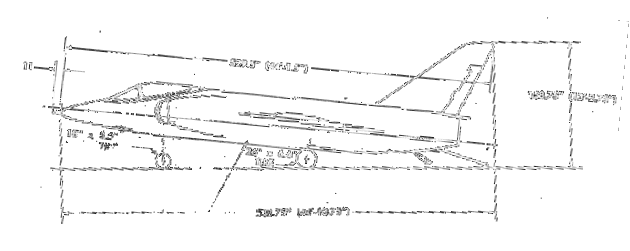
Attridge became aware of the incident when the plane rattled, and his windshield buckled inwards, He’d been hit.

Attridge throttled back to slow down and prevent cave-in of the windshield (His thoughts were that maybe he’d had a bird strike), and attempt to fly back to Grumman’s Long Island field at 200 knots. He radioed that a gash in the outboard side of the right engine’s intake lip was the only apparent sign of damage, other than for the glass but, more worryingly, only 78 percent engine power was available without severe roughness.

Two miles out, at 1,200 ft with flaps and wheels down, it became evident from the sink rate that the runway could not be attained at this low power setting. Attridge applied power, and is quoted as saying the engine made a noise like “a Hoover vaccum cleaner picking up gravel from a rug.”

Shortly after, the engine lost power completely. He pulled up the gear and dead-sticked a landing, settling into trees, half a mile short of the runway. He gouged a path 300 feet long in the decelerating impact (losing a right wing and stabilizer in the process); fire broke out from the unburnt fuel. Despite injuries, Attridge managed to cut himself free of the plane and get far enough away from the crash. The Sikorsky S-58 helicopter dispatched to retrieve him also damaged its blades from contact with foliage during the rescue.
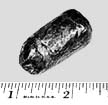
A post-accident investigation revealed that Attridge’s aircraft had been hit by three of the 20mm bullets he’d fired. The first penetrated his windshield, the second punctured the nose, and the third damaged the right engine intake, struck the inlet guide vanes, and lodged in the first stage compressor of the engine. This bullet was recovered and a picture of it is shown on the left.

Attridge survived the crash with a shattered leg, and three broken vertebrae. He successfully returned to flight status less than six months later, and continued on to a long and distinguished career in the aerospace industry, becoming the project manager of the LEM-3, the first lunar module rated for human flight (flown on Apollo 9), and later as VP of Grumman Ecosystems, the company’s environmental management and research venture.

Blue Angels

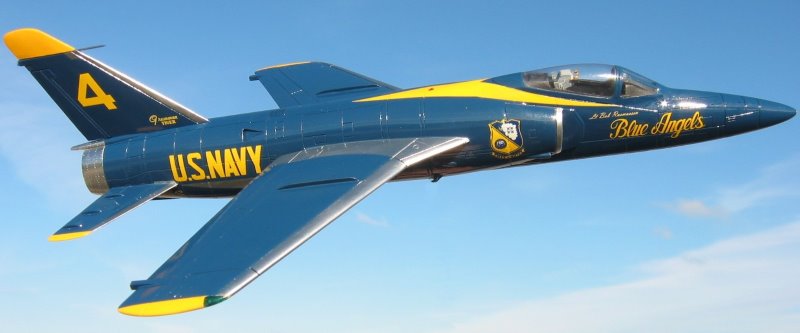
Interestingly, the F11F saw limited service as it was eclipsed by two more modern aircraft: F8U Crusader and F4H Phantom II. Tigers finished their service in the Naval Air Training Command and as demonstration aircraft with the Blue Angels, who flew the F11F during the period 1957-1969.
Datagenetics.com

What the F#@k is up with the North Koreans

BBC

This is when Kim Jong-un will finally formalise his own succession and set out his agenda. The build-up is part of the mystique and it is here that he will try to balance all the competing interests within the party, army and the state.


kim

This is the craziest of all the Kims.


The congress is also a public opportunity for him to reward loyalists; those who helped his father and those who helped him in his transition. He will also appoint some people his own age into lower-tier positions, a kind of regime-in-waiting.

What took them so long?

The last one, the 1980 congress, was five years overdue. According to the Party Charter, a party congress is “the supreme organ of the party” and should be convened every five years.

But in lieu of a full congress, the party can convene a party conference. The Workers’ Party of Korea didn’t do this until 2010, 30 years later. At that meeting they took out the five-year requirement. It is hard to say exactly what has taken so long, but in this time the Communist world would radically change. There are now far fewer international delegations who might be able to make it. The economic plans that used to be announced at such events, were no longer relevant either.

 What is it for?

The congress will determine the role of and elect members of the party’s leading institutions. It is also there to amend the Party Charter.

The Party Charter sets out how the party is organised, how the party bodies relate to North Korea’s government, military, society, economy and culture. It is also an ideological document with a preamble that gives a broad definition of the Workers’ Party of Korea’s views on a number of different domestic and international issues. These will inform North Korean policies until the next congress.


kim1

What happened in 1980?

The last Party Congress was held in October 1980. It served as the first event at which Kim Jong-il was publicly identified as the successor to his father, North Korean founder Kim Il-sung.

Essentially, it formalised Kim Family rule through hereditary succession, ushered in changes to North Korea’s political institutions and brought in a new generation of officials, some of whom remain in power to this day.


kim2

One wrong move by any of these brown-nosers and it could be the firing squad.


kim3

Where is James Franco when you need him?

Jet Dodges Trio of Tornadoes

An amazing piece of footage from Sochi, Russia shows a passenger jet weaving around three ominous-looking tornadoes that had formed over the Black Sea.

The jaw-dropping maneuver occurred earlier this week when an astounding 12 such water spouts formed at the same time in the area.

As this was unfolding, observers on the ground were amazed to see the airliner come barreling through the sky towards three of the tornadoes.

In either a remarkable display of dexterity or simply the result of a clever camera angle, footage of the encounter shows the jet deftly avoid the water spouts as it heads toward a nearby airport.

Although the view from below was rather breathtaking, it paled in comparison to what those aboard the plane were seeing, but we’re guessing they weren’t exactly too thrilled by the sight.

There must have been some irregular bowel movements on that plane.

Car Racetrack on the roof!

Lingotto is a district of Turin, Italy, and the location of the Lingotto building in Via Nizza. This building once housed an automobile factory built by Fiat. Construction started in 1916 and the building opened in 1923. The design (by young architect Matté Trucco) was unusual in that it had five floors, with raw materials going in at the ground floor, and cars built on a line that went up through the building. Finished cars emerged at rooftop level, where there was a rooftop test track. It was the largest car factory in the world at that time. For its time, the Lingotto building was avante-garde, influential and impressive—Le Corbusier called it “one of the most impressive sights in industry”, and “a guideline for town planning”. 80 different models of car were produced there in its lifetime, including the Fiat Topolino of 1936.


fiat5

The factory became outmoded in the 1970s and the decision was made to finally close it in 1982. The closure of the plant led to much public debate about its future, and how to recover from industrial decline in general. An architectural competition was held, which was eventually awarded to Renzo Piano, who envisioned an exciting public space for the city. The old factory was rebuilt into a modern complex, with concert halls, theatre, a convention centre, shopping arcades and a hotel. The eastern portion of the building is the headquarter of the Automotive Engineering faculty of the Polytechnic University of Turin. The work was completed in 1989. The track was retained, and can still be visited today on the top floor of the shopping mall and hotel.


fiat

fiatlingotto

Ramps leading up to the roof

ligotti

Fiat_Lingotto_Rooftop_Racetrack_2

Fiat_Lingotto_Rooftop_Racetrack_1