The Vertical Forest of Milan

avertical

Bosco Verticale (Vertical Forest) is a pair of residential towers in the Porta Nuova district of Milan, Italy, between Via Gaetano de Castillia and Via Federico Confalonieri near Milano Porta Garibaldi railway station. They have a height of 110 metres (360 ft) and 76 metres (249 ft) and will host more than 900 trees (approximately 550 and 350 trees in the first and second towers respectively) on 8,900 square metres (96,000 sq ft) of terraces. Within the complex is also an 11-story office building; its facade does not host plants.

The towers were designed by Boeri Studio (Stefano Boeri, Gianandrea Barreca and Giovanni La Varra). It also involved input from horticulturalists and botanists.

The building was inaugurated in October 2014.

avertical1

The project was designed as part of the rehabilitation of the historic district of Milan between Via De Castillia and Confalonieri. It consists of two residential towers of which the largest is 26 floors and 110 meters high (called Torre E) and the smaller tower is 18 floors and 76 meters high (called Torre D). It contains 400 condominium units priced from 3,000 – 12,000 Euro per square metre.

It is called Bosco Verticale because each tower houses trees between three and six meters which help mitigate smog and produce oxygen. It is also used to moderate temperatures in the building in the winter and summer. The plants also attenuate noise. The design was tested in a wind tunnel to ensure the trees would not topple from gusts of wind. Botanists and horticulturalists were consulted by the engineering team to ensure that the structure could bear the load imposed by the plants. The steel-reinforced concrete balconies are designed to be 28 cm thick, with 1.30 metre parapets.

avertical2

The construction of the towers began in late 2009 and early 2010, involving 6,000 onsite construction workers. Between mid-2010 and early 2011 construction progressed very slowly and the towers rose by only five floors while the core rose to the seventh floor. Construction progressed throughout 2011, and by the beginning of 2012 the structures were completed, and construction of the facades and installation of the plants began on 13 June 2012. The building was inaugurated in October 2014.

On April 11, 2012, one of the buildings was used as a temporary art gallery and opened to the public for an art exhibition hosted during Milan Fashion Week.

The two buildings have 730 trees (480 large, 250 small), 5,000 shrubs, and 11,000 perennials and groundcover on its facades. The original design had specified 1,280 tall plants and 920 short plants encompassing 50 species. Overall, the vegetation is the equivalent of that found in a one hectare woodlot. The innovative use of heat-pump technology is helping to slash heating and cooling costs.

avertical3

On November 19, 2014, Bosco Verticale won the International Highrise Award, prestigious international competition bestowed every two years, honouring excellence in recently constructed buildings that stand a minimum of 100 meters (328 feet) tall. The five finalists were selected from 26 nominees in 17 countries.

On the 12th of November 2015, the Council on Tall Buildings and Urban Habitat (CTBUH) Awards Jury selected Bosco Verticale, Milan, as the overall “2015 Best Tall Building Worldwide” at the 14th Annual CTBUH International Best Tall Building Awards Symposium, Ceremony & Dinner, celebrated at the Illinois Institute of Technology, Chicago.

Gardeners rappel down ropes

avertical4

avertical5

avertical6

avertical7

avertical8

avertical9

avertical10


US Air Force’s secretive space plane lands after two years in orbit

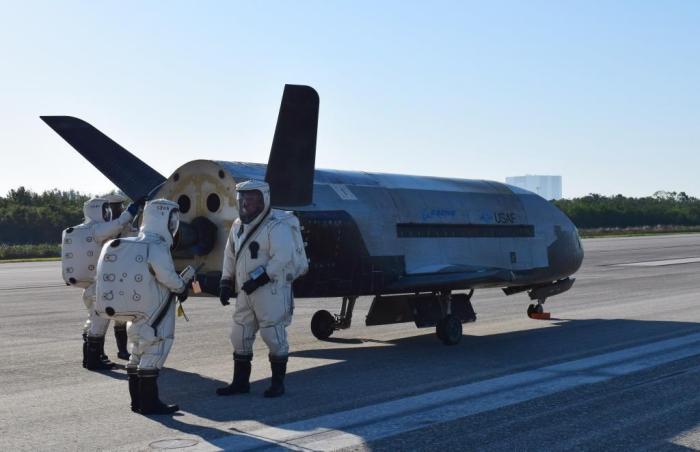
X-37B OTA4 lands at Kennedy Space Center

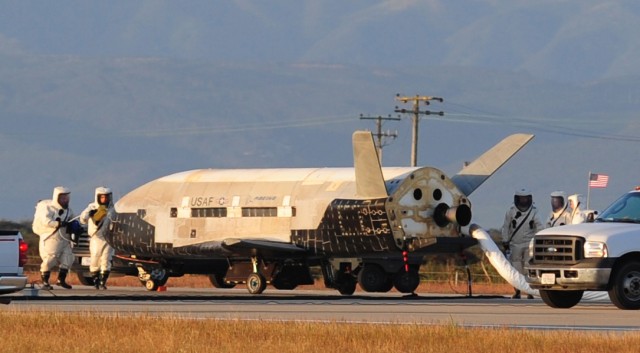
The X-37B Orbital Test Vehicle (OTV-4), an unmanned, reusable space plane operated by the US Air Force, has landed at Nasa’s Kennedy Space Centre in Florida after two years in orbit.

US Air Force officials confirmed the craft’s landing and said they were “excited about the data gathered”.

According to a press release, the programme is designed to experiment on and develop reusable space vehicles.

But what the OTV-4 has been doing for the last 24 months isn’t clear.

“The hard work of the X-37B OTV team and the 45th Space Wing successfully demonstrated the flexibility and resolve necessary to continue the nation’s advancement in space,” said Randy Walden, the director of the Air Force Rapid Capabilities Office.

x-37b-landing-640x353

Role Unmanned spaceplane
National origin United States
Manufacturer Boeing Defense, Space & Security
First flight 7 April 2006 (first drop test)
Introduction 22 April 2010 (first spaceflight)
Status
  • In service
  • 4 spaceflights completed
Primary user
  • X-37A: NASA?Darpa
  • 37B: United States Air Force
Number built
  • X-37A: 1
  • X-37B: 2
Developed from Boeing X-40

“The ability to land, refurbish, and launch from the same location further enhances the OTV’s ability to rapidly integrate and qualify new space technologies.”

Because the X-37B started life as a Nasa programme, the Air Force is in a position to talk openly about the craft’s design but its precise purpose remains classified.

Back in 2010, when the vehicle was first launched, Gary Payton, the Air Force’s deputy undersecretary for space programmes, tried to calm worries about the potential weaponisation of space.

“I don’t know how this could be called weaponisation of space. It’s just an updated version of the space shuttle type of activities in space,” he said.

“We, the Air Force, have a suite of military missions in space and this new vehicle could potentially help us do those missions better.”

X_37_14

Given that its landing on Sunday caused a sonic boom, waking residents in central Florida, it would be hard for US Air Force officials to deny something had happened.

“Today marks an incredibly exciting day for the 45th Space Wing as we continue to break barriers,” said Brig Gen Wayne Monteith, the 45th SW commander.

“Our team has been preparing for this event for several years, and I am extremely proud to see our hard work and dedication culminate in today’s safe and successful landing of the X-37B.”

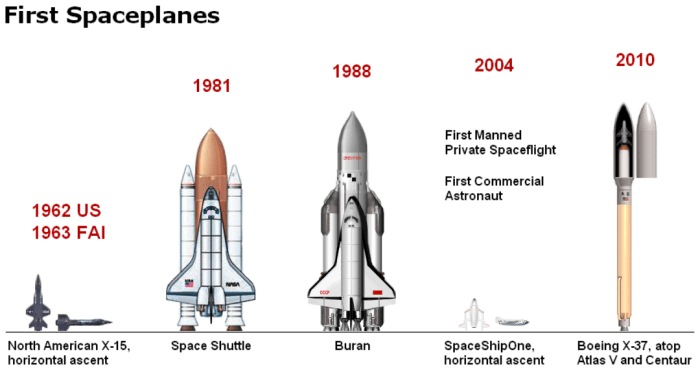
xWorld's_First_Five_Spaceplanes

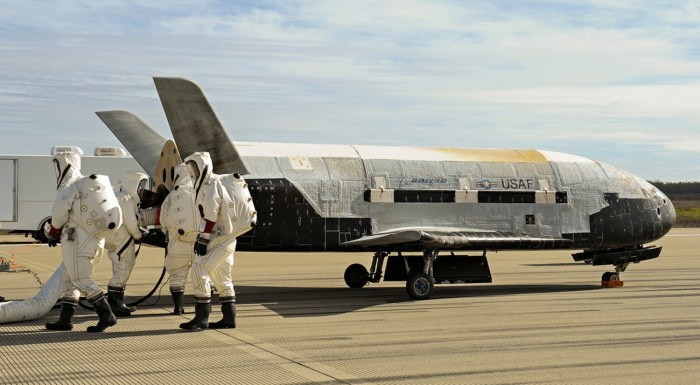
X-37B OTV Mission 3 Landing

General characteristics
Crew: none
Length: 29 ft 3 in (8.92 m)
Wingspan: 14 ft 11 in (4.55 m)
Height: 9 ft 6 in (2.90 m)
Max takeoff weight: 11,000 lb (4,990 kg)
Electrical power: Gallium arsenide solar cells with lithium-ion batteries
Payload bay: 7 × 4 ft (2.1 × 1.2 m)
Performance
Orbital speed: 28,044 km/h (17,426 mph)
Orbit: Low Earth orbit
Orbital time: 270 days (design)

Prince Philip Retiring from Public Life at 96

Prince Philip will retire this fall from his royal duties, Buckingham Palace announced Thursday.

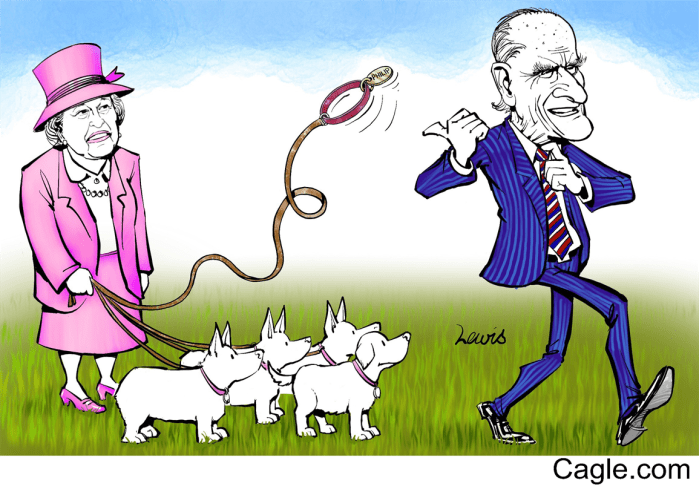
Philip, the husband of Queen Elizabeth II, will attend previously scheduled engagements until August, but won’t accept invitations after that, a palace spokesman said, adding the decision was made by the 95-year-old Duke of Edinburgh and supported by the queen. Elizabeth, who is 91, “will continue to carry out a full program of official engagements,” the statement said.

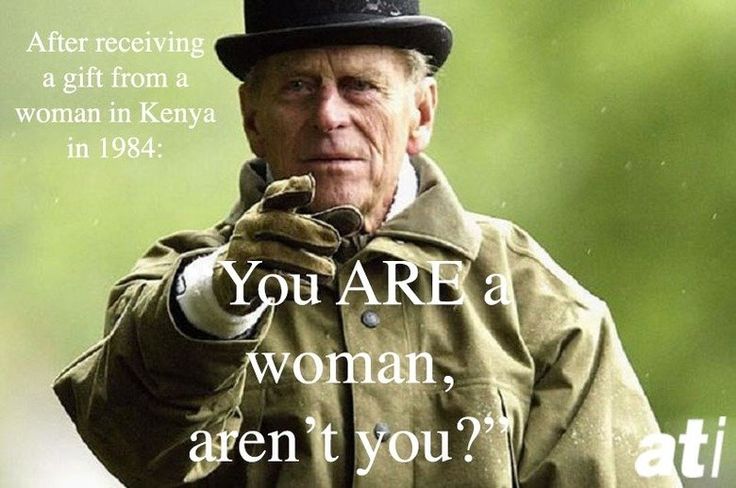
Philip is known for both his off-the-cuff remarks and his sometimes embarrassing gaffes. At an event in London on Wednesday, he referred to himself as the “world’s most experienced plaque unveiler.”

Some of his best quotes:

phil

phil1

To President of Nigeria, who was in national dress, 2003: “You look like you’re ready for bed!”

phil2

His description of Beijing, during a visit there in 1986: “Ghastly.”

phil3

To a tourist in Budapest in 1993: “You can’t have been here long, you haven’t got a pot belly.”

phil4

On the Duke of York’s house, 1986: “It looks like a tart’s bedroom.”

phil5

On the 1981 recession: “A few years ago, everybody was saying we must have more leisure, everyone’s working too much. Now everybody’s got more leisure time they’re complaining they’re unemployed. People don’t seem to make up their minds what they want.”

prince

On Tom Jones, 1969: “It’s difficult to see how it’s possible to become immensely valuable by singing what are the most hideous songs.”

To then Paraguay dictator General Stroessner: “It’s a pleasure to be in a country that isn’t ruled by its people.”

To Scottish driving instructor, 1995: “How do you keep the natives off the booze long enough to pass the test?”

To Susan Edwards and her guide dog in 2002: “They have eating dogs for the anorexic now.”

On Princess Anne, 1970: “If it doesn’t fart or eat hay, she isn’t interested.”

prince1

Julian Assange coming up for air

Julian Paul Assange, born Julian Paul Hawkins, 3 July 1971 is an Australian computer programmer, publisher and journalist. He is editor-in-chief of the organisation WikiLeaks, which he founded in 2006. He has won numerous accolades for journalism, including the Sam Adams Award and Martha Gellhorn Prize for Journalism.
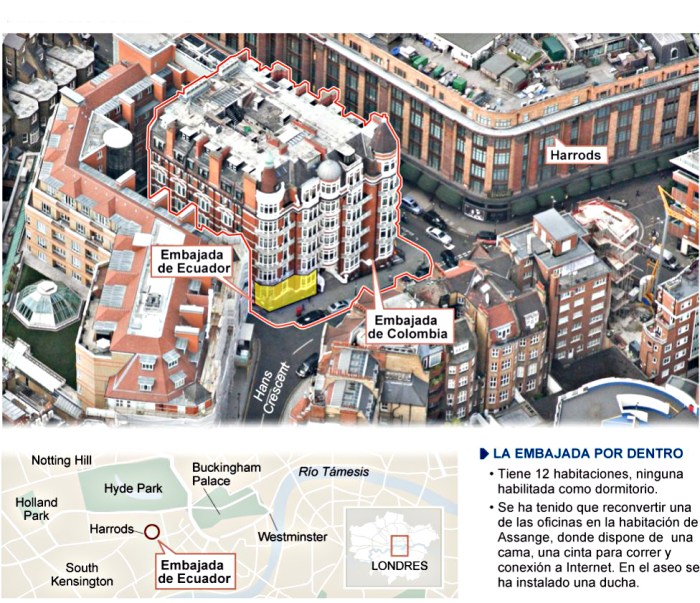
Assange founded WikiLeaks in 2006, but came to global prominence in 2010, when WikiLeaks published a series of leaks provided by Chelsea Manning. These leaks included the Collateral Murder video (April 2010), the Afghanistan war logs (July 2010), the Iraq war logs (October 2010), and CableGate (November 2010). Following the 2010 leaks, the United States government launched a criminal investigation into WikiLeaks and asked allied nations for assistance. In November 2010, a request was made for Assange’s extradition to Sweden, where he had been questioned months earlier over allegations of sexual assault and rape. Assange continued to deny the allegations, and expressed concern that he would be extradited from Sweden to the United States because of his perceived role in publishing secret American documents. Assange surrendered himself to UK police on 7 December 2010, and was held for ten days in solitary confinement before being released on bail. He sought and was granted asylum by Ecuador in August 2012. He has since remained in the Embassy of Ecuador in London, and is unable to leave without being arrested for breaching his bail conditions.

Speaking from the Embassy

ajulie4

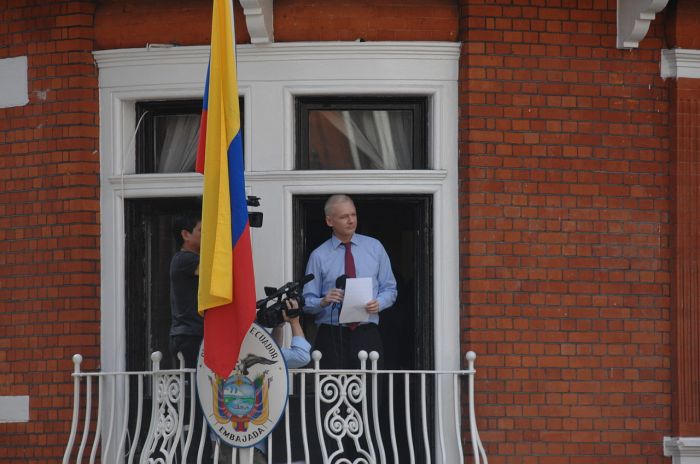
On 16 August 2012, Foreign Minister Patiño announced that Ecuador was granting Assange political asylum because of the threat represented by the United States secret investigation against him and several calls for assassination from many American politicians. In its formal statement, Ecuador reasoned that “as a consequence of [Assange’s] determined defense to freedom of expression and freedom of press… in any given moment, a situation may come where his life, safety or personal integrity will be in danger”. Latin American states expressed support for Ecuador. Ecuadorian President Rafael Correa confirmed on 18 August that Assange could stay at the embassy indefinitely, and the following day Assange gave his first speech from the balcony. Assange’s supporters forfeited £293,500 in bail and sureties. His home since then has been an office converted into a studio apartment, equipped with a bed, telephone, sun lamp, computer, shower, treadmill, and kitchenette.

ajulie6

Due to the assassination threats Assange doesn’t go out on the embassy balconies and stays away from windows. Nor does he venture to the roof for fresh air.

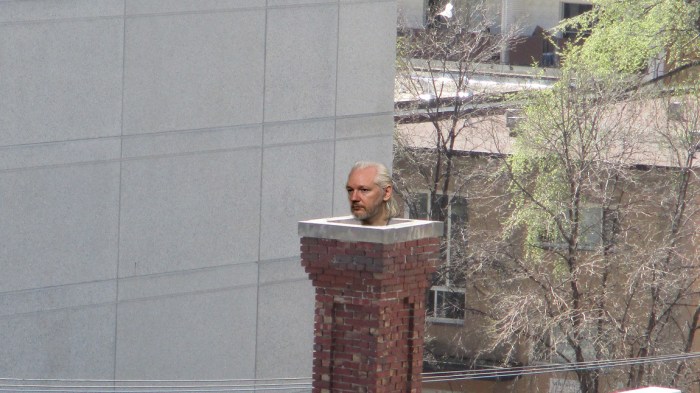
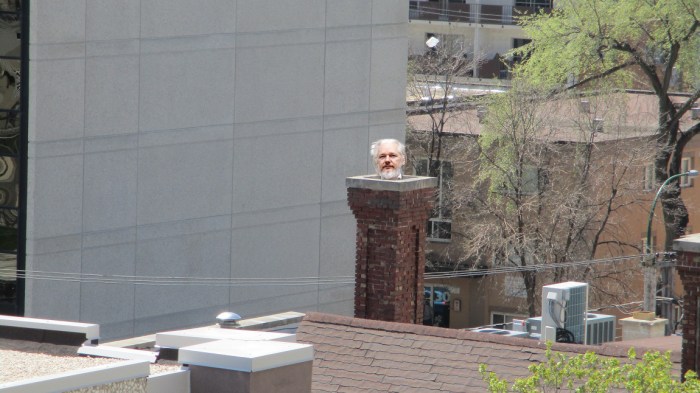
Recently emerged photos taken by British intelligence seems to show Assange’s head emerging from a chimney from a nearby building. How he moved from the embassy to that building is unknown.

ajulie (1)

ajulie (2)

The fresh air must be exhilarating. Getting through the chimney however must be quite stuffy.

Another photo snapped by a lucky paparazzi shows Assange sticking his head out of a manhole on a street next to the embassy. Conjecture has it that Assange must have a network of sewer tunnels available to him to move around below the streets of London. If the Ecuadorians ever change their minds about allowing him asylum Julian could make a break for it by fleeing through the sewers. With help he could make it to Russia, where he could move in with Edward Snowden.

ajulie3

Assange claims he is all about transparency by governments. A true democrat who is fighting for the people. According to traitors like Assange and Snowden the government should never conceal and have secrets. Everything should be wide open. Even in time of war.

Furthermore,  if Assange is so committed to truth and transparency, why doesn’t he turn himself in to authorities and face the music. If he is truthfully innocent he has nothing to fear,  so why is he holed up in the Ecuadorian Embassy like a cornered rat?

00000winstonchurchill1

NASA’s Armstrong Flight Research Center

Armstrong Flight Research Center is NASA’s primary center for atmospheric flight research and operations. NASA Armstrong is chartered to research and test advanced aeronautics, space and related technologies that are critical to carrying out the agency’s missions of space exploration, space operations, scientific discovery, and aeronautical research and development.

Located at Edwards, California, in the western Mojave Desert, Armstrong is uniquely situated to take advantage of the excellent year-round flying weather, remote area and visibility to flight test some of the nation’s most unique aircraft and aeronautical systems.

Some examples of the research undertaken: Oblique Wing Research, SST and Sonic Boom Research, Autonomous Formation Flight Control, Atmospheric Research, Vortex study,  Develop Dyna-soar launch pad abort procedures, Variable Sweep Transition flight experiment,  F-15 – Thrust Vectoring, to name a few.

Selected aircraft:

nasa automatic collision avoidance technology

F-16D conducting Automatic Collision Avoidance Technology (ACAT) tests

nasa1

F-14 Tomcat

nasa2

F-15 Eagle

nasa3

F-18

nasa4

F-104 Starfighters

nasa5

Global Hawk Unmanned Aerial Vehicle (this drone is bigger than an F-16)

nasa7

SR-71 Blackbird

nasa8

F-16

nasa9

F-18 Hornet

nasa10

The infamous Predator drone

The current fleet

nasa6


The Forgotten Ruins of Mrauk U

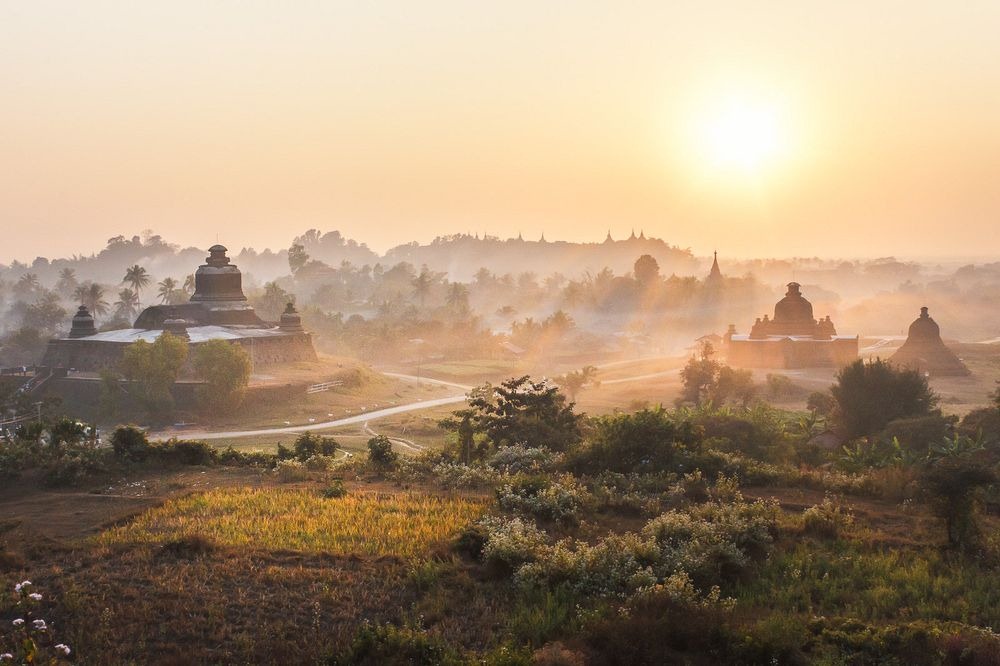
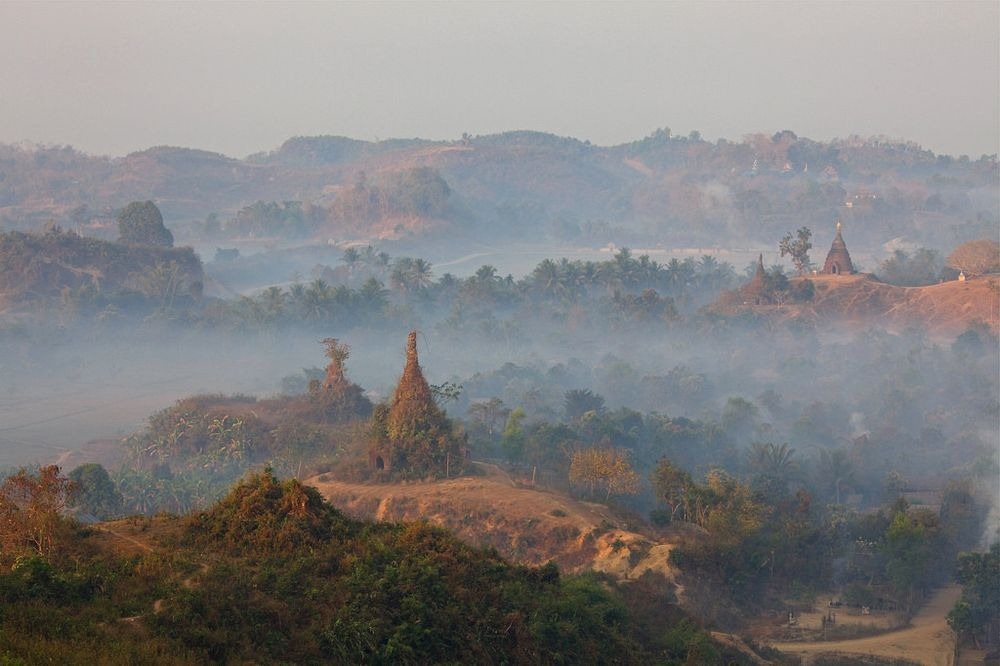
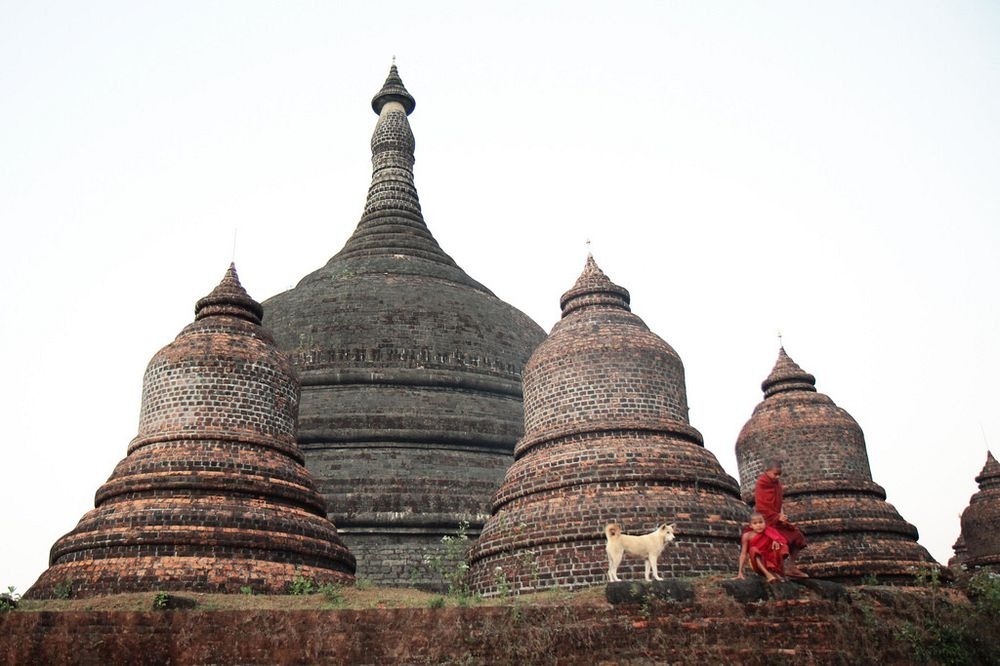
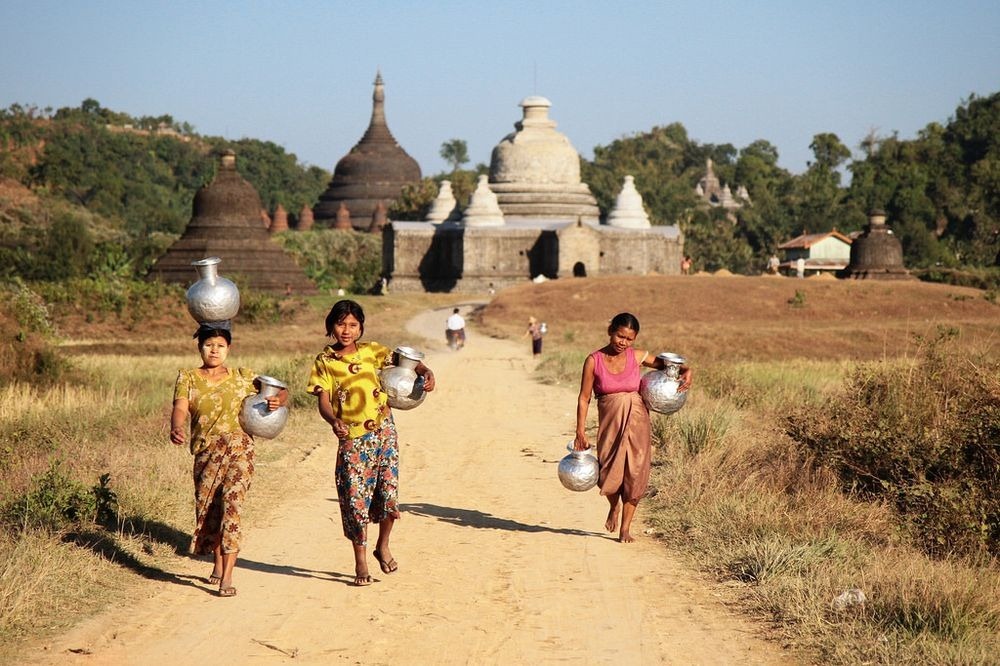
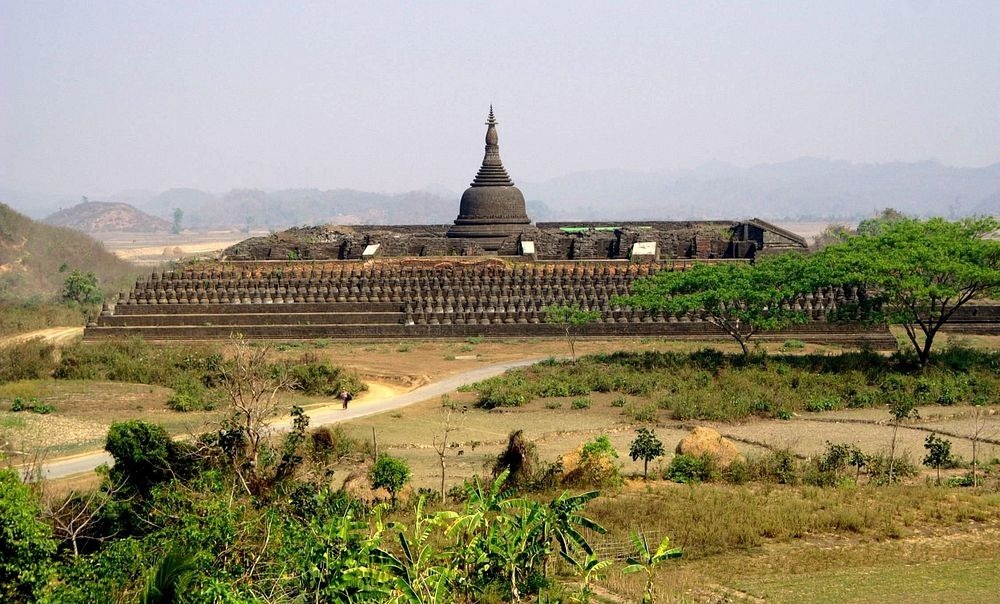
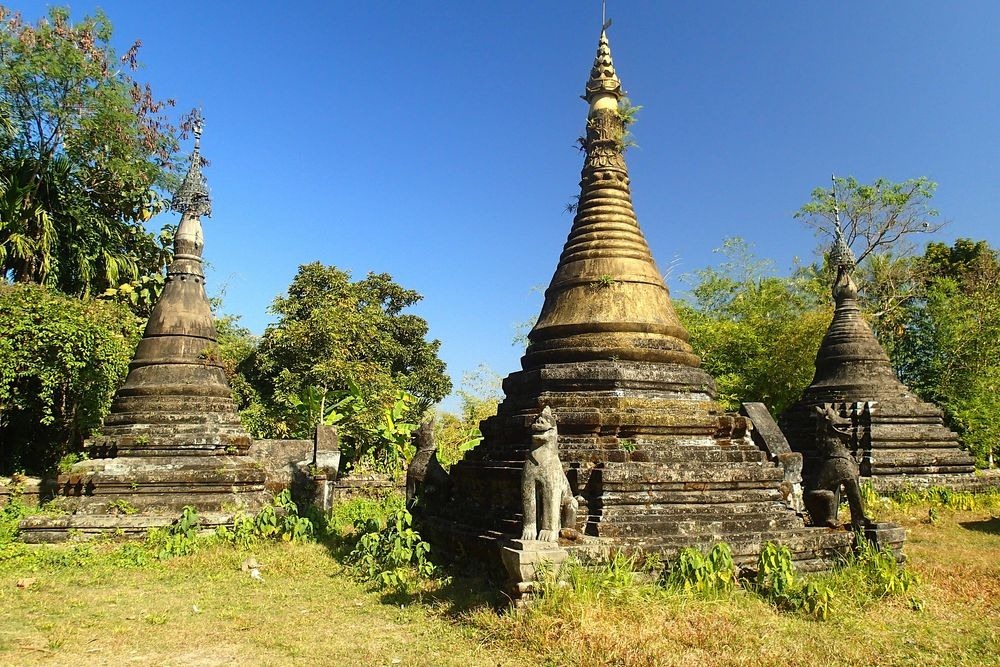
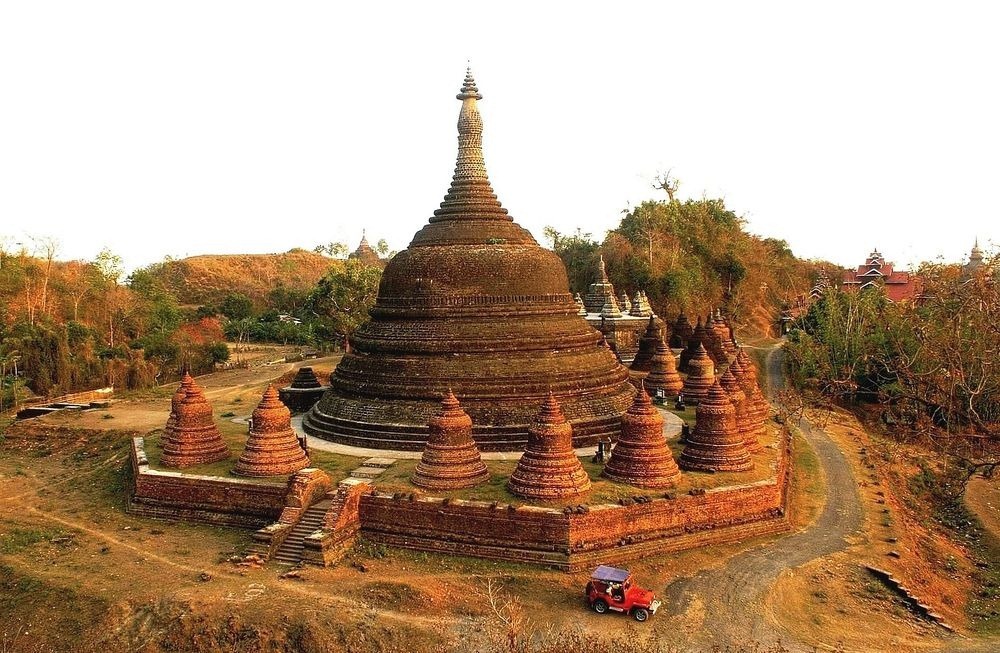
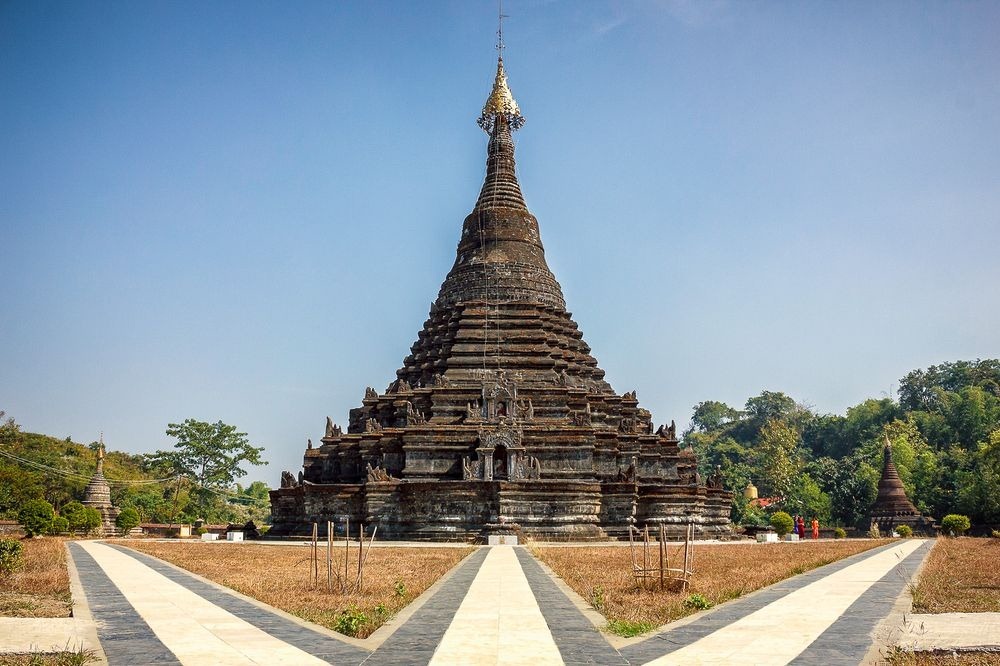
Spread across the beautiful rolling hills of Rakhine in Western Burma, lies a little known archeological site—the medieval town of Mrauk U. Once the capital of the powerful Arakan empire where Portuguese, Dutch and French traders rubbed shoulders with the scholars of Bengal and Mughal princes on the run, Mrauk U is now a sleepy village where goat herders tend to their animals, farmers work their fields and women fetch water from the wells located among the hundreds of old temples and Buddhist pagodas that the Kings of Mrauk U erected during the city’s heydays.

mrauk-u-10

The Mrauk U Kingdom was founded in 1430 by King Min Saw Mon, and Mrauk U remained the capital for more than three hundred and fifty years, until 1785. At its peak, Mrauk U controlled half of Bangladesh and the western part of Lower Burma. Its fame spread to far Europe where it became known as a city of oriental splendor after the Portuguese missionary and traveler, Fray Sebastien Manrique, published a vivid account of the coronation of King Thiri Thudhamma in 1635 and about the Rakhine Court.

As the city grew, the King and the rich inhabitants built many Buddhist pagodas and temples. Some are still being used as places of worship, and these are the main attraction of Mrauk-U. In fact, Mrauk U’s rich collection of temples and pagodas is second only to Bagan, but unlike Bagan, Mrauk U isn’t swarmed with tourists. This is because the place is not easy to reach. There’s no airport, and the only way to get there is by a boat, which takes about 7 to 8 hours.

One thing that sets Mrauk U apart from other popular archeological sites is the local life here that runs right in the heart of this historical site.

Travel writer Robert Reid describes his visit to Mrauk U in a BBC article:

Here, the ruins are merely a backdrop to everyday life. Streams of young women fill tin pots at temple-side wells and take short cuts over cracked pagoda steps to farms sandwiched between 500-year-old stupas. Elders crouch below trees, amid smoking refuse piles and goat herds.

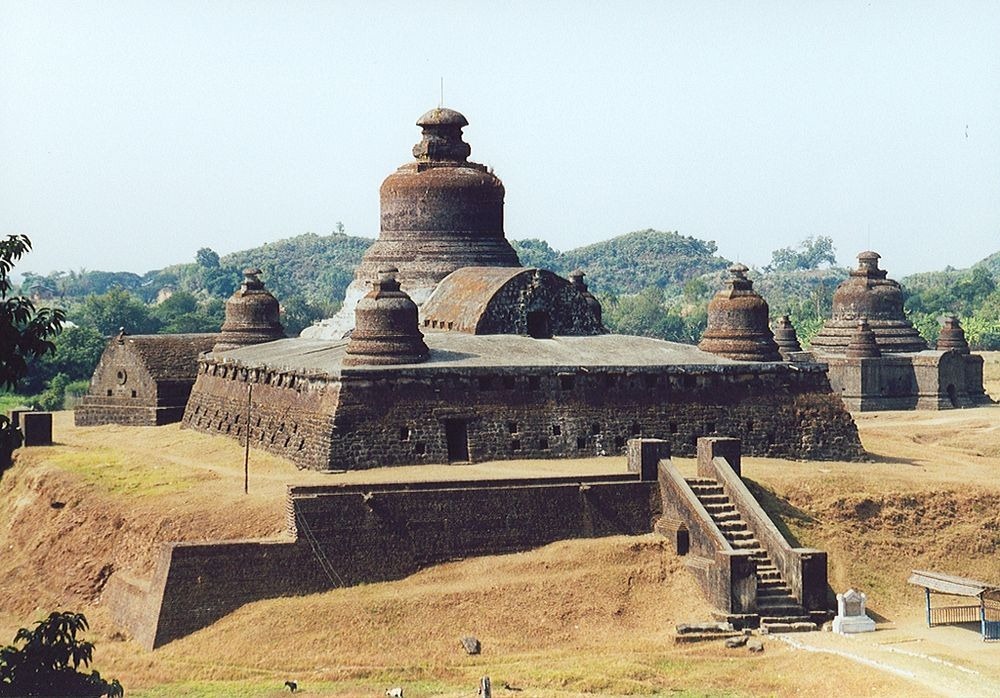
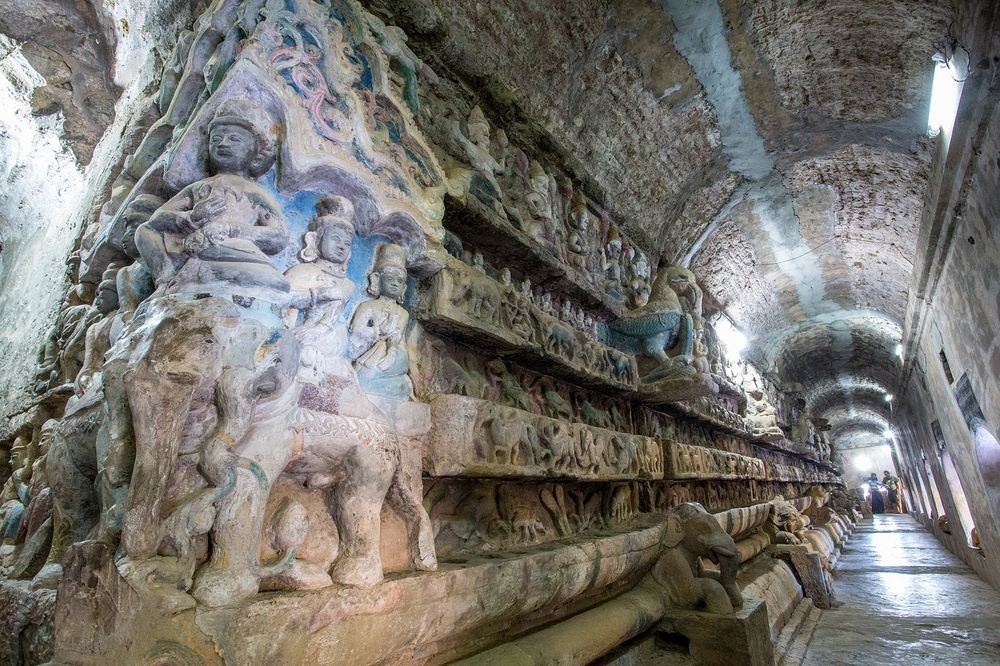
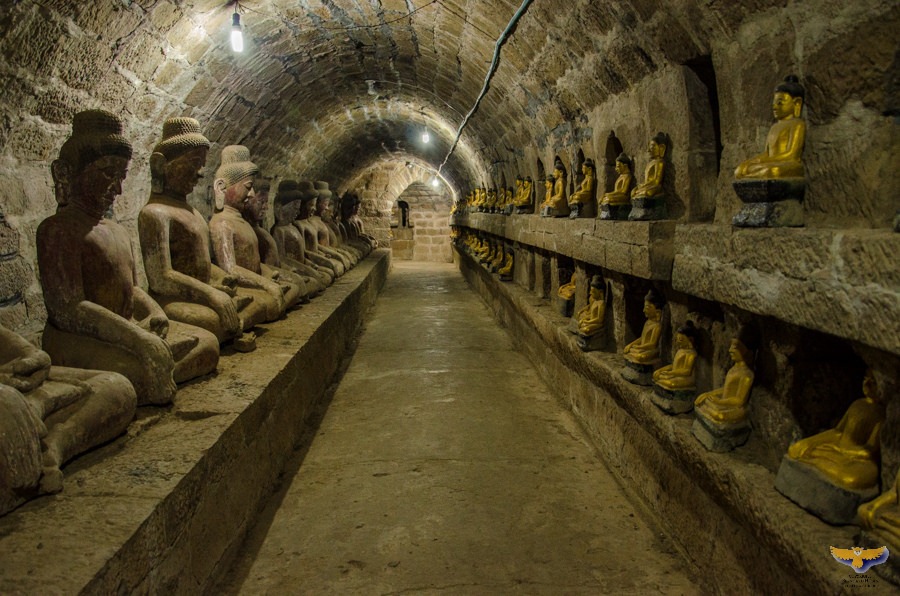
Another difference between Bagan and Mrauk U is that unlike in Bagan, none of the temples in Mrauk U are closed, and can be explored inside out. Although there are far more temples in Bagan than in Mrauk U, the views from the surrounding hills are no less breathtaking. The temples are also different to those in Bagan, made of hewn stone bricks rather than mud and brick. Some of the temples were built like bunkers with thick solid walls, and were probably used as places of refuge during times of war.

Being the former capital of the Arakan empire, Mrauk U was surrounded by long defensive walls and moats, at the center of which stood the Royal Palace. Very little of the palace remains today.

mrauk-u-1

mrauk-u-2

mrauk-u-3

mrauk-u-4

mrauk-u-5

mrauk-u-6

mrauk-u-14

mrauk-u-7

mrauk-u-9

mrauk-u-11

Amusing Planet