Barack

Bruce Willis

Morgan Freeman

James Bond

Jack

Rocky

Da Terminator

Goodfella

Snoop

Dirty Harry

Scarface

Mr. Bean

Jim

Mick and Keith

Barack
Bruce Willis
Morgan Freeman
James Bond
Jack
Rocky
Da Terminator
Goodfella
Snoop
Dirty Harry
Scarface
Mr. Bean
Jim
Mick and Keith

Kevin Pollak impersonating Mr. Walken
Lets go cool off in the river

Another day working in the fields

“I don’t feel so good, I’m telling the foreman I’m sick and going home.”
A beautiful day to sunbath on the beach here in Cape Town.

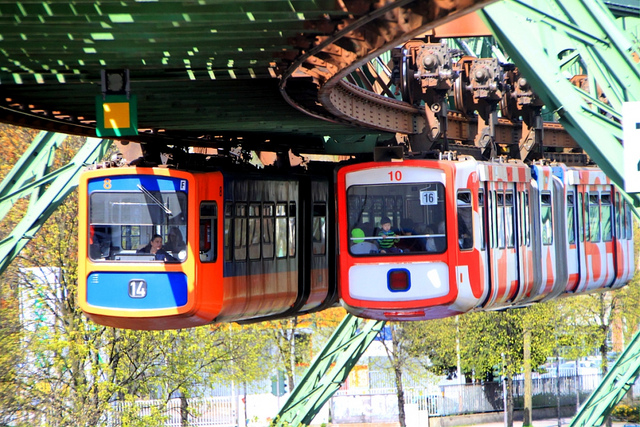
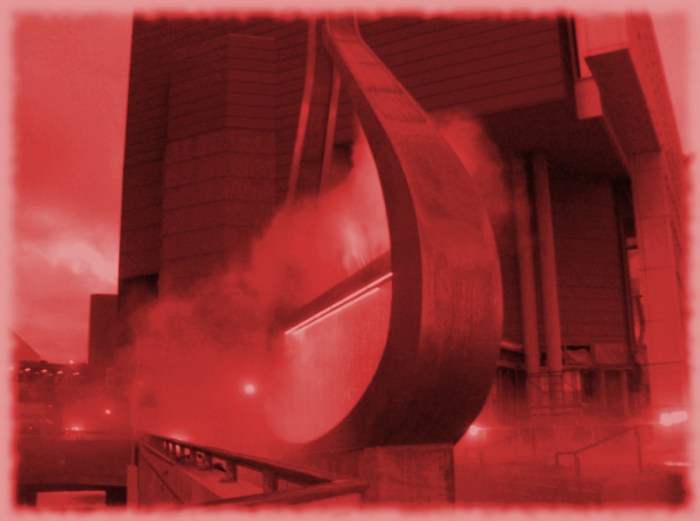
Its full name is “Electric Elevated Railway (Suspension Railway) Installation, Eugen Langen System”, it is the oldest electric elevated railway with hanging cars in the world and is a unique system.
Designed by Eugen Langen to sell to the city of Berlin, the installation with elevated stations was built in Barmen, Elberfeld and Vohwinkel between 1897 and 1903; the first track opened in 1901. The Schwebebahn is still in use today as a normal means of local public transport, moving 25 million passengers annually (2008).
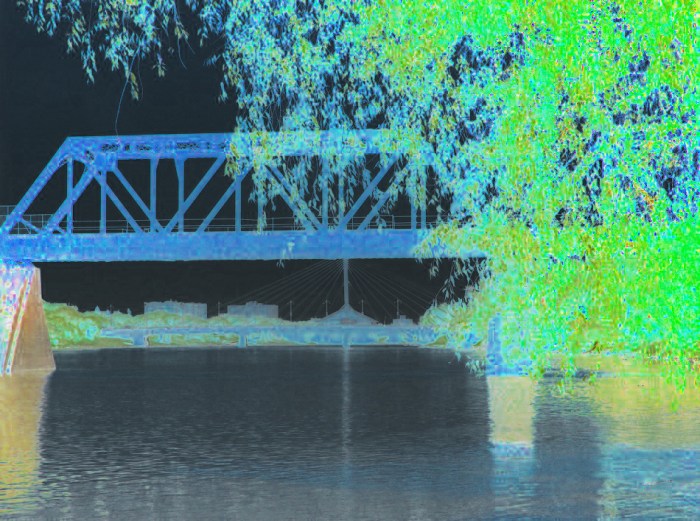
The suspension railway runs along a route of 13.3 kilometres (8.3 mi), at a height of about 12 metres (39 ft) above the river Wupper between Oberbarmen and Sonnborner Straße (10 kilometres or 6.2 miles) and about 8 metres (26 ft) above the valley road between Sonnborner Straße and Vohwinkel (3.3 kilometres or 2.1 miles). At one point the railway crosses the A46 motorway. The entire trip takes about 30 minutes.

Construction on the actual Wuppertal Suspension Railway began in 1898, overseen by the government’s master builder, Wilhelm Feldmann. On 24 October 1900, Emperor Wilhelm II participated in a monorail trial run.
In 1901 the railway came into operation. It opened in sections: the line from Kluse to Zoo/Stadion opened on 1 March, the line to the western terminus at Vohwinkel opened on 24 May, while the line to the eastern terminus at Oberbarmen did not open until 27 June 1903. Around 19,200 tonnes (18,900 long tons; 21,200 short tons) of steel were used to produce the supporting frame and the railway stations. The construction cost 16 million gold marks. The railway was closed owing to severe damage during World War II, but reopened as early as 1946.


The Wuppertal Suspension Railway nowadays carries approximately 80,000 passengers per weekday through the city. Since 1997, the supporting frame has been largely modernised, and many stations have been reconstructed and brought technically up to date. Kluse station, at the theatre in Elberfeld, had been destroyed during the Second World War. This too was reconstructed during the modernisation. Work was planned to be completed in 2001; however a serious accident took place in 1999 which left five people dead and 47 injured. This, along with delivery problems, delayed completion. In recent years (2004), the cost of the reconstruction work has increased from €380 million to €480 million.
On 15 December 2009 the Schwebebahn suspended its operations for safety concerns; several of the older support structures needed to be renewed, a process that was completed on 19 April 2010.
On 10 November 2011 Wuppertaler Stadtwerke (Wuppertal City Works) signed a contract with Vossloh Kiepe to supply 31 new articulated cars to replace those built in the 1970s. The new cars were built in Valencia, Spain. When they were introduced the line’s power supply voltage was raised from 600 to 750 V.
In 2012, the Wuppertal Suspension Railway was closed for significant periods to upgrade the line. The closing times were 7 to 21 July, 6 August to 22 October and weekends in September (15/16) and November (10/11).
The modernisation was completed and the line fully reopened on 19 August 2013.


The cars are suspended from a single rail built underneath a supporting steel frame. The cars hang on wheels which are driven by an electric motor operating at 600 volts DC, fed from an extra rail.
The supporting frame and tracks are made out of 486 pillars and bridgework sections. For the realization Anton Rieppel Head of MAN-Werk Gustavsburg invented 1895-96 a patented structural system. The termini at each end of the line also serve as train depots and reversers.
The current fleet consists of twenty-seven two-car trains built in the 1970s. The cars are 24 metres long and have 4 doors. One carriage can seat 48 with approximately 130 standing passengers. The top speed is 60 kilometres per hour (37 mph) and the average speed is 27 km/h (17 mph).
The Kaiserwagen (Emperor’s car), the original train used by Emperor Wilhelm II during a test ride on 24 October 1900, is still operated on scheduled excursion services, special occasions and for charter events.


On July 21, 1950 the Althoff Circus organised a publicity stunt by putting a baby elephant on a train at Alter Markt station. As the elephant started to bump around during the ride, she was pushed out of the car and fell into the river Wupper. The elephant, two journalists, and one passenger sustained minor injuries. After this jump, the elephant got the name Tuffi, meaning ‘waterdive’ in Italian. Both operator and circus director were fined after the incident.

Driving one of these things would be a great job.


Blast from the past: 2015.
Despite no official deal in place with the B.C. government, one of the largest air water tankers in the world took a test dip in Sproat Lake near Port Alberni, B.C. to ready for action. It operated in 2015.

The last remaining Martin Mars water bomber is “coming out of retirement” to fight the wildfires burning up B.C. this summer, Forests Minster Steve Thomson has confirmed.
About 195 fires are currently burning across the province, with dozens more fires popping up each day.
“Given the extraordinary fire situation this year, and recognizing that public safety is paramount, we need to look at every possible tool in our toolbox,” said Thomson in a statement issued on Wednesday.
The ministry confirmed earlier this week it was in negotiations to use the aging air tanker, but the deal was not confirmed publicly until yesterday
“Today, I’m pleased to announce that we’re entering into a one-month agreement to use the Martin Mars air tanker.”


General characteristics

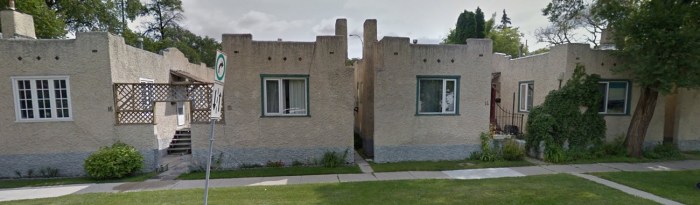
They are independent apartments situated a few feet apart in a group of around 20 structures. They are roughly the size of a medium size trailer home. But the interesting aspect of the buildings is the thick stucco on the outside walls. The flat roofs are also somewhat different. The thick stucco gives the buildings the distinct appearance of being adobe.
An adobe structure is usually defined as being made out of natural building material made from sand, clay, water, and some kind of fibrous or organic material (sticks, straw, and/or manure). These buildings look very adobe indeed. The big concrete stucco walls also add to the adobe quality.
The buildings do look old. They must have been built in the fifties or sixties. Maybe earlier. It would be a great place to live if the rent wouldn’t be too high (maybe they are condos), because you would never hear your neighbour banging things or playing loud music.
Some pictures:


Here is a list of some of the top Aerobatic Jet Teams in the world. Most of these teams are military jet teams, but there are also a few civilian teams.
These teams perform high-speed intricate manoeuvres often involving extremely close precision formations. It is very dangerous stuff. The pilots have to know exactly what the other members are doing and where they are at all times. Accidents have happened with loss of life, but it is very rare.
I have included 10 military teams and 2 civilian teams. There is no rating as the criteria would not be uniform throughout all the teams. Some teams, especially the Russian and United States teams, fly top of the line high performance fighters. While other teams use advanced trainers.
Lets get this list airborne.
Blue Impulse. Japan.
Aircraft: 9 Kawasaki T-4’s, Trainer


Turkish Stars. Turkey.
Aircraft: 10 NF-5A Freedom Fighters. Fighter.


Patrouille de France
Aircraft: 8 Alpha Jets. Trainer.


August 1 (aerobatic team). China.
Aircraft: 6 Chengdu J-10. Fighter.


Russian Knights
Aircraft: 6 SU-27’s. Fighter.


Royal Air Force Red Arrows. United Kingdom.
Aircraft: 9 Hawk T1A’s. Trainer.


Snowbirds. Canada.
Aircraft: 11 CT-114 Tutors. Trainer.


Blue Angels. United States.
Aircraft: 10 F/A-18 Hornets. Fighter.


Russian Swifts
Aircraft: 6 Mig-29’s. Fighter.


Thunderbirds. United States.
Aircraft: 8 F-16 Fighting Falcons. Fighter.


Jet aerobatic teams are not exclusive to militaries. They are several civilian teams from around the world. Below are two of the most prominent.
Team Breitling. France.
Aircraft: 5 L-39 Albatross.


Patriots Jet Team. United States.
Aircraft: 4 L-39 Albatross.

Donald Jay “Don” Rickles (May 8, 1926 – April 6, 2017) was an American stand-up comedian, actor and author. Although he became well known as an insult comic, his pudgy, balding appearance and pugnacious style led to few leading roles in film or television; his prominent film roles included Run Silent, Run Deep (1958) and Kelly’s Heroes (1970).
He made famous the term “hockey puck” as a derogatory slant towards anybody.

While working in the “Murray Franklin’s” nightclub in Miami Beach, Florida, early in his career, Rickles spotted Frank Sinatra and remarked to him, “I just saw your movie The Pride and the Passion and I want to tell you, the cannon’s acting was great.” He added, “Make yourself at home, Frank. Hit somebody!” Sinatra, whose pet name for Rickles was “bullet-head”, enjoyed him so much that he encouraged other celebrities to see Rickles’ act and be insulted by him. Sinatra’s support helped Rickles become a popular headline performer in Las Vegas. During a Dean Martin Celebrity Roast special, Rickles was among those who took part in roasting Sinatra, although Rickles himself was also roasted during another show in the series.
A CubeSat is a type of miniaturized satellite for space research that usually has a volume of exactly one liter (10 cm cube), has a mass of no more than 1.33 kilograms, and typically uses commercial off-the-shelf components for its electronics.
Beginning in 1999, California Polytechnic State University (Cal Poly) and Stanford University developed the CubeSat specifications to help universities worldwide to perform space science and exploration.

The CubeSat specification accomplishes several high-level goals. Simplification of the satellite’s infrastructure makes it possible to design and produce a workable satellite at low cost. Encapsulation of the launcher–payload interface takes away the prohibitive amount of managerial work that would previously be required for mating a piggyback satellite with its launcher. Unification among payloads and launchers enables quick exchanges of payloads and utilization of launch opportunities on short notice.


Since CubeSats are all 10×10 cm (regardless of length) they can all be launched and deployed using a common deployment system. CubeSats are typically launched and deployed from a mechanism called a Poly-PicoSatellite Orbital Deployer (P-POD), also developed and built by Cal Poly. P-PODs are mounted to a launch vehicle and carry CubeSats into orbit and deploy them once the proper signal is received from the launch vehicle. P-PODs have deployed over 90% of all CubeSats launched to date (including un-successful launches), and 100% of all CubeSats launched since 2006. The P-POD Mk III has capacity for three 1U CubeSats, or other 1U, 2U, or 3U CubeSats combination up to a maximum volume of 3U.


QB50 is a proposed international network of 50 CubeSats for multi-point, in-situ measurements in the lower thermosphere (90–350 km) and re-entry research. QB50 is an initiative of the Von Karman Institute and is funded by the European Commission as part of the 7th Framework Programme (FP7). Double-unit (2U) CubeSats (10×10×20 cm) are developed, with one unit (the ‘functional’ unit) providing the usual satellite functions and the other unit (the ‘science’ unit) accommodating a set of standardised sensors for lower thermosphere and re-entry research. 35 CubeSats are envisaged to be provided by universities in 19 European countries, 10 by universities in the US, 2 by universities in Canada, 3 by Japanese universities, 1 by an institute in Brazil, and others. Ten 2U or 3U CubeSats are foreseen to serve for in-orbit technology demonstration of new space technologies.
The Request for Proposals (RFP) for the QB50 CubeSat was released on February 15, 2012. Two “precursor” QB50 satellites were launched aboard a Dnepr rocket on June 19, 2014. All 50 CubeSats were supposed to be launched together on a single Cyclone-4 launch vehicle in February 2016, but due to the unavailability of the launch vehicle, 40 satellites are now planned to be launched aboard Cygnus CRS OA-7 in March 2017 and subsequently deployed from the ISS. Eight other cubesats have been manifested on two further Dnepr flights but the availability of this launcher has been in doubt since its last flight in 2015.
2018 InSight mission: MarCO CubeSats
The May 2018 launch, of the InSight stationary lander to Mars, will include two CubeSats to flyby Mars to provide additional relay communications from InSight to Earth during entry and landing. This will be the first flight of CubeSats in deep space. The mission CubeSat technology is called Mars Cube One (MarCO), a six-unit CubeSat, 14.4 inches (36.6 centimeters) by 9.5 inches (24.3 centimeters) by 4.6 inches (11.8 centimeters). MarCo is an experiment, but not necessary for the InSight mission, to add relay communications to space missions in important time durations, in this landing from the time of InSight atmospheric entry and landing.
MarCO will launch in May 2018 with the InSight lander and will separate after launch and then travel in their own trajectories to Mars. After separation, MarCO will deploy two radio antennas and two solar panels. The high-gain, X-band antenna is a flat panel to direct radio waves. MarCO will navigate to Mars independently from the InSight lander, making their own course adjustments on the flight.
During InSight’s planned entry, descent and landing (EDL) in November 2018, the lander will transmit information in the UHF radio band to NASA’s Mars Reconnaissance Orbiter (MRO) flying overhead. MRO will forward EDL information to Earth using a radio frequency in the X band, but cannot simultaneously receive information in one band if transmitting on another. Confirmation of a successful landing could be received on Earth several hours after, so MarCO would be a technology demonstration of real-time telemetry during the landing.

InSight lander with labeled instruments






 The MarkoZen Blog