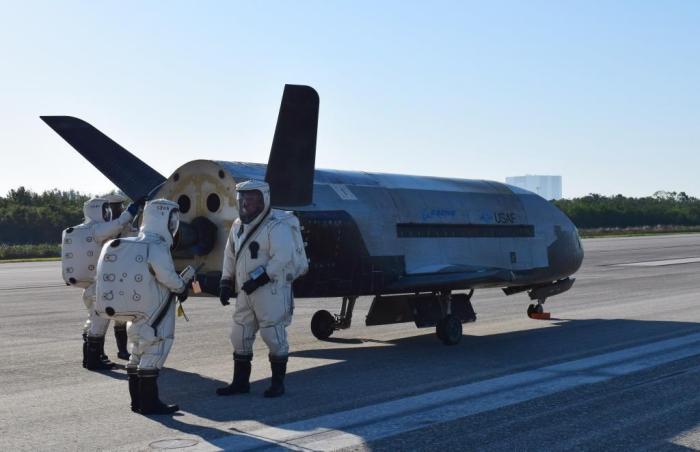
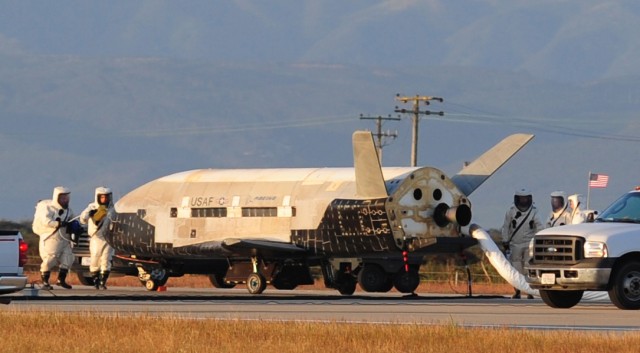
The X-37B Orbital Test Vehicle (OTV-4), an unmanned, reusable space plane operated by the US Air Force, has landed at Nasa’s Kennedy Space Centre in Florida after two years in orbit.
US Air Force officials confirmed the craft’s landing and said they were “excited about the data gathered”.
According to a press release, the programme is designed to experiment on and develop reusable space vehicles.
But what the OTV-4 has been doing for the last 24 months isn’t clear.
“The hard work of the X-37B OTV team and the 45th Space Wing successfully demonstrated the flexibility and resolve necessary to continue the nation’s advancement in space,” said Randy Walden, the director of the Air Force Rapid Capabilities Office.
| Role | Unmanned spaceplane |
|---|---|
| National origin | United States |
| Manufacturer | Boeing Defense, Space & Security |
| First flight | 7 April 2006 (first drop test) |
| Introduction | 22 April 2010 (first spaceflight) |
| Status |
|
| Primary user |
|
| Number built |
|
| Developed from | Boeing X-40 |
“The ability to land, refurbish, and launch from the same location further enhances the OTV’s ability to rapidly integrate and qualify new space technologies.”
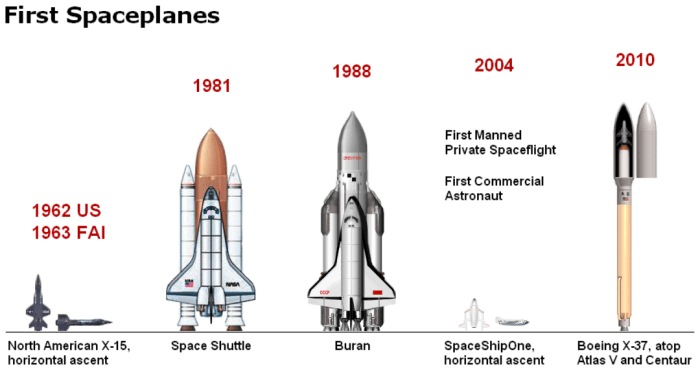
Because the X-37B started life as a Nasa programme, the Air Force is in a position to talk openly about the craft’s design but its precise purpose remains classified.
Back in 2010, when the vehicle was first launched, Gary Payton, the Air Force’s deputy undersecretary for space programmes, tried to calm worries about the potential weaponisation of space.
“I don’t know how this could be called weaponisation of space. It’s just an updated version of the space shuttle type of activities in space,” he said.
“We, the Air Force, have a suite of military missions in space and this new vehicle could potentially help us do those missions better.”

Given that its landing on Sunday caused a sonic boom, waking residents in central Florida, it would be hard for US Air Force officials to deny something had happened.
“Today marks an incredibly exciting day for the 45th Space Wing as we continue to break barriers,” said Brig Gen Wayne Monteith, the 45th SW commander.
“Our team has been preparing for this event for several years, and I am extremely proud to see our hard work and dedication culminate in today’s safe and successful landing of the X-37B.”
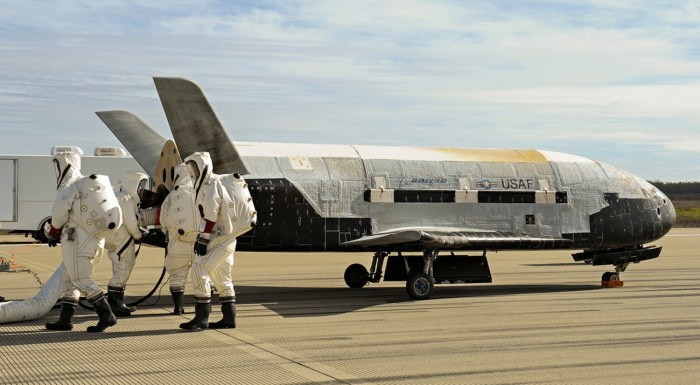
General characteristics
Crew: none
Length: 29 ft 3 in (8.92 m)
Wingspan: 14 ft 11 in (4.55 m)
Height: 9 ft 6 in (2.90 m)
Max takeoff weight: 11,000 lb (4,990 kg)
Electrical power: Gallium arsenide solar cells with lithium-ion batteries
Payload bay: 7 × 4 ft (2.1 × 1.2 m)
Performance
Orbital speed: 28,044 km/h (17,426 mph)
Orbit: Low Earth orbit
Orbital time: 270 days (design)
 The MarkoZen Blog