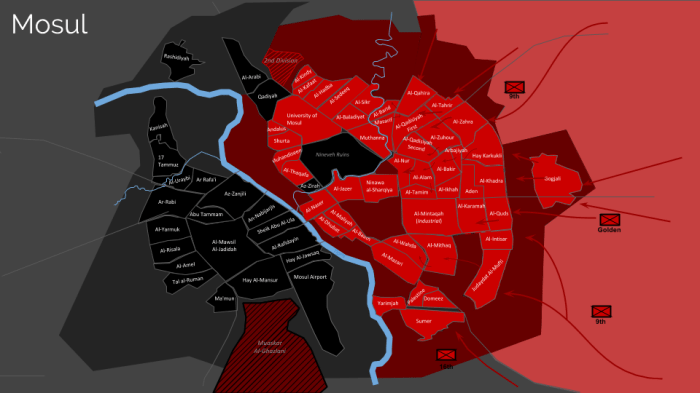
The Battle of Mosul is a joint offensive by Iraqi government forces with allied militias, Iraqi Kurdistan, and international forces to retake the city of Mosul from the Islamic State of Iraq and the Levant (ISIL). The offensive, dubbed Operation “We Are Coming, Nineveh” (قادمون يا نينوى; Qadimun Ya Naynawa), began on 16 October 2016, with forces besieging ISIL-controlled areas in the Nineveh Governorate surrounding Mosul. The battle for Mosul is considered key in the military intervention against ISIL, which seized the city in June 2014. Outnumbering ISIL forces 10 to 1, it is the largest deployment of Iraqi troops since the 2003 invasion of Iraq.
The operation follows the Mosul offensives in 2015 and 2016. The offensive began with Iraqi troops and Peshmerga fighters engaging ISIL on three fronts outside Mosul, going from village to village in the surrounding area. More than 120 towns and villages were liberated from ISIL control in the first two weeks of fighting. At dawn on 1 November, Iraqi Special Operations Forces entered the city on the eastern front. Meeting with fierce fighting, the Iraqi advance into the city was slowed by elaborate defenses – including road blocks, booby traps, suicide bombers and snipers – and by the presence of civilians.
The Battle of Mosul is concurrent with the Battle of al-Bab by the Turkish-led FSA forces, and the Raqqa offensive by the Syrian Democratic Forces (SDF) on ISIL’s capital city and stronghold in Syria.


Red: Iraqi government control
Gray: ISIS control
Yellow: Kurdish control

Iraqi army liberators
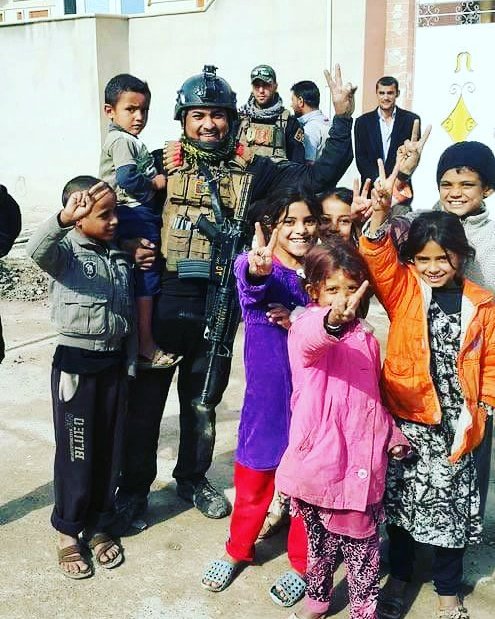
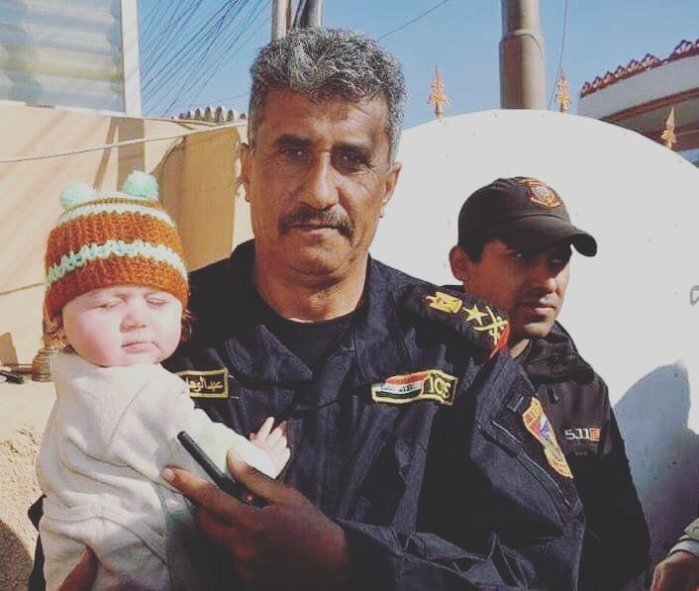

Christian areas liberated

Tough fight continues…
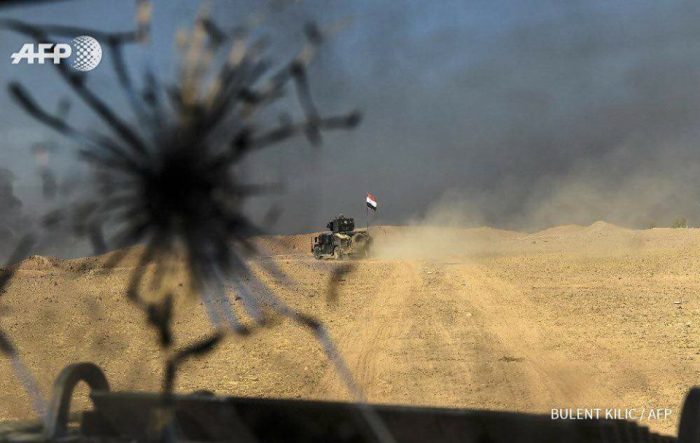
Coalition airstrikes major component of the battle.
 The MarkoZen Blog